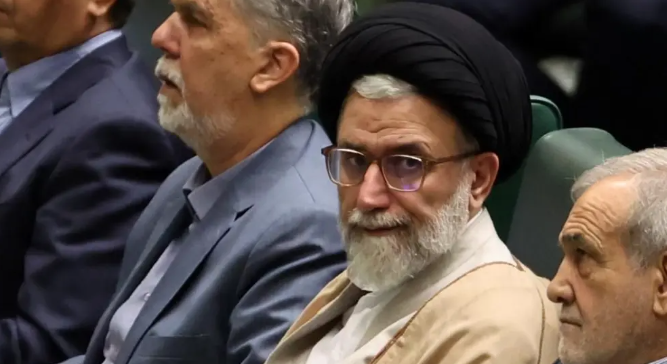
Israel says Iran’s intelligence minister Esmail Khatib was killed in an overnight strike. Iran has not publicly confirmed the claim. The report lands amid widening regional attacks, including fresh Israeli strikes in Beirut and ongoing retaliatory fire across the Middle East.
Khatib is not a battlefield commander. Yet he sits at the centre of Iran’s internal security and overseas intelligence work. That makes him a high-value figure in any escalation between Israel and Iran.
Who is Esmail Khatib
Esmail Khatib has served as Iran’s minister of intelligence since 2021. He was appointed by former president Ebrahim Raisi.
He is a cleric by training. He studied Islamic jurisprudence, a branch of religious law that shapes many senior roles in Iran’s state system.
He has also held senior posts inside Iran’s intelligence establishment and in offices linked to the Supreme Leader.
What Iran’s intelligence ministry does
Khatib ran the Ministry of Intelligence and Security, often referred to by its acronym MOIS. It is a civilian intelligence body. It deals with counter-espionage, internal security, and intelligence operations abroad.
Iran also has powerful parallel security organisations, including the Islamic Revolutionary Guard Corps, or IRGC. The IRGC is a military and security force created after the 1979 revolution. It runs its own intelligence networks and exerts major influence across the state.
Why the US sanctioned him
In 2022, the United States sanctioned Iran’s intelligence ministry and Khatib personally. US officials accused the ministry of cyber-enabled activity targeting the United States and allied countries.
Sanctions typically aim to restrict access to assets and financial systems. They also signal that Washington sees the targeted figure as part of a hostile security apparatus.
How his reported death fits a wider surge in attacks
Israel’s claim about Khatib comes a day after reports that Ali Larijani, described as a top Iranian security official, was also killed. That sequence suggests a focus on senior figures tied to Iran’s decision-making and security infrastructure.
At the same time, Israel has intensified strikes in Lebanon, including in parts of Beirut outside areas widely seen as Hezbollah strongholds. The Israeli military has also warned it will target crossings over the Litani River in southern Lebanon, saying it aims to disrupt the movement of fighters and weapons.
Across the region, retaliatory strikes and interceptions have been reported in multiple locations. The conflict has also raised alarms around the Strait of Hormuz, a critical shipping lane for global oil transport.
What happens next
The key unknown is confirmation from Iran. In past cases, Tehran has sometimes delayed public comment while it assesses internal impact and plans its response.
If Khatib’s death is confirmed, it would be a major blow to Iran’s intelligence leadership. It would also raise immediate questions about succession, internal security, and how Iran’s intelligence services respond under pressure.
For now, the claim adds another volatile layer to a fast-moving crisis, with military actions stretching from Iran and Israel to Lebanon and the Gulf.