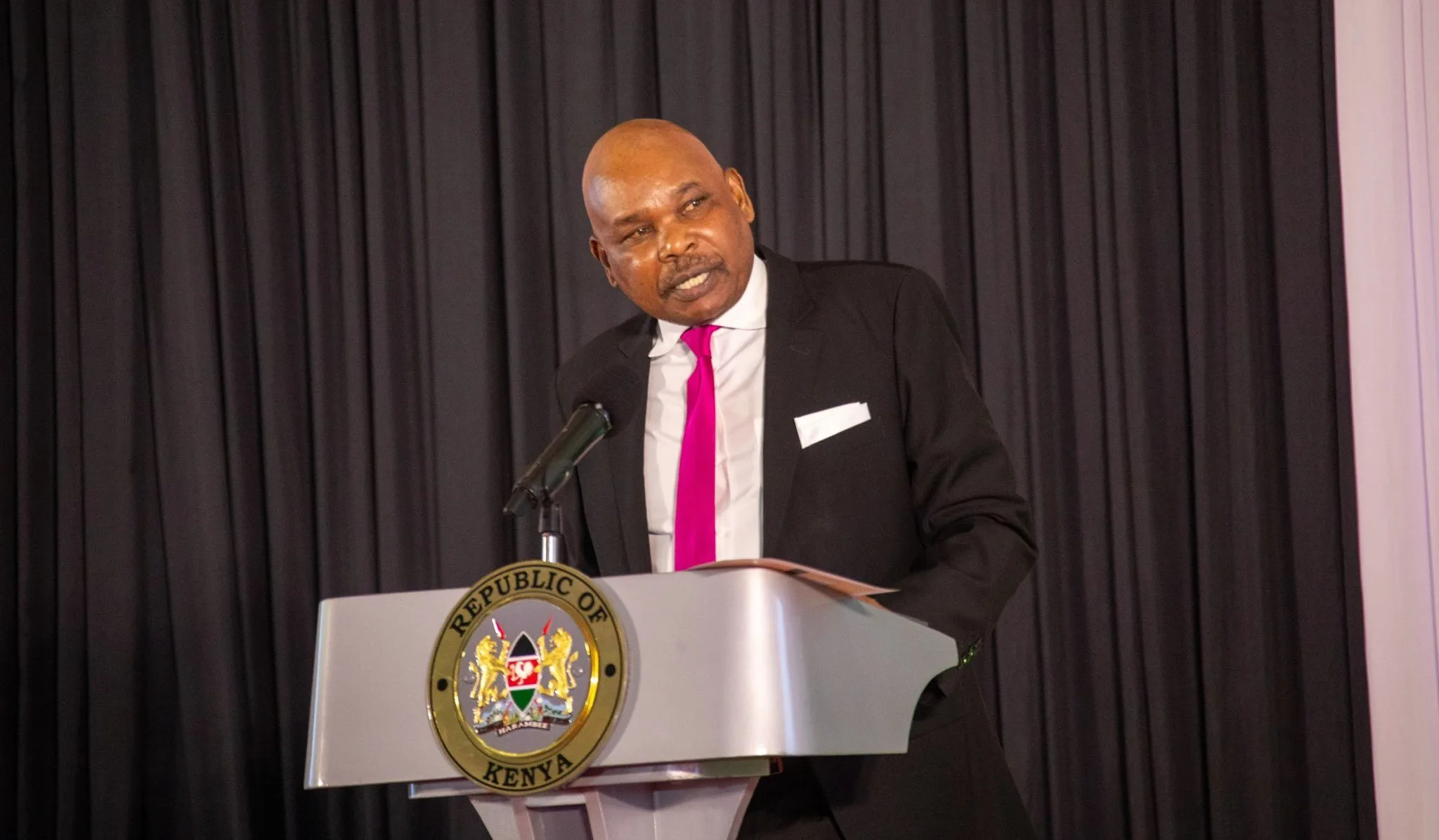
The Kenyan government has disbursed Sh1.014 billion in compensation to 1,083 victims of human rights violations — covering deaths, injuries, sexual violence and economic losses — sustained during demonstrations and public protests, the Panel of Experts on Compensation of Victims of Human Rights Violations confirmed on Tuesday, September 15.
This is real money going to real people whose lives were shattered. The Panel confirmed that compensation is rolling out on a continuous basis, with every claim passing through verification, authentication and categorisation before any payment is approved. No shortcuts, they insist — but no unnecessary delays either.
Among those compensated are 139 claimants who suffered verified economic losses — small business owners and informal traders whose livelihoods were wiped out when protests erupted around them. Their claims were backed by business records, police reports, photographs and witness statements. The Panel put it plainly: “Demonstrations, public protests and related incidents have often disrupted livelihoods, enterprises and property.”
The programme does not stop at civilians. 100 uniformed officers who suffered human rights violations during the same period have had their claims received and approved. That detail matters — it signals that the reparations framework is designed to be comprehensive, not politically selective.
The government is now deep into the fourth and fifth phases of the programme, covering claims that have cleared the full approval pipeline. Phase IV approved 96 civilian claims — nine fatalities, 32 severe injuries, 28 moderate injuries, 14 minor injuries and 13 economic-loss claims — totalling Sh74.35 million. Uniformed officers in Phase IV accounted for one fatality, four moderate injuries and 24 minor-injury claims, adding Sh7.4 million to the tally.
Phase V covers 83 civilian claims, including two fatalities, 80 aggravated injuries and one economic-loss claim, amounting to Sh10.5 million. A further 99 uniformed officer claims — spanning one fatality, four severe injuries, 19 moderate injuries and 75 minor injuries — brought the Phase V uniformed total to Sh22.75 million. Combined, Phases IV and V account for Sh113.8 million.
The Panel also approved above-scale compensation for two exceptional cases — one civilian, one uniformed officer — after reviewing updated medical reports submitted after their initial applications. Both were reclassified under the review provisions of the Reparations Guidelines, 2026, and the Panel will recommend to President William Ruto that both victims be enrolled in a government-funded lifetime medical scheme. For people carrying permanent injuries, that recommendation could change everything.
But the process has run into legal turbulence. High Court Petition No. E488 of 2026, filed in July and naming the Panel as second respondent, has forced it to sequester and ring-fence Sh105 million from the compensation fund specifically for victims of torture and enforced disappearances, pending the court’s final determination. The Panel says it has fully complied with those directives.
The Panel is also pushing back against any perception that a cheque closes the matter. “Compensation does not replace criminal accountability or other legal remedies available to victims,” it stated, adding that reparations must also drive institutional reform and guarantees that these violations never happen again. That is the part the government cannot buy its way out of — and young Kenyans who lived through those protests know it.