Why are fuel prices suddenly a political emergency?
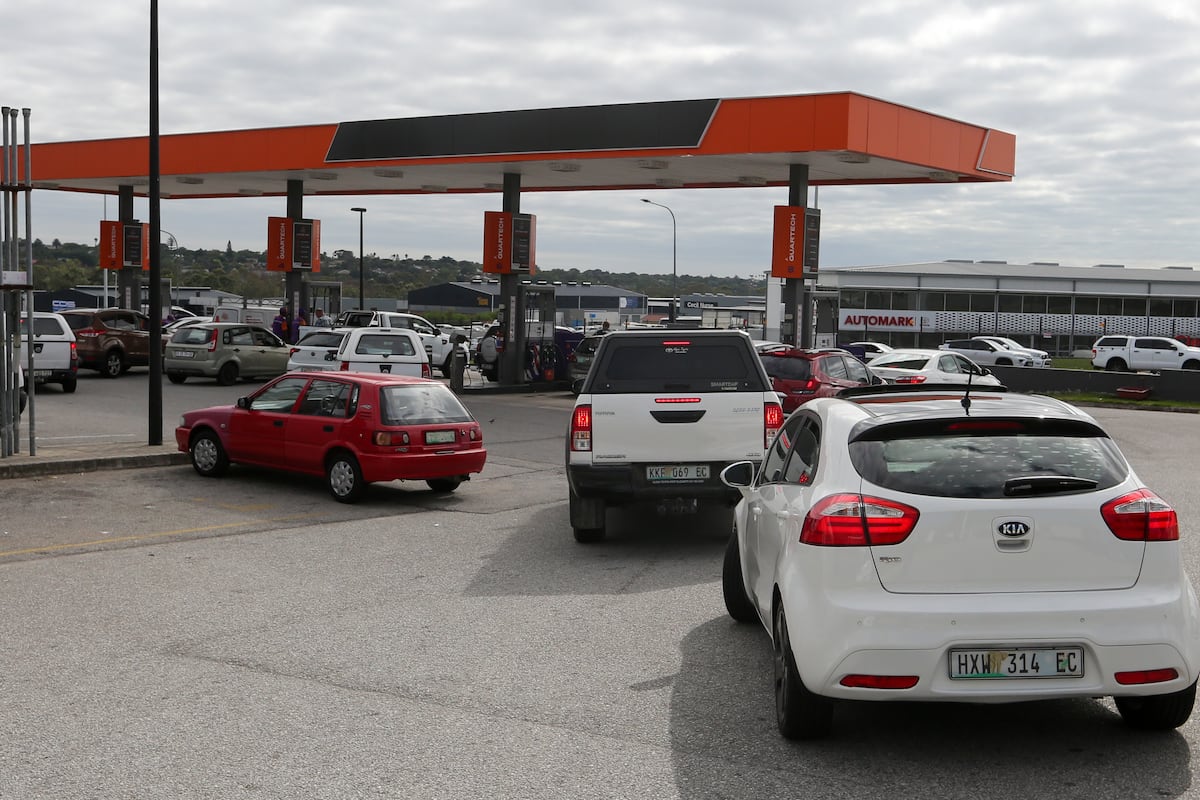
Petrol hit R30.28 per litre in October. Diesel climbed to R33.29. And more increases were already lined up for November. For millions of South Africans — and by extension, Kenyans watching a familiar story unfold across the continent — this is not an abstract economic statistic. It is the difference between running a matatu-equivalent minibus at a profit or a loss, between affording groceries or skipping meals.
Geopolitical conflict in the Middle East pushed Brent crude oil past $100 a barrel, triggering a near-50% surge in petrol prices and a staggering 72% spike in diesel prices since the crisis began. Every sector of the South African economy felt it. Businesses passed costs onto consumers. Inflation bit harder. And ordinary households absorbed the shock with no warning and no cushion.
The pressure on Finance Minister Enoch Godongwana became impossible to ignore. So on Wednesday, standing in the National Assembly to deliver his Medium-Term Budget Policy Statement, he responded.
What exactly did the government announce?
Godongwana confirmed that Treasury is allocating R10 billion for temporary fuel levy relief — a direct cut to what consumers pay at the pump. From November 4 to December 1, the fuel levy drops by R3 per litre for diesel and R1.50 per litre for petrol. That is real, immediate money back in people’s pockets.
The relief does not end there. From December 1 through January 5, the cuts continue at a reduced rate — R1.50 per litre for diesel and R1 per litre for petrol. It is a tapering approach, designed to ease the economy off the relief rather than cut it abruptly. Whether that is responsible fiscal management or a political calculation ahead of the holiday season is a question worth sitting with.
Godongwana framed this as proof that the government had “rebuilt fiscal buffers” and was now in a position to act. “Geopolitical conflict has pushed up global oil prices and led to a sharp rise in the cost of living for businesses and households,” he said. The subtext was clear: this relief is a sign of strength, not desperation.
Where is the R10 billion actually coming from?
Here is where the official narrative deserves scrutiny. Treasury Director-General Duncan Pieterse was clear before Godongwana even took the podium: this is not new money. The R10 billion comes from a revenue overrun in the 2025/26 fiscal year — essentially, the government collected more tax than it budgeted for.
That surplus was already allocated through the Second Special Appropriation Bill to the Central Energy Fund’s (CEF) Equalisation Fund, a mechanism designed to stabilise fuel price volatility. Now, the CEF will surrender that R10 billion back to the National Revenue Fund specifically for this levy relief. Pieterse confirmed that while it sits unspent — because the Bill has not yet been adopted by the National Assembly — it has already earned nearly R342 million in interest.
The government is emphatic that this will not destabilise the fiscal framework. Pieterse stressed that any future relief would only be considered if it remained “fiscally neutral.” Translation: do not expect this to become a permanent fixture unless the numbers keep cooperating.
Has South Africa done this before?
Yes — and on a larger scale. Earlier in the year, between April and June, the government granted an estimated R17.2 billion in fuel levy relief, which ultimately materialised as approximately R22 to R23 billion. That relief took the form of temporary cuts of up to R3 per litre for petrol and a final total of R3.93 per litre for diesel.
That intervention was also designed to be fiscally neutral, funded through a combination of higher-than-expected tax revenue and government underspending. It did not affect the fiscal framework parliament adopted following the 2026 budget. The current R10 billion relief follows the same playbook.
The pattern reveals something important: South Africa’s government has now twice leaned on tax windfalls to deliver politically popular fuel relief without touching its core budget targets. It works — until the windfalls stop coming.
What does this mean for the average person?
The immediate impact is straightforward. Fuel becomes cheaper at the pump for two months, which reduces transport costs, lowers the cost of moving goods, and takes direct pressure off household budgets during the most expensive time of the year. For businesses running on tight margins, the diesel relief is particularly significant.
The deeper question is what happens in February. Geopolitical tensions are not resolved. Oil markets remain volatile. And the South African government has now signalled, twice, that it will step in when prices become politically untenable — but only when the fiscal math allows it. That is a conditional safety net, not a structural solution.
For young, economically squeezed South Africans — and for anyone watching from Nairobi, Kampala or Lagos — the lesson is the same: governments respond to cost-of-living crises when the pressure is loud enough and the money is available. The fight is always in making sure both conditions are met simultaneously.