
Ghana has officially removed the name of Emmanuel Kwasi Kotoka from the country’s main airport, restoring its earlier title, Accra International Airport. The change, confirmed by the Ministry of Transport, reopens an old national debate about how Ghana remembers the 1966 coup that toppled founding president Kwame Nkrumah.
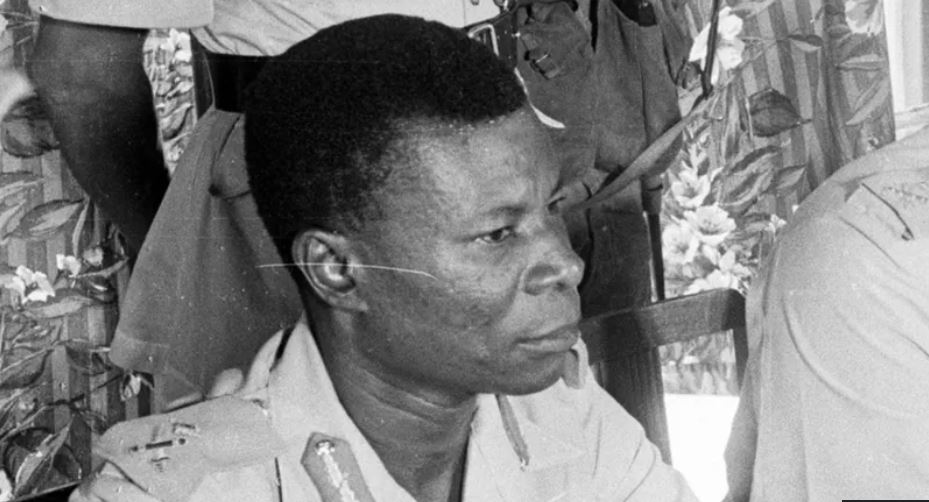
Kotoka was a leading figure among the officers who overthrew Nkrumah on 24 February 1966. He was later killed during a failed counter-coup attempt at the airport site in April 1967. The airport was renamed in his honour in 1969 by the military government that followed, which portrayed him as a “liberator” from what it viewed as authoritarian rule.
Accra International Airport is back on official documents
In a statement, the transport ministry said the government had “considered it appropriate” to restore the earlier name. It also urged the public and international partners to support what it called a smooth transition, adding that operations, safety standards and international travel arrangements would not be affected.
Transport Minister Joseph Bukari Nikpe has also been quoted in local media linking the move to a neutral national image and a name that reflects the capital city.
Why Kotoka’s name became a flashpoint
For years, civil society voices have argued that honouring a coup figure at the country’s principal gateway clashes with democratic values. Their view is that it normalises an unconstitutional change of government, despite Ghana’s return to multiparty democracy in 1992.
The debate has intensified in recent weeks, with renewed public pressure and political sparring over what national symbols should represent.
Critics question costs and priorities
Opponents of the change have raised concerns about cost and timing, arguing that economic pressures such as jobs and living conditions should come first. Others say the decision risks deepening political divisions rather than building consensus.
Kotoka’s family, among other critics, has argued that removing his name erases his service and legacy.
Afenyo-Markin calls it a blow to Volta Region recognition
Parliament’s Minority Leader, Alexander Afenyo-Markin, has been one of the most prominent voices against the renaming. He has described it as an attempt to erase a key national recognition linked to the Volta Region, where Kotoka was born, and called it a betrayal of that region’s place in national history.
Online, the issue has split opinion, with arguments ranging from legal process and national identity to how Ghana should teach its political past.
The long shadow of 1966 still shapes Ghana’s politics
Nkrumah, who led Ghana to independence in 1957 and became a leading voice of pan-Africanism, faced growing criticism before the coup, including claims of increasing repression. Historians have also long debated the extent of foreign interest in his removal, including questions around US awareness and involvement.
After 1966, Ghana experienced several coups before the restoration of multiparty democracy in 1992. Since then, the country has built a reputation for competitive elections and peaceful transfers of power, making the symbolism of national institutions especially sensitive.
For now, the government says the focus is a seamless switch to Accra International Airport, without disruption to travel. Yet the argument over what Ghana chooses to honour, and what it chooses to leave behind, is far from settled.