SPAR’s Earnings Crash 60% — Here’s Why Your Grocery Bill Isn’t Getting Cheaper Anytime Soon
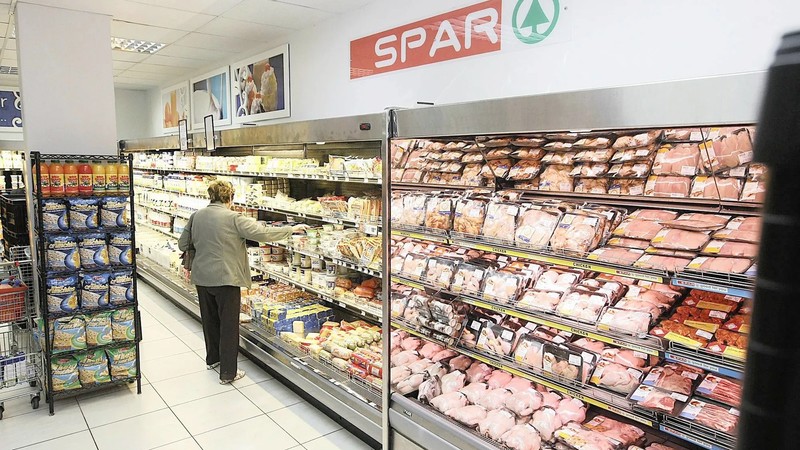
SPAR Group, one of Southern Africa’s biggest supermarket chains, just handed investors a brutal reality check. On Friday, the JSE-listed retailer warned that headline earnings would collapse by between 50% and 60% for the six months ending March 27, 2026 — and its share price immediately tanked 16% in response. This isn’t just a corporate accounting headache. It’s a signal about the health of the entire retail economy you shop in every day.
The Numbers Don’t Lie
SPAR’s share price hit R48.05 on Friday afternoon — down 15.08% from the morning’s opening price and a staggering 56.77% lower than it was a year ago. That’s not a dip. That’s a freefall.
Diluted headline earnings per share are expected to land between 173 and 216 cents for the six-month period, compared to 433 cents at the same point last year. Earnings per share from continuing operations could fall by as much as 65%, dropping to between 140 and 180 cents versus 399 cents a year earlier.
What Actually Went Wrong
The official explanation from SPAR’s directors blames a “combination of underlying trading conditions and operational anomalies.” Translation: a series of self-inflicted wounds that compounded an already difficult environment.
The single biggest culprit is the botched rollout of a new enterprise software system — SAP S/4HANA — at SPAR’s KwaZulu-Natal distribution centre. Introduced in early 2023 as a pilot to modernise supply chain operations, the implementation collapsed under the weight of data migration errors, workflow breakdowns, and integration failures with older systems.
The fallout was severe: disrupted service levels, skyrocketing logistics costs, and a distribution centre that dragged the entire group’s performance down for months. The directors admitted that insufficient logistics capacity planning in the first quarter was a primary driver of the sharp earnings decline.
Black Friday Made It Worse
Here’s the bitter irony: SPAR’s Black Friday 2025 campaign delivered strong sales growth. But it came at a devastating cost. The promotional subsidies and elevated marketing spend in November 2025 crushed gross profit margins — a classic case of buying revenue at the expense of profitability.
The gross profit margin in Southern Africa fell by between 20 and 40 basis points, only partially cushioned by better performance from SPAR’s Irish operations. Above-inflation cost growth and elevated debtor impairments in the SA Groceries and Liquor segment made a bad situation worse.
What This Means for You
SPAR’s crisis doesn’t exist in a vacuum. South African retailers are being squeezed from every direction — higher fuel prices, persistent inflation, and elevated interest rates are hammering consumer disposable incomes at the same time they’re compressing retailer margins.
When major grocers are under this kind of pressure, the costs don’t disappear. They get passed on — through higher shelf prices, reduced promotions, or degraded service. The independent retailers who stock SPAR shelves are directly affected when the group’s distribution network fails them.
Is There a Recovery Plan?
SPAR CEO Reeza Isaacs insists there is. The group is exiting its troubled UK operations entirely, finalising an asset sale to wholesaler AF Blakemore & Son in stages between June and September 2026. The move eliminates what the group calls a “long-running capital drag” from its balance sheet.
Internally, SPAR has appointed a dedicated Managing Director for the SA Groceries and Liquor segment and brought in a new Group Chief Marketing Officer to impose tighter controls on promotional spending — a direct response to the Black Friday margin disaster.
“We believe in the independent retailer model and have a path to sustainable recovery,” Isaacs said. “Rebuilding the SPAR brand will take time, but the team and initiatives we have put in place are starting to bear fruit.”
The KwaZulu-Natal distribution centre — ground zero for the crisis — has reportedly delivered three consecutive profitable months in February, March, and April 2026. That’s a start, but directors are clear: full stabilisation is still a work in progress.
Don’t Hold Your Breath
SPAR’s own directors acknowledge that “recovery will take time” and that the macroeconomic backdrop “remains demanding.” The group also flagged risks of further provisioning needs, intensifying competition, and ongoing macroeconomic uncertainty as potential headwinds going into the second half of 2026.
Revenue from continuing operations grew just 2.1% for the six-month period — a figure that barely keeps pace with inflation and does nothing to offset the earnings collapse. SPAR Health was the standout, growing revenue by 26.1%, while Build It managed a modest 1.3% increase.
The group’s full interim results drop on June 10, 2026. That’s when the complete picture of this crisis becomes public. Watch that date — it will tell us whether SPAR’s recovery story is real, or just another corporate promise that doesn’t survive contact with the numbers.