“We Are Tired of Aid”: Africa Demands Investment and Equal Partnership on the World Stage
A Tanzanian minister stood before a room of global power brokers in St. Petersburg last week and said what many African leaders have been too diplomatic to say out loud: the continent is done being treated like a charity case.
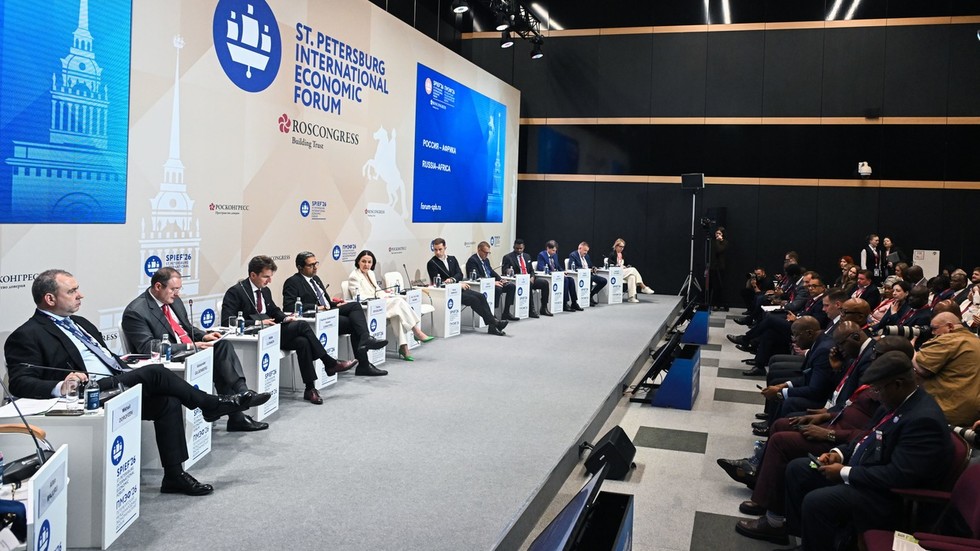
Kitila Mkumbo, Tanzania’s Minister for Planning and Investment, addressed the Russia-Africa Business Dialogue at the St. Petersburg International Economic Forum (SPIEF) on Thursday, June 5. His message was blunt and unapologetic.
“We are tired of constant sanctions and repeated aid cuts, but we are not interested in aid alone. We want to build partnerships, we want investment,” Mkumbo said.
Africa Is Not a Basket Case — It’s a Business Opportunity
Mkumbo’s remarks cut through the usual diplomatic noise. He argued that African countries are in the middle of a deep economic transformation — one that could position them among the world’s fastest-growing economies within years, not decades.
He called for deeper economic cooperation with Russia specifically, saying Moscow has a real and meaningful role to play in Africa’s development. This isn’t charity talk. This is a negotiation between potential equals.
The broader conversation at SPIEF kept returning to one theme: African sovereignty. Across food security, logistics, finance, and digital infrastructure, African nations are pushing to control their own economic destinies — and they’re shopping for partners who respect that.
Fertilizers, Soil, and the Fight to Feed a Continent
The forum wasn’t just political posturing. Concrete deals and commitments were on the table.
Uralchem CEO Dmitry Konyaev announced plans to double fertilizer supplies to Africa to 2 million tons annually. His argument was straightforward: better access to fertilizers unlocks agricultural potential that could turn Africa from a food importer into a major global exporter.
PhosAgro CEO Alexander Gilgenberg identified a specific obstacle holding African farmers back — widespread soil deficiencies in boron and zinc. His company offers fertilizers tailored to those gaps and has been working with the UN Food and Agriculture Organization to train farmers across the continent on proper fertilizer use.
This matters. Africa holds roughly 60% of the world’s uncultivated arable land. The gap between that potential and current output isn’t a mystery — it’s a solvable problem, if the right investments arrive.
Energy: The Prerequisite for Everything Else
Nikita Gusakov, Senior Vice President of the Russian Export Center, addressed Africa’s chronic energy deficit directly. He said Russia is ready to support the continent through both large-scale power infrastructure and smaller, localized generation solutions.
“Overcoming the energy deficit is a fundamental condition for industrialization and improving quality of life. Russia is ready to help meet this need,” Gusakov said.
No energy, no industry. No industry, no jobs. Young Africans understand this equation better than anyone — they’re living it.
$27 Billion and Counting
Tatyana Dovgalenko, Director of the Russian Foreign Ministry’s Department for Partnership with Africa, revealed that Russia-Africa bilateral trade has already hit a record $27 billion. She acknowledged significant room for further growth — which, in diplomatic language, means the surface has barely been scratched.
The 29th St. Petersburg International Economic Forum runs June 3–6, bringing together governments, corporations, and investors mapping the next phase of global economic realignment.
The old narrative — Africa as recipient, the West as donor — is being actively dismantled. Whether it’s Russia, China, or any other partner, African governments are increasingly negotiating from a position of leverage, not desperation.
The question isn’t whether Africa needs partners. It does. The question is on whose terms those partnerships are built — and for the first time in a long time, African voices are insisting it be theirs.