A Construction Site That Became an Economy
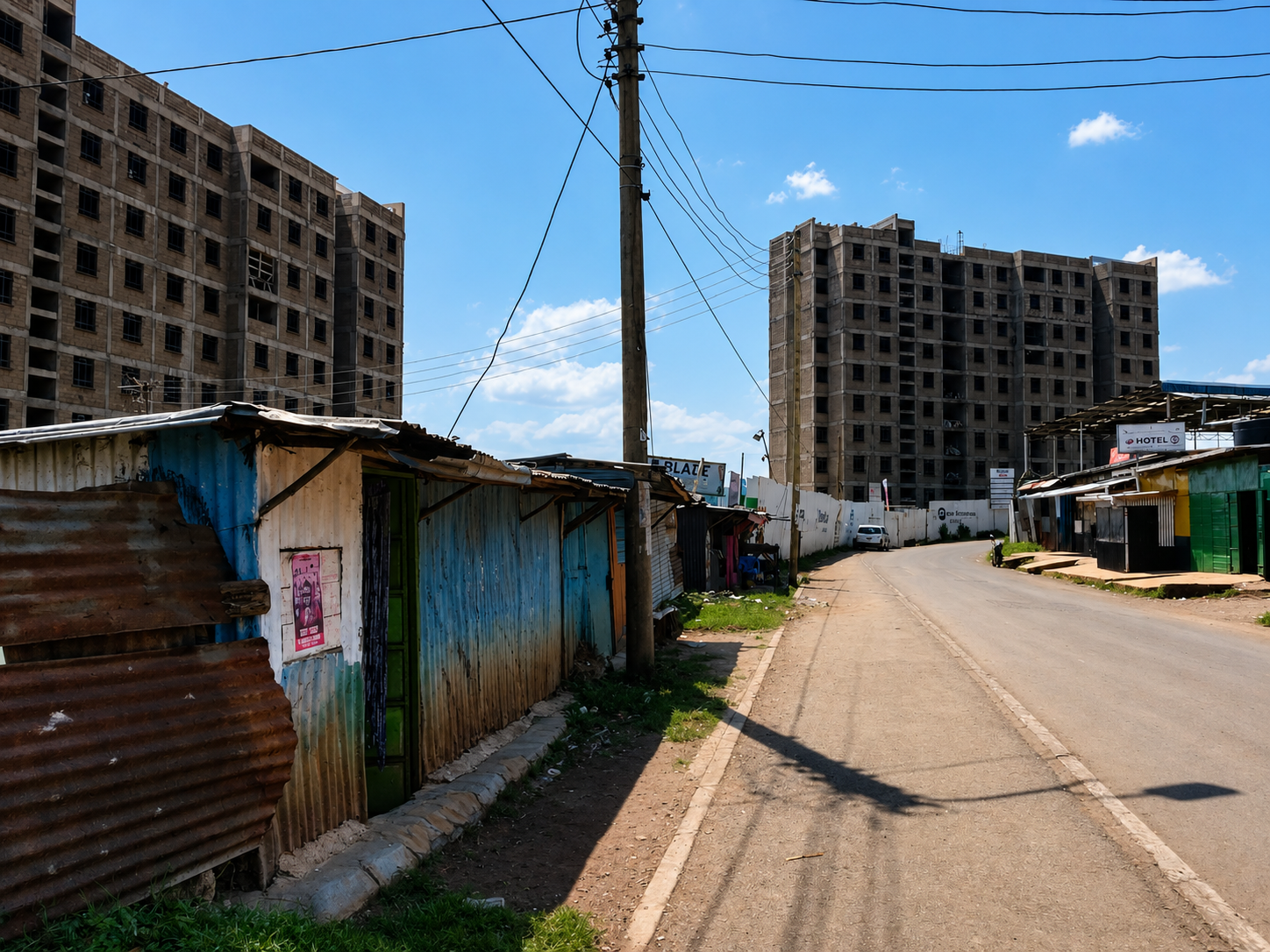
Something unexpected is happening on the outskirts of Kericho Town, and it deserves more attention than it is getting. The government’s Affordable Housing Project at Majengo-Talai is not just stacking 324 housing units worth Sh778.2 million near the Kiprugut Chumo Stadium — it is quietly seeding an entire micro-economy, one that young Kenyans built themselves, with their own hands, around an opportunity the state accidentally created.
The thesis is simple but important: large public infrastructure projects, when sited strategically, do not merely deliver their stated output. They generate gravitational pull — drawing workers, engineers, contractors and daily visitors into a single space, and that concentration of people becomes a market. Around Kericho’s AHP site, that market is now alive, growing, and sustaining real household incomes for people who were not waiting for anyone to hand them a job.
The Entrepreneurs Who Showed Up First
Franklin Omondi did not apply for a tender. He did not attend a government workshop on youth entrepreneurship. He looked at hundreds of construction workers arriving daily at the Majengo-Talai site, noticed that they carried ordinary mobile phones that inevitably cracked, drained and malfunctioned, and he set up a repair stall. A year later, he is still there — fixing screens, replacing batteries, sorting charging faults — and he describes himself, without irony, as happy. That is not a small thing in this economy.
Constance Nzinza read the same signal differently. She and a business partner opened “Affordable Cafe”, a name that is almost too on-the-nose, serving githeri, ugali with sukuma wiki, omena, fish, uji and tea to the workers who need a hot meal between shifts. The cafeteria did not exist before the project arrived. It exists now because the project created a predictable, recurring demand — and Nzinza was sharp enough to meet it. She is candid about the friction: some customers accumulate debt, pay in instalments, or vanish without settling their bills. She does not romanticise the hustle. But she stays, because the fundamentals are sound.
These are not isolated cases. The Eland area surrounding the site has seen barber shops, boutiques, mitumba stalls, furniture outlets, a chemist and a private clinic all emerge in the project’s wake. The mama mboga count has risen visibly. Jua Kali artisans have plugged into the supply chain, providing doors, windows, metalwork and masonry services. The project is not just employing people on its payroll — it is stimulating a secondary economy that the official employment figures will never fully capture.
Why This Matters Beyond Kericho
Young, politically aware Kenyans have every reason to be skeptical of government housing announcements. The Affordable Housing Programme has been contested — in court, in public debate, in the levy deducted from workers’ salaries before many of them ever saw a unit. That skepticism is legitimate and should not be abandoned. But the Kericho case surfaces a harder, more useful question: even when a policy is imperfect or contested, can its physical footprint create conditions that communities exploit for themselves?
The answer, at Majengo-Talai, appears to be yes. And that distinction matters enormously. It means the value of a public project is not reducible to its stated deliverable — the housing units — but extends to the economic ecosystem that coalesces around its construction phase. It means that where the government sites these projects, and how long the construction lasts, are decisions with consequences that planners rarely account for and that communities rarely get to negotiate.
When the 324 units are completed and occupied, a new and larger resident population will sustain the businesses that already exist and attract more. Constance Nzinza is already banking on it. The real question is whether policymakers are paying attention to what she and Franklin Omondi have demonstrated — that Kenyans do not need to be the beneficiaries of a housing unit to benefit from a housing project. They need proximity, a market, and the space to move.