Every time a building collapses in Kenya, the pattern is the same: rubble, bodies, a press conference, and then silence. Investigations stall. Prosecutions never materialize. The contractors who cut corners walk free. The developers who bribed their way through approvals open new sites. And somewhere, another shoddy structure quietly waits to kill someone. That cycle may finally be about to break.
On July 8th, the Office of the Director of Public Prosecutions (ODPP) and the National Construction Authority (NCA) announced a formal, structured partnership — not a vague memorandum of goodwill, but a concrete framework designed to investigate, escalate and prosecute construction-related crimes with real teeth. This is the kind of accountability infrastructure Kenya’s construction sector has desperately needed, and it’s long overdue.
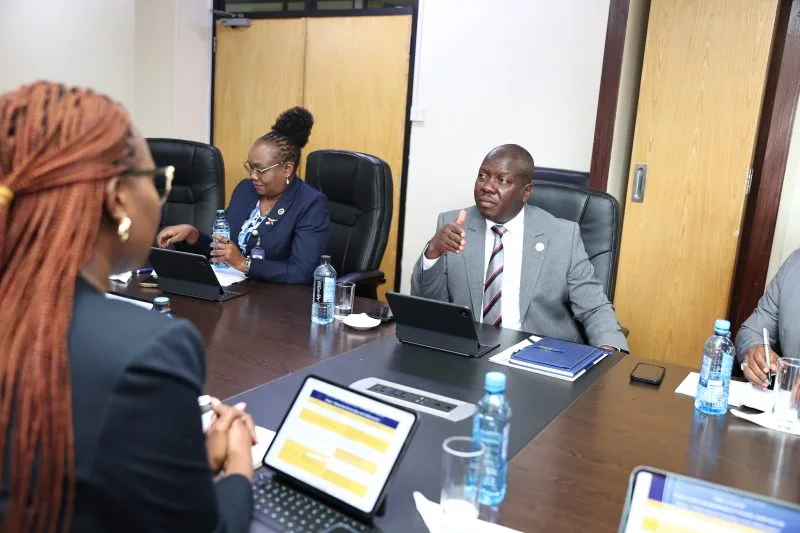
Director of Public Prosecutions Renson Ingonga and NCA Board Chairperson Mercy Okiro met at the ODPP headquarters in Nairobi to seal the deal. What came out of that room isn’t just a handshake — it’s a referral and escalation framework that will route construction cases with criminal liability directly into the prosecution pipeline, faster and with stronger evidentiary backing than has ever existed before.
Think about what that actually means. Right now, when an NCA enforcement officer flags an illegal development or a fraudulent approval, the case can get lost in bureaucratic limbo — wrong desk, insufficient evidence, no clear prosecutorial pathway. That is precisely how impunity survives. The new framework closes that gap by ensuring cases are flagged for prosecution-guided investigation from the very beginning, not after the trail has gone cold.
Ingonga was unambiguous about the stakes. “The safety of Kenyans must remain paramount,” he said. “As the country continues to experience incidents of collapsed buildings and unsafe developments, it is imperative that regulatory breaches attracting criminal liability are investigated thoroughly and prosecuted effectively.” That’s not the language of a bureaucrat hedging his bets. That’s a DPP who understands that people are dying — and that his office has a direct role in stopping it.
The partnership targets a wide net of offences: illegal construction, fraudulent approvals, abuse of office, environmental violations, and cases where professional negligence results in death or injury. These aren’t abstract regulatory infractions. They are crimes. And for too long, the individuals behind them have enjoyed the protection of a system too fragmented to hold them accountable.
One of the most significant commitments in this partnership is joint capacity-building — specialised training for prosecutors, investigators and NCA enforcement officers. This matters more than it might sound. Construction cases are technically dense. A prosecutor who doesn’t understand structural engineering standards or building code requirements can’t effectively argue a negligence case in court. By embedding that technical knowledge into the prosecution process, the ODPP and NCA are building a team that can actually win. “Through joint training and a structured referral framework, we will improve the quality of investigations and ensure that criminal conduct within the construction sector is addressed decisively,” Ingonga said.
Okiro, for her part, was equally direct about what this means for enforcement. “Individuals whose actions endanger lives through illegal or unsafe construction practices will be held accountable.” She also flagged that training NCA officers to meet the ODPP’s evidentiary requirements and Decision to Charge Guidelines will dramatically improve the quality of investigation files — which is where so many cases have historically collapsed before they even reached a courtroom.
The coordination doesn’t stop at the two agencies. The partnership also pulls in investigative bodies, county governments and other regulators. That’s critical, because construction oversight in Kenya is fragmented across multiple layers of government, and illegal developments have long exploited the gaps between them. Closing those gaps requires exactly the kind of multi-agency coordination this framework promises.
Under the National Construction Authority Act, every public and private construction project in Kenya must be registered before work begins. That law exists. It has existed. What has been missing is the will and the mechanism to enforce it with criminal consequences when it’s violated. That is what this partnership is designed to provide.
Young Kenyans who live in rental apartments in Nairobi’s dense neighbourhoods, who work in commercial buildings constructed on the cheap, who send their children to schools that may or may not have passed a structural inspection — this is your issue. The collapse of a building is never just an accident. It is the end product of a chain of decisions made by people who calculated, correctly, that they would never face consequences. The ODPP and NCA are now saying that calculation is wrong. Hold them to it.