The Hall Where Equality Dies at the Door
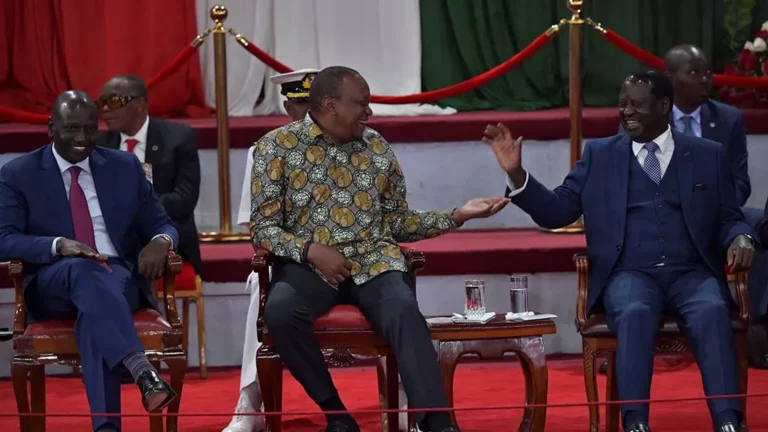
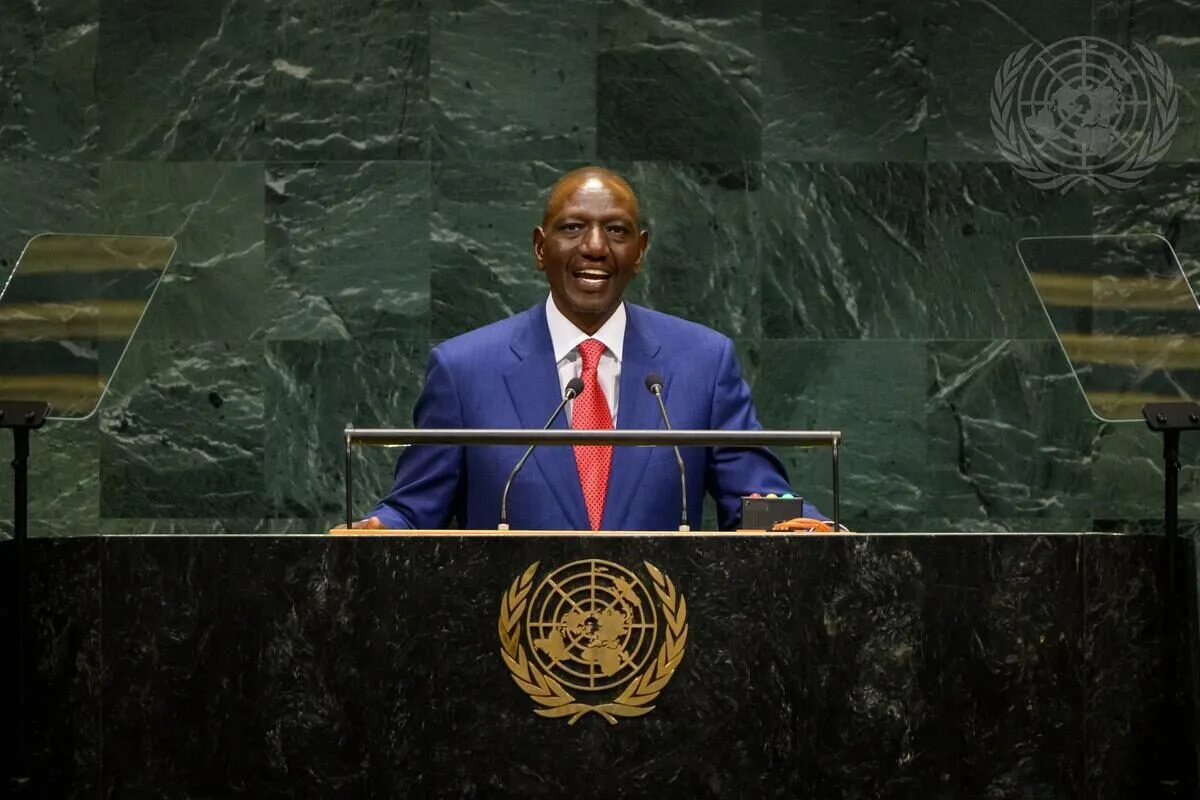
Picture the scene. New York. The United Nations General Assembly. One hundred and ninety-three nations crammed into one hall, each waving the flag of sovereign equality. Then President William Ruto steps to the podium, and he says what every African leader knows but few have said this plainly: “The equality proclaimed in this Assembly ends at the doors of the Security Council.”
That single sentence should have shaken the room. It named the contradiction that the global order has lived with — and profited from — since 1945. Five nations, China, France, Russia, the United Kingdom and the United States, hold permanent seats and veto power on the body that decides questions of war and peace. The other 188 countries, including all 54 African states that make up more than a quarter of the General Assembly, get to watch.
Africa is frequently the subject of Security Council decisions. It is permanently discussed. It is permanently excluded. Ruto said exactly that, out loud, in front of the world.
This Is Not Abstract Diplomacy — This Is About You
Before you dismiss this as high-table politics that has nothing to do with your life, stop. The same structural inequality that keeps Africa off the Security Council is the same logic that makes Kenya pay higher interest rates on loans than European countries with worse fiscal records. It is the same logic that means 46 developing countries now spend more on debt interest than on health or education combined. That is not a statistic. That is a hospital that does not get built. That is a classroom that stays overcrowded. That is a government choosing between paying a foreign creditor and paying a nurse.
Global public debt hit $102 trillion in 2024. Ruto put it starkly: “The hospital competes with the creditor, the classroom competes with debt service, and too often the creditor is paid first.” If you have ever waited in a public hospital corridor in Nairobi, or watched a school in your county crumble for lack of funds, you already know what that sentence means in practice.
This is the real argument Ruto made in New York, and it is worth taking seriously even if you are skeptical of what Kenyan presidents say on the international stage. The question of who sits at the table where global rules are written is directly connected to whether those rules work for you or against you.
Seventeen Years of Talking About Talking
Here is the part that should make your blood pressure rise. The United Nations General Assembly moved Security Council reform into formal intergovernmental negotiations in 2009. Seventeen years later, the negotiations are still ongoing. Seventeen years. No permanent African seat. No veto power for a continent of 1.4 billion people. Just more meetings, more communiqués, more polite expressions of commitment to a process that has produced nothing.
Ruto called it out directly. He noted that the Security Council itself was expanded once before, from 11 to 15 members, back in 1963. “What was possible then is possible again,” he said. It is a simple point, but it demolishes the argument that reform is structurally impossible. The resistance is not technical. It is political. The five permanent members have little incentive to dilute their own power, and they know it.
The UN’s own 2024 Pact for the Future acknowledged Africa’s historical underrepresentation as a priority. It committed member states to intensifying reform talks. But commitments without deadlines are just wishes dressed in formal language, and Africa has been collecting those wishes for decades.
Capital Must Price Risk, Not Prejudice
Ruto’s argument in New York was not only about seats at a table. He connected political exclusion to financial exclusion with a clarity that most African leaders avoid, perhaps because it implicates domestic failures alongside global ones. Developing countries, he argued, face higher borrowing costs despite having some of the greatest financing needs — for infrastructure, energy, education, industrialisation. The logic of global capital systematically disadvantages the countries that most need investment.
“Capital must price risk; it must not price prejudice,” he said. That line deserves to be written on the walls of the IMF and the World Bank.
He called for multilateral development banks to lend more and lend longer, for greater use of guarantees and risk-sharing tools, and for more long-term local-currency financing so that African governments are not perpetually exposed to exchange rate shocks on top of everything else. These are not radical demands. They are basic reforms that have been discussed for years and implemented at a pace that suggests no one with real power is in a hurry.
But Ruto also did something unusual. He turned the mirror inward. He acknowledged that international reform cannot substitute for domestic accountability. Governments must manage debt prudently. They must strengthen institutions, prepare credible projects, honour contracts and tackle corruption. “Reform abroad cannot substitute for accountability at home,” he said. In a country where billions have been lost to procurement scandals and where the same administration making this speech at the UN has faced serious questions about domestic governance, that line carries a weight Ruto may not have fully intended.
Africa as Maker, Not Just Supplier
The third strand of Ruto’s address was the one that offered something beyond critique. He argued that Africa must stop being the beginning of other people’s value chains and become the site of its own industrial transformation. The continent holds the minerals, the agricultural land, the renewable energy potential and the demographic youth that the rest of the world needs. The question is whether Africa extracts and exports raw, or whether it processes, manufactures and sells finished goods.
He pointed to the planned East Africa refinery in Lamu as a concrete example — a project expected to attract around $16 billion in investment with a processing capacity of 700,000 barrels of oil per day. He cited the African Continental Free Trade Area, with its market of more than 1.5 billion people, as the platform on which a more industrialised Africa could be built. And he estimated that Africa already holds more than $4 trillion in domestic capital across pension funds, insurance assets, sovereign wealth funds and banks — capital that could be mobilised for the continent’s own development rather than recycled through foreign financial systems.
The vision is compelling. A more industrialised Africa expands global demand. A more food-secure Africa strengthens global stability. A better-connected Africa diversifies global supply chains. These are not just African interests — they are global ones. That reframing matters because it shifts the conversation from Africa asking for charity to Africa offering partnership on its own terms.
The Credibility Problem Nobody Wants to Name
Ruto also addressed something that most leaders at the UN dance around: the selective application of international law. He did not name specific conflicts, but the implication was clear to anyone paying attention to Gaza, to Ukraine, to the Sahel, to Sudan. “International law cannot be invoked loudly in one crisis, cautiously in another, and disregarded when convenient,” he said.
The world recorded 65 state-based armed conflicts in the previous year. Thirteen reached the scale of war. Too many of these conflicts are not being resolved — they are being frozen, deferred or decided by force. And the populations bearing the cost are overwhelmingly in the Global South, in Africa, in the Middle East, in Asia. The Security Council, the body theoretically responsible for global peace and security, is paralysed by the veto power of the same five nations whose geopolitical rivalries fuel many of these conflicts.
Ruto’s point about consistency is not just a legal argument. It is a political one. When the rules-based international order is seen to apply selectively — robustly when powerful nations’ interests align, weakly or not at all when they do not — it loses legitimacy. And when it loses legitimacy, every country starts calculating whether to follow the rules or simply pursue its interests. That is a world that is worse for everyone, but especially for smaller, less powerful nations like Kenya.
What Comes Next
Speeches at the UN General Assembly are easy to dismiss. Leaders say bold things in New York and then return home to the grind of domestic politics, coalition management and the quiet compromises that keep them in power. Ruto has made this argument before. Africa has made this argument before. The Security Council remains unreformed. The financial architecture remains tilted. The value chains remain extractive.
But something is shifting, slowly and unevenly. The 2024 Pact for the Future is on paper. The language of reform is more explicit than it has been. A generation of young Africans — the same generation that has been in the streets from Nairobi to Dakar to Lagos demanding accountability from their own governments — is also watching what happens at the global level. They are smart enough to know that the problems they face at home are connected to structures that extend far beyond their borders.
Ruto said Kenya speaks “not from despair in this institution, but from conviction in its possibilities.” That is a careful, diplomatic formulation. But behind it is a harder truth that every young Kenyan already carries: the world as it is currently organised was not designed with us in mind. The question is whether we wait for it to change, or whether we build enough collective power to force the change ourselves.
Seventeen years of negotiations have produced nothing. The clock is running.