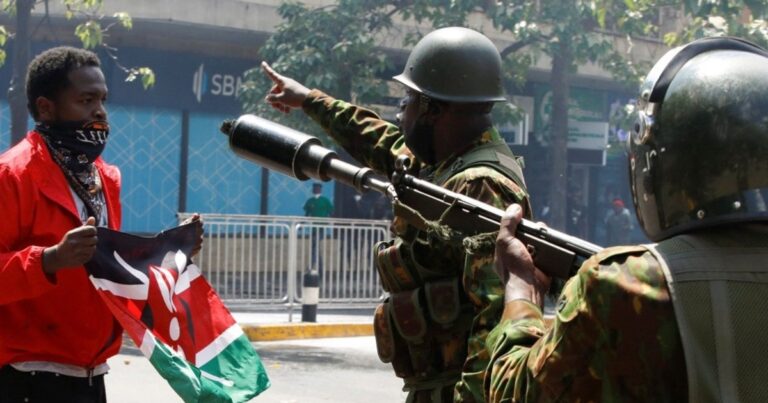
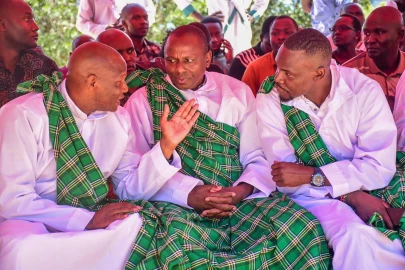
It started, as these things often do, with chaos at a rally. In Embu, not long ago, young men clashed at a political gathering — not because they had a stake in the outcome, but because someone older, richer, and more powerful had pointed them at each other like loaded guns. That image, of Kenyan youth being weaponised for political survival, is what brought Kenya Kwanza leaders to Turbo, Uasin Gishu County, with a message that was equal parts warning and confession.
The 2027 General Election is still two years away, but the mobilisation machinery is already grinding. Kenya Kwanza knows it. The opposition knows it. And if you’re a young Kenyan between the ages of eighteen and thirty-five, you are the most valuable — and most expendable — piece on that chessboard. That is exactly what these leaders were, whether they admitted it or not, gathering to address.
President Ruto’s close aide Farouk Kibet took the microphone first and went straight for the jugular of tribal politics. He urged supporters to reject ethnicity as a political currency, to exercise restraint at rallies, and to refuse provocation from rival camps — specifically calling out the Linda Mwananchi movement, which he dismissed as the “Linda Tumbo” group, a sharp Swahili dig implying they protect stomachs, not citizens. His challenge to the opposition was blunt: “Bring us your candidate and we will defeat them early in the morning.” No hedging, no diplomatic softening.
Farouk also defended the government’s record, pointing to the fertiliser subsidy programme as a concrete example of the administration’s commitment to farmers — a constituency that matters enormously in a county like Uasin Gishu, where agriculture is not a talking point but a livelihood. He then pivoted to local infrastructure concerns, urging residents living along riverbanks and near water springs to relocate, and calling on leaders to fund safe bridges so children stop risking their lives crossing waterways to reach school.
National Assembly Majority Leader Kimani Ichung’wah followed with a demand that landed harder than most political speeches do. He called on the Inspector General of Police to act — not just issue statements, but actually move against individuals who are recruiting and financing youth to disrupt political rallies. He named Embu as a recent flashpoint. This was not a vague call for peace; it was a direct instruction to law enforcement, delivered publicly, on the record.
South Mugirango MP Silvanus Osoro was equally direct, accusing sections of the opposition of substituting policy with what he called “goonism” — the outsourcing of political argument to fists and chaos. He pointed to road construction and government projects as evidence that Kenya Kwanza was competing on ideas, not intimidation, though skeptics in the crowd would rightly note that a ruling party always has the advantage of pointing to its own spending as proof of virtue.
Lurambi MP Bishop Titus Khamala rounded out the voices, praising Ruto’s development record and citing the Kakamega Stadium and hospital infrastructure in Western Kenya as proof that this administration delivers. His framing was deliberate — Western Kenya has long been a swing region, and every brick laid there is also a vote being courted.
What emerged from Turbo was not a peace rally. It was a political rally dressed in the language of peace — which does not make the message wrong, but it does make it complicated. The warnings against tribalism and violence were real and necessary. The political competition they were embedded in was equally real. As 2027 draws closer, Kenya’s young people will have to decide whether they are participants in this democracy or pawns within it. The leaders in Turbo were telling them to choose wisely. Whether those same leaders will make that choice easy is another question entirely.