Africa’s Free Trade Dream Is Being Sabotaged From Within — Here’s What Officials Are Doing About It
Cartels. Monopolies. Market abuse. These aren’t just buzzwords — they are the silent killers of Africa’s most ambitious economic project. And right now, in Lomé, Togo, trade officials from across the continent are finally having the conversation that should have happened years ago.
The Problem Nobody Wants to Admit
The African Continental Free Trade Area (AfCFTA) promised to create the world’s largest free trade zone — 54 countries, 1.3 billion people, and a combined GDP of over $3 trillion. But a free trade area without fair competition rules is just a playground for the powerful.
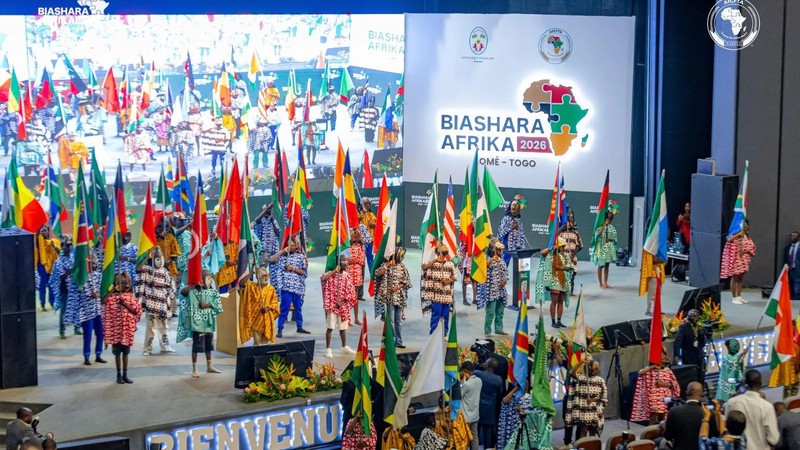
At the third edition of Biashara Afrika, an annual pan-African business forum organised by the AfCFTA Secretariat, officials are confronting an uncomfortable truth: without a unified competition protocol, big players will rig the game — and ordinary African traders and consumers will pay the price.
The Man From ECOWAS Said the Quiet Part Out Loud
Simeon Koffi, Director-General of the ECOWAS Regional Competition Authority, didn’t mince words. He identified three brutal realities strangling competition enforcement across the continent:
“Purely national solutions have shown their limits,” Koffi said. “What we need is stronger collaboration between regional competition authorities and the proposed AfCFTA competition authority to ensure coordinated market regulation across the continent.”
Translation: Kenya’s competition watchdog cannot fight a continental cartel alone. Neither can Nigeria’s. Neither can anyone’s.
This Is Personal — For Kenya and Every African Market
Think about the industries that shape your daily life — telecommunications, banking, fuel, food imports. Now ask yourself: how many of those markets are truly competitive? How many prices are quietly fixed by dominant players who face zero cross-border accountability?
Without a continental enforcement mechanism, AfCFTA risks becoming a tool that entrenches existing inequalities rather than dismantling them. Bigger economies with stronger firms will dominate smaller ones. Local businesses will be crushed not by better products, but by anti-competitive muscle.
Togo and COMESA Are Pushing Back
Togolese Director-General for Trade Claude Talime Abe called for competition policy to move beyond declarations and into practical enforcement. “Competition law must go beyond policy declarations and focus on practical implementation mechanisms capable of supporting sustainable regional trade,” he stated.
Officials from the Common Market for Eastern and Southern Africa (COMESA) backed this position, pointing to their own regional enforcement experience as proof that coordinated mechanisms work — and are necessary for deeper integration.
What Happens Next Will Define AfCFTA’s Legacy
Delegates at Biashara Afrika are expected to adopt concrete recommendations targeting four critical areas:
The forum continues in Lomé with discussions on trade facilitation, industrialisation, infrastructure, and private sector development — the building blocks of an Africa that actually works for Africans.
The question is no longer whether Africa needs unified competition rules. The question is whether African governments have the political will to enforce them against the interests that profit most from the current chaos.