African football has been shaken by a ruling few thought possible. The Confederation of African Football has overturned the result of the Africa Cup of Nations final and awarded the title to Morocco.
Senegal had won the final 1-0 after extra time. Now, CAF’s Appeal Board has declared the match forfeited by Senegal and recorded it as a 3-0 victory for Morocco.
The decision comes nearly two months after the final in Rabat and has triggered outrage in Senegal, celebration in Morocco, and fresh questions about how strictly rules should be enforced in the biggest matches.
Why the AFCON final was overturned
CAF’s Appeal Board said Senegal’s conduct during the final amounted to a refusal to play. Under tournament rules, that triggers a forfeiture.
The incident happened late in normal time on 18 January. With the score 0-0 deep into stoppage time, the referee awarded Morocco a penalty after a VAR review.
Senegal’s bench reacted angrily. Players left the pitch in protest and stayed off for more than 10 minutes before returning. Reports put the stoppage at roughly a quarter of an hour.
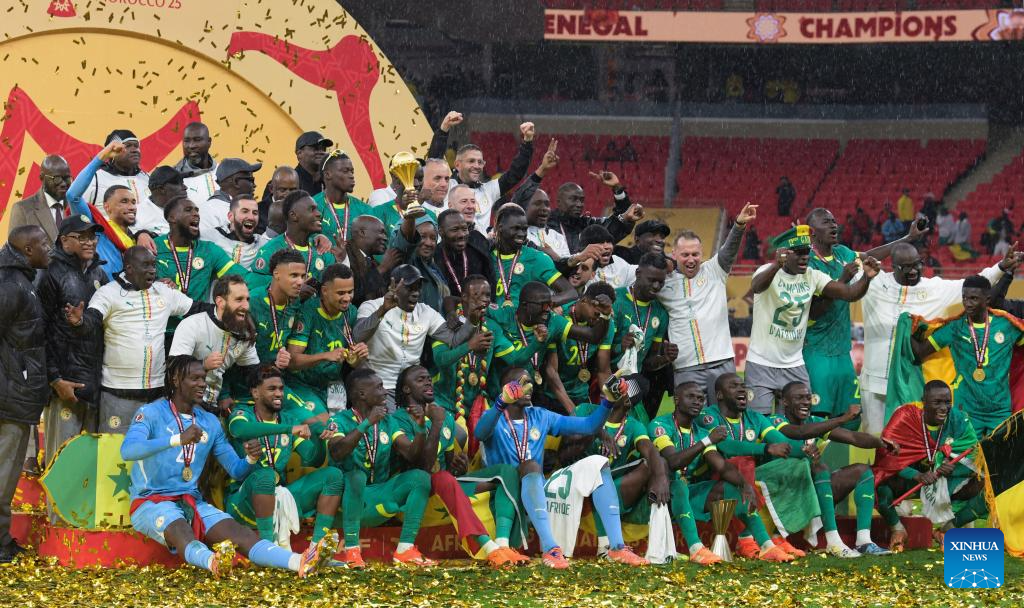
Play eventually resumed. The penalty was missed, and the match went to extra time. Senegal then scored through Pape Gueye and celebrated what looked like a historic triumph.
CAF has now erased that outcome.
The rules CAF says Senegal breached
At the heart of the ruling are CAF’s regulations on forfeiture.
In simple terms, a forfeiture is an administrative loss. It is applied when a team does not play, refuses to continue, or abandons the field without permission.
CAF cited Articles 82 and 84 of the AFCON regulations.
Article 82 covers scenarios such as refusing to play or leaving the field before full time without the referee’s authorisation. Article 84 sets out the sanction, including a 3-0 defeat and elimination, with the possibility of further disciplinary action.
CAF said Senegal’s walk-off fell within that framework. The Appeal Board upheld Morocco’s protest and ordered that the final be recorded as a 3-0 win for the hosts.
What happened in Rabat on 18 January
The final was already tense before the late flashpoint.
Senegal believed they had been denied earlier in the match. Then came the stoppage-time penalty decision, which inflamed the situation.
The referee, Jean-Jacques Ndala, awarded the spot-kick after consulting VAR over a challenge involving Senegal defender El Hadji Malick Diouf and Morocco’s Brahim Diaz.
Senegal players left the field. The match was halted for an extended period as officials tried to restore order. Reports said Senegal eventually returned after persuasion efforts, including from senior players.
When the game restarted, Morocco failed to score from the penalty. Senegal later won in extra time, sparking celebrations that have now been replaced by anger and disbelief.
A decision that rewrites the record books
Overturning a continental final is exceptionally rare in football. Results are almost never changed after the final whistle, even when refereeing decisions are disputed.
This case is different because it is not framed as an “error” by officials. CAF’s decision centres on behaviour that its rules treat as a red line: leaving the pitch and delaying the match without authorisation.
That distinction is why the ruling is being presented by CAF as a disciplinary matter rather than a replaying of the match.
Still, the optics are explosive. Senegal won the football match on the night. Morocco now holds the title on paper.
Senegal’s federation vows to fight at CAS
Senegal’s Football Federation has rejected the ruling in the strongest terms and says it will appeal to the Court of Arbitration for Sport in Lausanne.
CAS is an independent body that hears global sports disputes. It can assess whether CAF followed due process and whether its regulations were correctly interpreted and applied.
Senegal argues the verdict is unfair and damaging to the image of African football. A key element of Senegal’s case is expected to focus on what happened after the walk-off, including the fact the referee allowed the match to resume and be completed.
CAF, for its part, has insisted the regulations required the sanctions once the conduct was established.
Morocco handed a title in extraordinary circumstances
For Morocco, the ruling delivers a continental title in a way no team wants to win it, yet one that still counts.
The final was played at home, in Rabat, with huge expectations on the host nation. Losing in extra time was a blow. Having the title awarded later is a dramatic reversal.
The decision also adds a political and emotional layer. Many fans will see it as the ultimate statement that discipline rules apply even when the stakes are highest.
However, it may also leave lingering debate about consistency, especially given that the match was completed and a winner was decided on the field.
FIFA’s warning on discipline and the game’s integrity
The fallout has reached beyond CAF.
FIFA President Gianni Infantino, who attended the final, criticised the pitch-leaving incident and warned about the damage such protests can cause.
His intervention reflects a wider view in football governance: disputes over refereeing decisions must be handled through established channels, not by stoppages that threaten the completion of matches.
That message is likely to shape how future incidents are handled, particularly as VAR decisions continue to provoke volatile reactions in stadiums.
VAR, or video assistant referee, is a system that allows referees to review key incidents using video replays. It is designed to reduce major errors, but it can also heighten pressure in moments that decide trophies.
What this could change for African football
CAF’s ruling is already being viewed as a potential precedent.
If CAS upholds it, teams across the continent may think twice before any protest that involves leaving the pitch, even briefly. If CAS overturns it, CAF could face questions about consistency and governance.
The case also revives memories of earlier CAF disputes that ended up in Lausanne, including high-profile club cases that tested how far sporting bodies can go when matches descend into chaos.
For now, the record has been rewritten. Senegal’s 1-0 extra-time win is no longer official. Morocco is listed as champion by a 3-0 forfeit. Senegal is preparing its next move at CAS, and African football is left to absorb a decision that has stunned the continent and reignited an old argument about rules, authority, and the limits of protest on the pitch.