A Farm Wiped Out Overnight
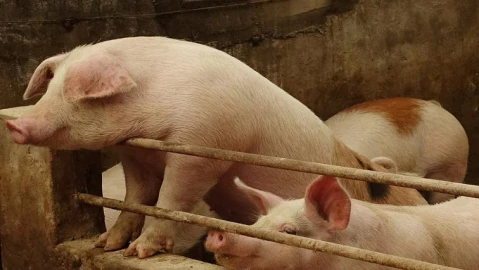
Peter Gitonga Kimani had 156 pigs. He had a plan. He was holding his stock until mid-term, waiting for the market price to peak, calculating the kind of return that takes years of grinding work to set up. Then, on the evening of June 24th, 2026, African Swine Fever arrived on his farm in Kiambu — and by the morning of June 25th, 150 of his pigs were dead. By nightfall, the remaining six were gone too.
Seventy-two hours. That’s all it took to erase millions of shillings and years of investment.
“My total loss is like Ksh. 3 million,” Gitonga says, his voice carrying the particular exhaustion of someone who has done the math too many times. “This is what my family depends on entirely.”
He is not asking for sympathy. He is asking the government to show up.
What African Swine Fever Actually Does
African Swine Fever is not a disease you can negotiate with. It is a highly contagious viral hemorrhagic disease with no commercially available vaccine and no known cure. Once it enters a farm, the outcome is almost always the same: mass death, rapid and merciless.
The virus announces itself through high fever, skin that reddens or darkens, and a sudden behavioral collapse — pigs that were active become lethargic, shivering, unwilling to move. Then comes bleeding through the nose, miscarriages in breeding sows, and finally, mortality rates that can hit 100 percent before a farmer has even had time to call a vet. Gitonga’s account — 109 pigs dead in a single evening — is not an anomaly. It is textbook African Swine Fever doing exactly what it does.
Each pig on the Kenyan market is currently valued between Ksh. 15,000 and Ksh. 20,000. Do that arithmetic across 156 animals and you understand why Gitonga describes himself as being “back to square one.”
This Is Bigger Than One Farm
Gitonga’s story is devastating on its own. But it is one thread in a much larger crisis unraveling across Kiambu County and beyond.
Since May 2026, African Swine Fever has killed approximately 1,500 pigs across more than 20 farms in Kiambu alone. That is not a localized incident. That is a pattern — and patterns demand a systemic response, not press releases.
The disease has also been confirmed in six other counties: Tharaka-Nithi, Embu, Kakamega, Busia, Homa Bay, and Migori. The Department of Veterinary Services says it has heightened surveillance and response measures across these regions, and affected farmers have been told to enforce strict biosecurity protocols to prevent further spread.
Biosecurity advice is not compensation. It does not rebuild a herd. It does not feed a family.
The Real Stakes for Young Agripreneurs
Here is what gets lost in the official language of “heightened surveillance” and “response measures”: pig farming in Kenya is not a hobby. For thousands of households — and increasingly for young Kenyans who turned to agribusiness as a viable alternative to a brutal formal job market — it is the entire economic foundation.
The pig farming value chain supports feed suppliers, transporters, butchers, and processors. When a farm collapses, the damage radiates outward. And when twenty farms collapse simultaneously, entire local economies feel it.
Gitonga’s plea to the government to cushion affected farmers is not a demand for a handout. It is a demand for the kind of institutional backstop that exists in countries that take agriculture seriously — emergency compensation funds, subsidized restocking programs, and veterinary rapid-response teams that arrive before the death toll hits four figures.
What Needs to Happen Now
The government has confirmed the outbreak. It has issued biosecurity guidelines. That is the floor, not the ceiling.
Kenya’s agricultural sector cannot keep absorbing shocks like this without a structured safety net. Farmers like Gitonga are not asking to be rescued from bad decisions — they are asking to be protected from a viral catastrophe they had no power to prevent, in an industry the government itself promotes as a pillar of food security and rural economic growth.
The pigs are already dead. The question now is whether the livelihoods built around them have to die too — or whether the state will finally treat this crisis with the urgency it deserves.