
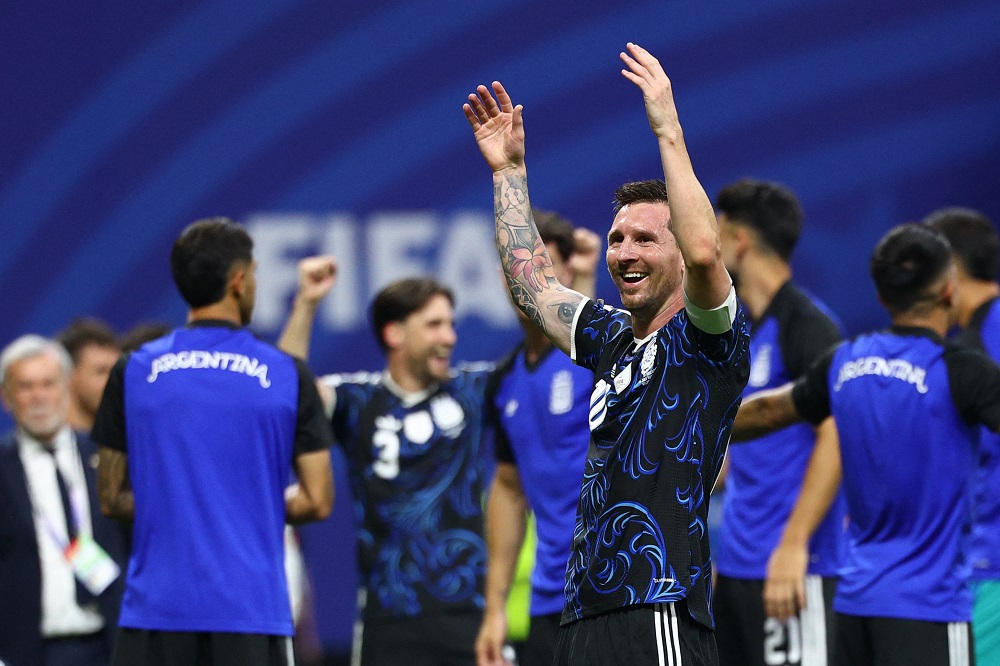
Let’s be honest — nobody who watched this match will sleep easily tonight. Argentina, the reigning world champions, did what Argentina always seem to do: they waited, they absorbed, and then, when England dared to believe, they struck with the ruthless precision of a side that knows exactly what it means to win. A 2-1 semi-final victory, sealed in the dying seconds, sends Lionel Messi’s men into a World Cup final against Spain, and sends England home with nothing but the ghost of 1966 to keep them warm.
For the young Kenyan fan watching this at 2 a.m., phone in hand, this match was not just football — it was a masterclass in what composed, collective belief can do against a side playing on nerves and nostalgia. England had their moment. Anthony Gordon broke the deadlock in the 55th minute through a combination of sharp movement and good fortune, when Nicolas Tagliafico’s attempted clearance fell to Declan Rice, who threaded a through ball to Morgan Rogers, and Gordon arrived at the back post to guide the cross past Emiliano Martinez with his instep. The stadium erupted. England’s players lost their minds with joy. And that, right there, was the mistake — because Argentina had not finished talking.
The Messi Factor Nobody Can Explain Away
What followed England’s goal was not a tactical adjustment or a fortunate bounce of the ball — it was the systematic dismantling of a side that, inexplicably, retreated into their own half and essentially invited pressure from the greatest footballer this generation has ever produced. With England parked deep and Argentina surging forward in relentless waves, an equaliser stopped feeling like a possibility and started feeling like a prophecy. Enzo Fernandez fulfilled it in the 85th minute, receiving a precise pass from Messi on the edge of the box and driving a fierce, low strike from 20 metres past Jordan Pickford into the corner. The momentum had shifted, and there was no coming back from it.
Then came the killer blow, the one that will replay on screens across the world for decades. Lautaro Martinez, introduced as a substitute in the 81st minute, headed home the winner in the 92nd minute after Alexis Mac Allister’s shot cannoned off the post and Messi — 39 years old, on what is widely understood to be his final World Cup — recovered the ball, drove down the right flank with the energy of a man half his age, and delivered a cross so perfectly weighted that Martinez had only to direct it into the net. It was not luck. It was Messi. It is always Messi.
What This Means Beyond the Scoreline
This result carries weight that stretches far beyond Argentina and England, and if you are young, politically aware, and tired of being told that legacy and power belong only to those who have always held them, then this match gave you something real to hold onto. England, with all their history, their 1966 mythology, and their Premier League billions, could not hold what they had. Argentina, a nation that has known genuine economic collapse and social fracture in recent years, produced a comeback built on collective grit and the individual genius of a man playing his farewell on the world’s biggest stage. There is a lesson buried in that, and it is not a subtle one.
Argentina now face Spain in the final, a match between two sides who play football with a philosophy — patient, technical, deeply structured — that demands respect regardless of your allegiances. England go home having matched the champions for long stretches of a fiercely contested match, only to collapse under the weight of their own caution in the final minutes. Thomas Tuchel’s side did not lose because they were outclassed. They lost because they stopped believing at precisely the moment Argentina never do. That distinction matters, and it stings.