
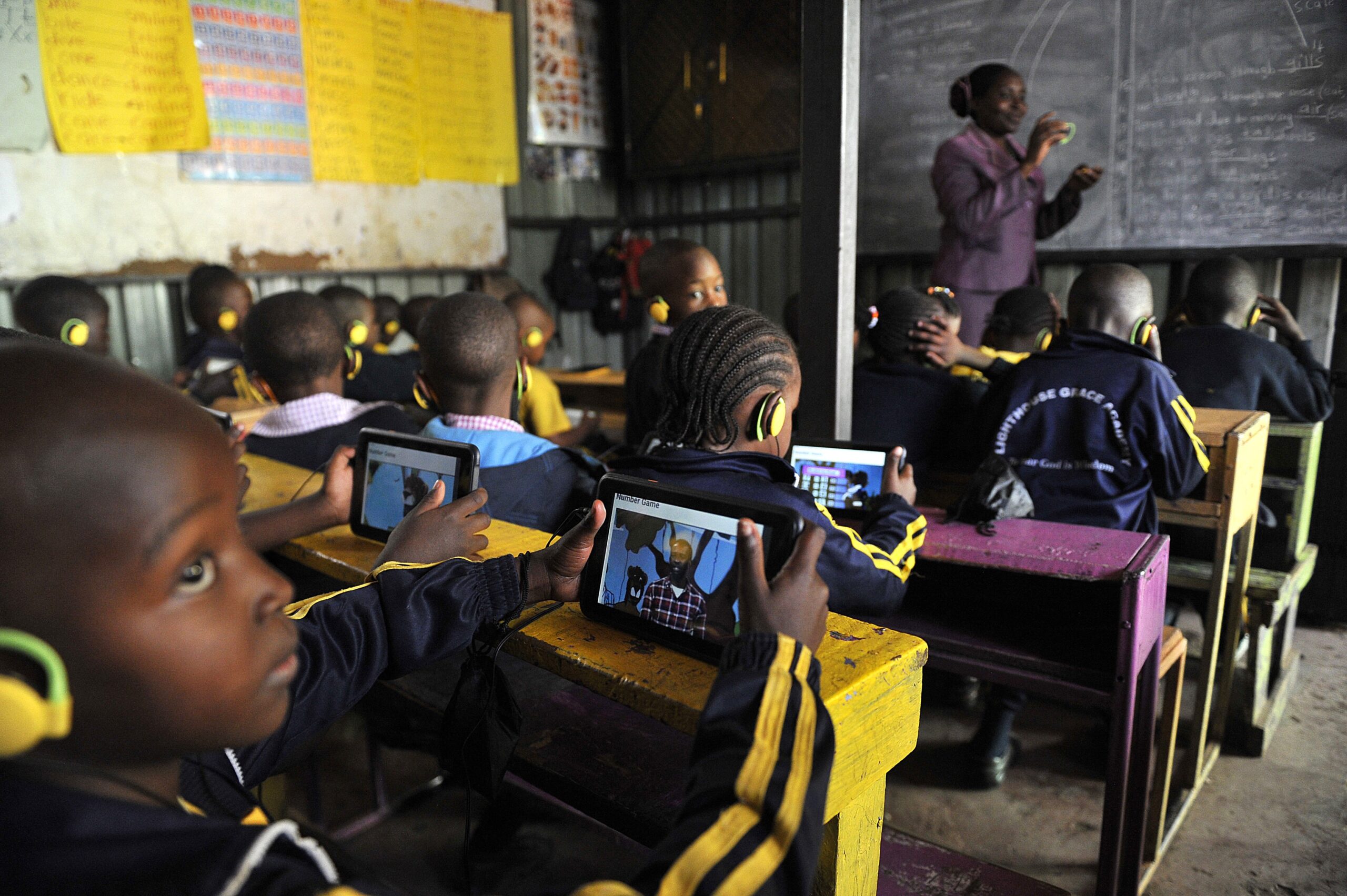
Here is the uncomfortable truth nobody in power wants to say out loud: if your history, your language, your land don’t exist in the data, they don’t exist to the machine. And right now, the machines are winning.
Africa has something the rest of the world desperately envies — the youngest, fastest-growing workforce on the planet. That is not a talking point. That is a geopolitical fact. But raw demographic power means nothing if the ecosystem around it is built by someone else, for someone else, with someone else’s story baked into every algorithm. We are standing at the edge of the most consequential technological shift in human history, and far too many of Africa’s decision-makers are still treating artificial intelligence like a foreign aid package — something that arrives from outside, to be received gratefully and deployed obediently.
That framing has to die. Now.
Kate Kallot, founder of Amini AI and one of the sharpest minds working on this continent’s digital sovereignty, put it plainly: a young African woman, educated in one of the world’s finest systems, should be able to ask a machine about her own history, her own language, her own land — and get an accurate answer. That sounds like a modest ask. It is, in fact, a radical one. Because right now, she largely cannot. The data infrastructure that powers tools like Claude, Gemini and Grok was not built with her in mind. Her culture is an afterthought at best, invisible at worst.
Think about what that means for a generation that is growing up with AI embedded in how they learn, how they work, how they understand the world. If the knowledge systems, the oral histories, the indigenous languages, the agricultural realities of this continent are absent from the data — then to the machine, they never happened. And increasingly, the machine is how the world remembers. This is not a technology problem. This is a power problem.
The challenge is not simply getting more young Kenyans online, though that matters. The deeper fight is about who owns the story. Africa’s cultural knowledge, its historical record, its ecological data — all of it must be digitised, embedded and owned on the continent. Not licensed from a Silicon Valley server farm. Not dependent on the goodwill of a foreign tech giant whose quarterly earnings call will always outrank our priorities. Owned. Here. By us.
And yes, the skills gap is real. Young people entering today’s job market will interact with AI tools whether they are ready or not. Workplaces across Nairobi, Lagos and Accra are already using these platforms to handle routine tasks. The question is whether Kenya’s youth are sitting at the table as users only — or as builders, regulators, architects of what comes next. There is a vast and consequential difference between those two positions, and the education systems, the government ministries and the private sector need to reckon with that honestly.
But skills alone are not enough, and anyone telling you otherwise is selling something. AI tools that can detect disease earlier, model crop yields more accurately, or flag financial fraud faster are genuinely powerful. They can save lives. They can unlock economic opportunity at scale. Yet that same power, left ungoverned, becomes a weapon. An AI system used to detect illness should never become a mechanism for insurers to deny coverage. A credit-scoring algorithm should not quietly encode historical discrimination into its outputs. The technology does not have values. The people who deploy it do — and right now, too few of those people are African.
This is why regulation is not the enemy of innovation. Smart, people-centred AI governance is the foundation on which real innovation stands. Kenya has an opportunity to lead — not to copy-paste European frameworks that were not designed for our realities, but to build regulatory architecture that protects citizens, builds public trust and creates the conditions for homegrown tech to thrive. The risk of getting this wrong cuts both ways: regulate too timidly, and corporations will exploit the vacuum; regulate too rigidly, and you strangle the very entrepreneurs who could change everything.
Those entrepreneurs exist. They are already working. Pioneers like Tonee Ndungu, Shikoh Gitau, Alfred Ongere and Nanjira Sambuli are not waiting for permission from Davos or Brussels to build Africa’s digital future. Their work is proof that this continent does not have to be a passive recipient of whatever AI paradigm the Global North decides to export next. We can shape the paradigm. We can challenge the defaults. We can insist that the machine remembers us — accurately, fully, on our own terms.
Africa’s greatest resource has never been buried underground. It has always been its people. The decisions made right now — in classrooms, in parliament, in boardrooms, in the code being written by a twenty-three-year-old in Kibera or Kisumu — will determine whether this generation merely uses artificial intelligence or builds it. That is not a metaphor. That is the actual stakes. And young, politically conscious Kenyans who are already skeptical of systems designed to exclude them should be the loudest voices demanding we get this right.
The future is not coming. It is already being written. The only question is whether Africa holds the pen.