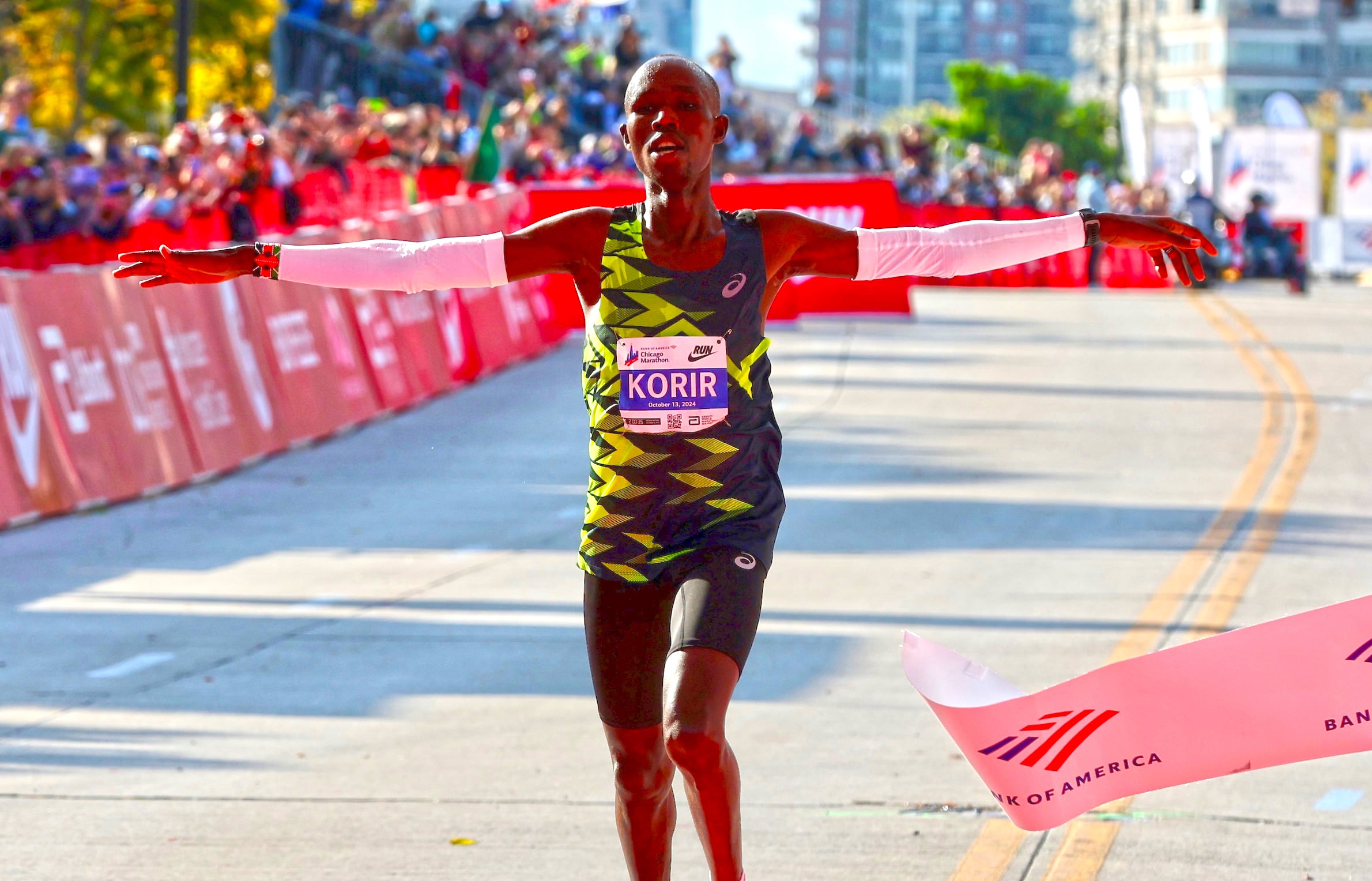
John Korir is not going to Valencia. The 29-year-old Kenyan marathon champion, who crossed the finish line first at last year’s Valencia Marathon and then went on to clock a stunning 2:01:52 at the Boston Marathon in April 2026, has withdrawn from the December 6 race due to injury. For Kenyan athletics fans who have watched Korir build one of the most compelling middle-distance careers in recent memory, this one stings.
The Valencia Marathon organisers confirmed the withdrawal in a formal statement that was warm but unambiguous: “Unfortunately, the current Valencia Marathon winner, John Korir, will not be able to defend his title in 2026. The Kenyan star has decided to withdraw from the race due to injury. We wish John a speedy recovery and hope to welcome him back to the City of Running very soon.” No further details on the nature of the injury have been disclosed, which means the speculation will run as long as the race itself.
What makes this withdrawal particularly frustrating is the timing. Korir’s last competitive appearance before Valencia was at the Sirikwa Classic World Cross Country Tour, where he clocked 29:44 to win the senior men’s 10km race, a performance that signalled he was in sharp form and building toward something significant in Spain. Injuries in athletics are brutal precisely because they arrive without warning, often right when an athlete is peaking, and Korir’s situation is a painful illustration of that reality.
But here is the thing about Kenyan athletics: depth is the whole point. Korir’s absence creates a gap, not a void.
Kenya’s men’s contingent for the Valencia 42km remains formidable in ways that should make any rival nation nervous. Alexander Mutiso, the 2024 London Marathon champion, lines up as one of the most decorated names in the field. Geoffrey Toroitich, who claimed the 2025 Amsterdam Marathon title, brings his own championship pedigree. Vincent Ngetich, Samwel Mailu and Benson Tunyo round out a squad that, even without its defending champion, carries genuine podium weight across multiple positions.
The deeper question, the one that politically engaged Kenyan sports followers should be sitting with, is what Korir’s withdrawal reveals about how elite Kenyan runners are managed between major races. The gap between the Sirikwa Classic in early 2026 and the Boston Marathon in April, followed by a push toward Valencia in December, is a punishing competitive calendar for any human body, regardless of how extraordinary that body is. The system that produces world-class Kenyan runners is also a system that runs them hard, and the costs of that system show up in moments exactly like this one.
For now, the focus shifts to Valencia, where Kenya’s remaining runners carry both the flag and the weight of expectation. Korir will be watching. So will everyone else.