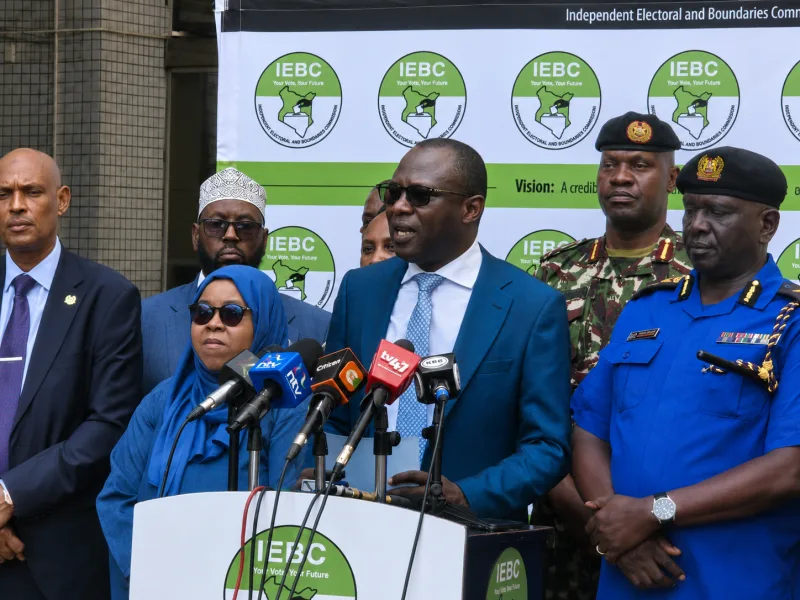
Here is the uncomfortable truth about Kenyan elections: money wins. It buys rallies, it buys airtime, it buys loyalty, and more often than not, it buys votes. So when the Independent Electoral and Boundaries Commission (IEBC) launches public hearings on how much candidates can spend in the 2027 General Election, that is not a bureaucratic footnote — it is one of the most consequential political conversations happening in this country right now, and most young Kenyans have no idea it is even taking place.
The IEBC kicked off nationwide public participation forums on Monday, July 27, running simultaneously in Mombasa, Kisumu, Garissa and Eldoret, with more county clusters scheduled for the following day. The subject is the Draft Election Campaign Financing Regulations, 2026 — a framework that will determine how much money candidates and political parties can legally raise and spend during the campaign period leading up to 2027. These are not advisory conversations. The submissions collected from these forums will directly shape the final regulations that get gazetted into law, and those regulations will govern who can realistically compete for power in this country.
The numbers on the table are staggering, and they deserve to be said plainly. The IEBC’s draft proposals cap presidential campaign spending at Sh4.44 billion, while political parties could spend up to Sh17.7 billion. Let that sit for a moment. For a country where millions of citizens live on less than Sh500 a day, the legal ceiling for buying your way to State House is four and a half billion shillings. The framework does not just apply to the top seat — it sets differentiated spending limits for governor, senator, MP and ward representative races, with figures calibrated according to population size, geographic spread and the logistical cost of reaching voters in each constituency.
Among the county-level limits, Turkana leads at Sh123 million, followed by Nairobi at Sh117 million, Marsabit at Sh114 million and Wajir at Sh103 million. The variation reflects real logistical differences — campaigning across Turkana’s vast, sparsely populated terrain genuinely costs more than knocking on doors in a dense urban ward. But the question that matters is whether these ceilings are low enough to stop entrenched money from steamrolling independent and grassroots candidates, or whether they are simply high enough to give wealthy incumbents a legally sanctioned advantage.
The legal foundation for all of this is the Election Campaign Financing Act, which mandates the IEBC to prescribe contribution limits, spending ceilings and authorised expenditure categories at least 12 months before a general election. The law also empowers the Commission to enforce financial disclosures, regulate campaign contributions and monitor actual spending — powers that sound robust on paper but have historically been difficult to enforce in a political environment where cash moves through informal networks and party structures that resist scrutiny. The IEBC says public participation is critical to ensuring the final rules strike a genuine balance between fair competition and transparency, and the Commission’s timetable puts the conclusion of this process in early August, after which the regulations will be gazetted.
This is where your voice actually matters, even if the political class would prefer you stayed home. The IEBC is legally obligated to incorporate stakeholder submissions into the final draft before it goes for publication, which means that what ordinary Kenyans say in these forums — or fail to say — becomes part of the architecture of the 2027 election. If the spending caps are too high, wealthy candidates dominate. If the disclosure requirements are too weak, dark money flows freely. If enforcement mechanisms are not explicitly demanded by the public, they will remain aspirational language buried in a gazette notice. The 2027 election is not decided on polling day. It is being decided right now, in public hearings that most people are not attending, on rules that most people have not read.