
The Numbers Don’t Lie
Over Ksh.363 million allegedly walked out of First Assurance Investment Company Limited over six years, and nobody — not the banks, not the board, not the regulators — apparently noticed. Or if they did, nobody said a word. That silence is now the subject of criminal charges, and it reaches all the way to the top of three of Kenya’s major banking institutions.
This is not a story about a rogue clerk or a small-time con. This is about a former nominated Member of the County Assembly, a sitting governor’s forged signature, and three bank CEOs who the prosecution says failed in their most basic legal duty: report suspicious money.
Who Is in the Dock
The Former MCA at the Centre of It All
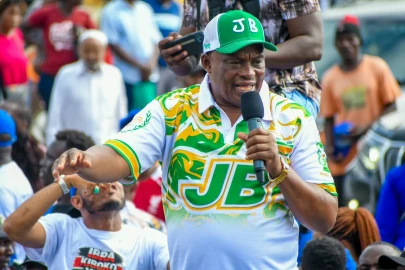
The Office of the Director of Public Prosecutions (ODPP) has approved a staggering 120 charges against a former nominated MCA who served as a director at First Assurance Investment Company Limited — a company he shared directorship with Lamu Governor Issa Abdalla Issa.
The prosecution alleges he used that position, and direct access to the company’s accounts at NCBA Bank, KCB Bank, and Co-operative Bank, to drain funds between May 18, 2018 and April 30, 2024. Six years. Ksh.363,420,459. Gone.
The forgery angle is damning. The prosecution alleges he repeatedly forged the signature of Governor Issa Abdalla Issa on company cheques, presenting them as properly authorised withdrawals. 114 times, allegedly. That is not a mistake. That is a system.
He pleaded not guilty before Chief Magistrate Gethi Kibiru and walked out on a Ksh.10 million bond — or a cash bail of Ksh.3 million. For a man accused of stealing over 363 million, that bail figure will raise eyebrows.
The Three Bank CEOs
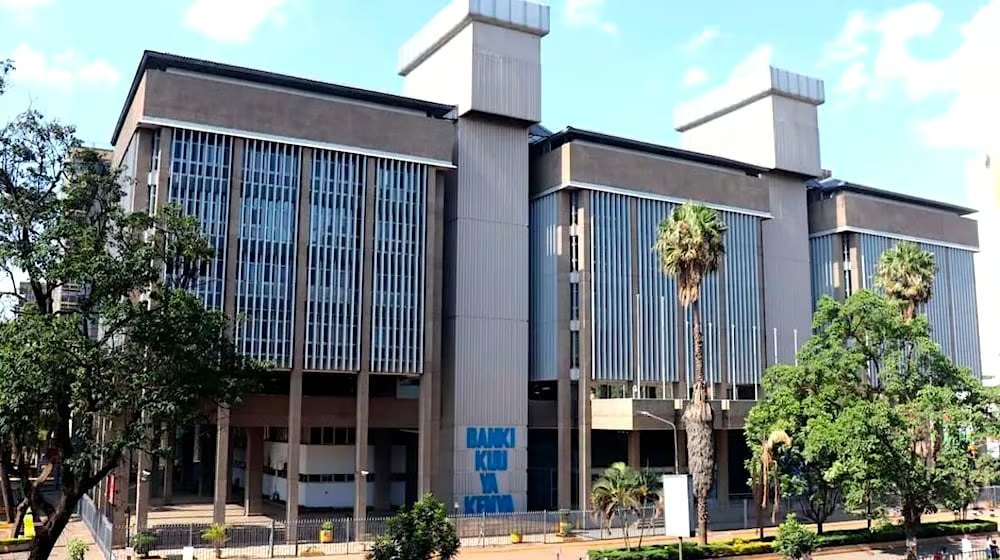
Here is where this case gets bigger than one man’s alleged greed. The ODPP has charged the CEOs of the three banks where the company held accounts — NCBA, KCB, and Co-operative Bank — for allegedly failing to report suspicion regarding proceeds of crime.
The charges cite Section 5 as read with Section 44(2) of the Proceeds of Crime and Anti-Money Laundering Act. In plain terms: Kenyan law requires financial institutions to flag suspicious transactions. The prosecution’s position is that these institutions sat on hundreds of millions of shillings moving in questionable patterns and said nothing.
The court has issued summons requiring the three bank chiefs to appear before the Chief Magistrate’s Court on August 11, 2026, to take plea.
Why This Case Matters Beyond the Courtroom
Kenya’s anti-money laundering framework exists precisely to catch this kind of thing. Banks are legally obligated to file Suspicious Transaction Reports. That obligation does not sit with a junior compliance officer alone — it flows from the top. Charging CEOs sends a message that institutional silence has consequences.
But let’s be honest about the skepticism this case deserves. Six years is a long time. Ksh.363 million across three major banks is not invisible money. The question young Kenyans should be asking is not just whether the former MCA is guilty — it is how a scheme this large, this sustained, and this brazen survived for so long inside institutions that are supposed to protect ordinary depositors.
Deputy Director of Public Prosecutions Nora Otieno and Principal Prosecution Counsel Willy Momanyi are leading the case. The prosecution machinery is moving. Whether it moves fast enough, and whether it moves without interference given the political connections involved, is the real test.
What Comes Next
The former MCA’s case is already before the court. The three bank CEOs face their plea date in August 2026, as investigations continue.
Watch this space. Because if the prosecution follows through, this case could redefine how seriously Kenya enforces its own financial crime laws — or confirm what many already suspect: that accountability in this country depends entirely on who you are and who you know.