
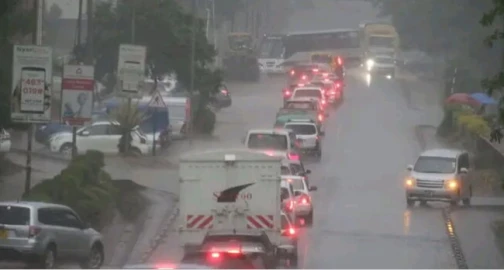
The rains are coming — and the Kenyan government knows exactly which communities stand in the path of disaster. Eighteen counties across the Coast, Lake, North Eastern and Rift Valley regions have been officially flagged as high-risk ahead of the anticipated El Niño rains, and the window to act is narrowing fast. This is not a drill, and the stakes could not be more personal for millions of Kenyans who have lived through floods before and rebuilt from nothing. The central question is not whether El Niño will arrive — it will — but whether the government’s response will be fast enough, coordinated enough, and honest enough to protect people before the waters rise.
The Threat Is Real and It’s Already Moving
The Kenya Meteorological Department has confirmed that El Niño conditions are gaining momentum in the Indian Ocean and could persist from October this year through February 2027. That is not a short weather event — that is a prolonged, grinding crisis. Western Kenya could begin feeling its effects as early as September, meaning communities in Kisumu, Siaya, Homa Bay, Migori and Busia have weeks, not months, to prepare. Dr. David Muriuki, the CEO of the Kenya Meteorological Department, was blunt: “The El Niño is gaining strength and will extend until February 2027. This is an early warning.” Early warning is only useful if someone is actually listening and acting on it.
The full list of flagged counties spans Tana River, Kilifi, Lamu, Mombasa, Kwale, Kisumu, Busia, Siaya, Homa Bay and Migori, among others — communities that already know what flood displacement feels like. These are not abstract statistics on a government report. They are real people living on riparian land, in low-lying coastal zones, and along lake shores who will bear the full weight of inaction if authorities move too slowly. The UN Development Programme’s representative, Yvonne, put it plainly at a stakeholder engagement: “We must come in on a big scale and move fast, as time is not on our side.” That urgency is the only appropriate register for this moment.
Government Machinery Is Moving — But Is It Moving Fast Enough?
A multi-agency team led by Environment Cabinet Secretary Deborah Barasa has already deployed to Baringo County, where Lakes Baringo and Bogoria sit among the most vulnerable zones. Barasa, after inspecting weather-monitoring facilities at the Kenya Meteorological Department headquarters in Nairobi, stated that response teams are on the ground coordinating with village elders to relocate at-risk residents. “Those living on riparian land must vacate immediately and seek higher ground,” she said — language that is direct, but only meaningful if evacuation infrastructure and safe relocation sites actually exist. Telling people to move without providing somewhere credible to move to is not a plan; it is a press statement.
The Ministry of Health is simultaneously seeking partners to support emergency medical services, temporary medical facilities, nutritional assessments and medical supplies for affected areas. Principal Secretary Mary Muthoni acknowledged that Kenya has faced El Niño before and claimed the government has learned from past failures. “We have taken time to learn from past disasters and build on the challenges we faced so that we can better mitigate its effects,” she said. That is exactly the kind of institutional confidence that young Kenyans — who remember the 2023 floods that killed hundreds and displaced thousands — are right to scrutinize carefully. Past learning means nothing if the same communities flood and the same people die.
What This Means for You
The government has named the threat, identified the counties, deployed teams and issued warnings. That is more than has happened in some previous disaster cycles, and it deserves acknowledgment. But the architecture of a credible response requires more than press briefings and multi-agency photo opportunities. It requires transparent communication with affected communities in local languages, enforceable evacuation orders with real logistical support, and health systems that are pre-positioned rather than reactive. Kenya’s young, politically aware generation has seen enough post-disaster parliamentary inquiries and audit reports to know that accountability comes after the floods, never before them.
The implication here is stark. If the government moves with the speed and scale that CS Barasa and the UN are calling for, lives will be saved and the institutional credibility of Kenya’s disaster management systems will be strengthened. If it does not — if the response stalls in bureaucratic coordination, if evacuation orders are issued without support, if health supplies arrive after the outbreak — then eighteen counties will once again become proof that early warning without early action is just noise. The rains do not care about good intentions. The question is whether the people in charge do.