The Money Was Supposed to Go Elsewhere
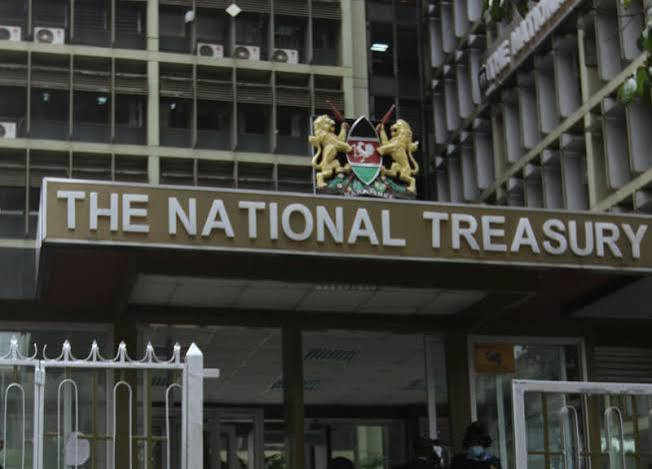
Kenya’s National Treasury is facing serious scrutiny after it emerged that Sh30 billion borrowed through a Eurobond issuance last year was quietly redirected to cover shortfalls in domestic borrowing — a move that directly contradicts what the government told the public about how those funds would be used. This is not a clerical error or a minor accounting footnote; it is a significant diversion of public debt resources, and young Kenyans who will spend the next two decades repaying this money deserve to understand exactly what happened to it.
In early 2025, the government went to international capital markets and raised a substantial $1.5 billion — equivalent to Sh193.9 billion — through the issuance of a new Eurobond. In its official disclosures to investors and the public, the Treasury stated clearly that the proceeds would be deployed to buy back and restructure a separate tranche of maturing debt, a standard liability-management exercise designed to extend repayment timelines and reduce refinancing pressure. That was the stated plan. What actually happened, according to the emerging evidence, is a different story altogether.
A Pattern of Opacity That Should Alarm Everyone
The revelation that Sh30 billion from those Eurobond proceeds was instead channelled toward plugging holes in domestic borrowing targets raises fundamental questions about fiscal transparency and the integrity of Kenya’s debt management framework. Domestic borrowing shortfalls typically arise when the government fails to raise enough money from the local market — through Treasury bills and bonds — to meet its budgetary commitments, and the temptation to raid externally borrowed funds to fill that gap is both financially reckless and politically dishonest. It is reckless because Eurobond debt carries foreign exchange risk, meaning the cost of repayment fluctuates with the shilling’s value against the dollar; using it to cover what should be shilling-denominated domestic obligations compounds that risk in ways that are difficult to unwind.
For a government that has repeatedly assured Kenyans it is on a credible path toward fiscal consolidation, this kind of manoeuvre cuts against the narrative with uncomfortable force. The Treasury’s credibility with both domestic and international investors depends on doing what it says it will do with borrowed money — and when that credibility erodes, the cost of future borrowing rises, a burden that lands squarely on ordinary Kenyans through higher taxes and reduced public services.
What This Means for You
It is easy to let figures like Sh30 billion wash over you as abstract, bureaucratic noise — but consider what that number actually represents in the context of a country where millions of young people cannot access affordable healthcare, where public universities are chronically underfunded, and where the government has in recent years introduced new levies and taxes to raise revenue it claims it desperately needs. Every shilling of public debt that is misallocated or diverted from its stated purpose is a shilling that does not do the structural work it was supposed to do, and the interest on that shilling accrues regardless of whether the money achieved anything meaningful.
The National Treasury has not, at the time of writing, offered a detailed public explanation for the diversion, and that silence is itself a statement. In a functioning accountability environment, such a significant departure from disclosed debt-use commitments would trigger immediate parliamentary scrutiny, engagement from the Auditor General, and a clear public accounting from the Cabinet Secretary for Finance. Whether any of those mechanisms will activate with sufficient urgency remains, as it so often does in Kenya, an open question — one that politically engaged citizens should be pressing loudly and without apology.