A four-hour Ebola test result. That is the difference between a controlled outbreak and a catastrophe crossing into Kenya.
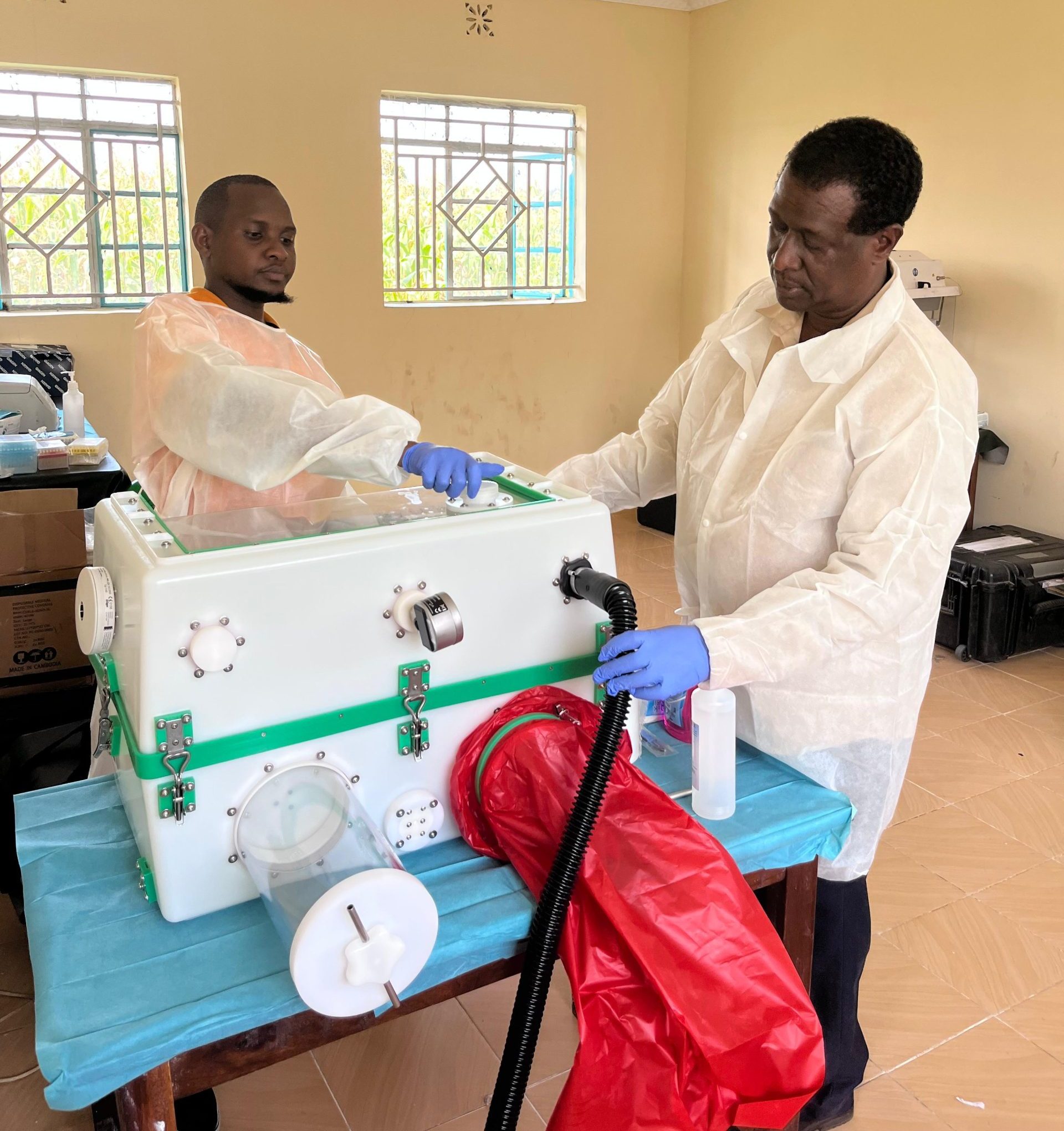
The Kenya National Public Health Institute (KNPHI), working with the U.S. government-funded Strengthening Infectious Disease Detection Systems (STRIDES) programme, has deployed a mobile laboratory at the Lwakhakha Point of Entry on Kenya’s border with Uganda. This is not a bureaucratic checkbox. It is a direct, deliberate response to a live threat — and it signals something important about how seriously Kenya is finally taking its border health security.
The Threat Is Real and It Is Right There
Ebola is not a distant horror story. It is active in neighbouring countries, and Lwakhakha sits precisely where the risk is highest — a porous, busy border crossing where people, goods, and pathogens move freely every single day. For years, Kenya’s response to that reality relied on laboratories in Nairobi and Kisumu, meaning samples from border regions had to travel hundreds of kilometres before results came back. Days would pass. Chains of transmission would grow. That was the system protecting you.
The new mobile lab changes that calculus entirely. Ebola test results now take approximately three to four hours instead of days. That gap — between suspicion and confirmation — is where outbreaks either get strangled or explode. KNPHI Acting Director General Dr. Kamene Kimenye put it plainly: rapid results enable immediate patient isolation, interrupt transmission chains, and support the timely evaluation of treatments and vaccines. She is not overstating it. Every hour of delay in a high-pathogen scenario is a compounding liability.
Why This Infrastructure Moment Actually Matters
The Lwakhakha facility is Kenya’s second mobile laboratory, joining the Alupe Mobile Laboratory in Busia County. It is also the fifth laboratory in the country supporting Ebola diagnostics, alongside the National Public Health Laboratory and KEMRI facilities in Nairobi and Kisumu. That expansion of distributed capacity is the real story here — not just one new lab, but a deliberate architecture of preparedness being built at the edges of the country, where the state historically shows up last.
Young Kenyans who grew up watching COVID-19 expose every crack in the public health system know exactly what it looks like when a government reacts instead of prepares. The centralized testing model failed spectacularly during that pandemic. What KNPHI is building now — mobile, deployable, fast — is the structural lesson learned from that failure, applied before the next crisis hits. That matters. It means someone, somewhere in the system, is thinking ahead.
The KNPHI Directorate of Laboratory Science and Safety coordinates the broader ecosystem: disease surveillance, quality assurance, diagnostic algorithm development, and health data management. The mobile lab does not stand alone — it plugs into a national system designed to detect, verify, and act on emerging threats with speed and accuracy. The question now is whether that system gets the sustained investment it needs, or whether this moment of preparedness quietly erodes the moment the immediate pressure eases.
Kenya has built something real at Lwakhakha. The hard part — keeping it funded, staffed, and politically prioritized — starts now.