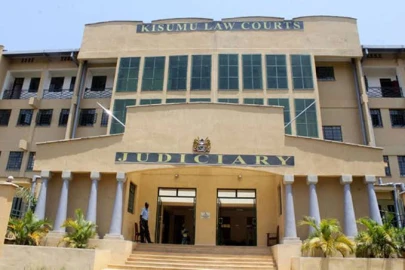
Picture this: a court awards Ksh.38.6 million to families whose loved ones were brutalised by police during protests in Kisumu, then issues clear directives to the very institutions responsible — and those institutions simply ignore them. No compliance. No request for an extension. Nothing. That is exactly what happened, and now Inspector General of Police Douglas Kanja and Attorney General Dorcas Oduor must answer for it before a judge on July 21, 2026.
Justice Alfred Mabeya of the High Court in Kisumu did not mince words in his ruling. He found that the IG and the AG were in direct defiance of the court by continuing to operate without gazetting regulations on public order management and the use of force — regulations specifically designed to protect your right to picket, to march, to make your voice heard without getting a baton across your skull. This is not a procedural technicality. This is the state telling you, plainly, that your constitutional rights are negotiable.
The original judgment, delivered earlier this year, was itself a landmark moment. The court declared that state agencies had violated fundamental rights enshrined in Kenya’s constitution — the right to life, to dignity, to equality, and to security of the person. These are not abstract legal phrases. They are the rights of the young people who flooded the streets of Kisumu, who carried nothing more dangerous than a placard, and who came home — or didn’t — changed forever by what the state chose to do to them.
The compensation was meaningful. Ksh.38.6 million to victims and bereaved families represents an acknowledgment, however inadequate, that something went terribly wrong. But money paid to grieving families does not stop the next trigger-happy officer from doing the same thing tomorrow. That is precisely why the court went further, ordering the AG and IG to gazette concrete regulations governing how demonstrations are managed and how force may be used. Those orders have been sitting there, unactioned, gathering dust in the offices of the very people sworn to uphold the law.
LSK Kisumu Chairperson Dorcas Oluoch, who is a party in this suit, put it bluntly: compensation is not a substitute for reform. You cannot write a cheque and call it accountability. The structural problem — the absence of clear, enforceable rules on how police interact with protesters — remains wide open, and every demonstration held in this country until those regulations exist is a demonstration held at personal risk, with no legal framework protecting the people in it.
What makes this moment particularly sharp is the context in which it lands. Kenya’s Gen Z proved in 2024 that young people are not passive observers of their own governance. They organised, they marched, they demanded accountability — and they were met, in too many places, with live ammunition and teargas. The question of how the state manages public protest is not an abstract policy debate. It is a question about whether you can exercise your constitutional rights without risking your life.
The court has now drawn a hard line. Justice Mabeya’s summons is a direct signal that judicial orders are not optional reading for government officials. The IG and the AG did not comply, and they did not even bother to ask for more time. That level of institutional indifference to a court’s authority — and to the rights of ordinary Kenyans — deserves exactly the scrutiny it is now receiving. July 21, 2026 will be a date worth marking.
The deeper truth here is that reform is always uncomfortable for institutions that benefit from the absence of rules. Vague, ungoverned use of force gives the state flexibility. Gazetting clear regulations removes that flexibility. It creates accountability. It means that the next time an officer fires into a crowd, there is a legal standard against which that action can be measured and prosecuted. That is precisely why those regulations matter — and precisely why their absence, more than a year after the court demanded them, is not an oversight. It is a choice.
Kenya’s young, politically aware citizens have learned not to take official silence at face value. The summons of IG Kanja and AG Oduor is a reminder that the courts remain one of the few arenas where that silence can be forced open. Watch what happens on July 21. Watch whether the two officials appear, what they say, and whether the regulations finally materialise. Because the answer will tell you everything you need to know about how seriously this government takes the rights it claims to protect.