What exactly did Mudavadi say, and why does it matter to you?
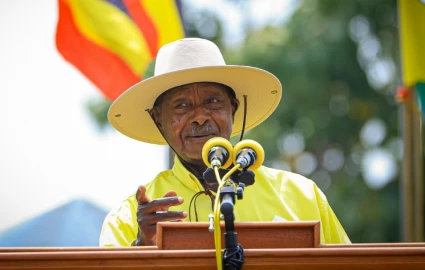
Prime Cabinet Secretary Musalia Mudavadi stood before more than 6,000 young Kenyans at the PAG Church National Conference in Nyang’ori, Vihiga County, and delivered a message that sounds reasonable on the surface — but deserves serious scrutiny from anyone paying attention to Kenyan politics right now.
His core warning: stop electing angry, bitter, vengeful politicians. Full stop.
“You will listen to them, they are angry, they are bitter, speak with vengeance and sound vindictive. They will not implement anything, they are only keen on spreading hate,” Mudavadi said. He urged the youth not to surrender to such leaders. The crowd was large. The message was polished. But smart Kenyans should ask — who exactly is he talking about, and what is the political timing here?
So what is Mudavadi actually arguing?
His speech had three distinct threads. First, the anti-bitterness warning. Second, a defence of President William Ruto’s government. Third, a direct pitch to young people to register as voters ahead of the 2027 General Election.
On leadership quality, Mudavadi made a point that genuinely holds water. He compared political maturity to education — you don’t skip classes and wake up as a national leader overnight. “A child does not wake up one day and skip the classes. So is it in politics,” he said. He also compared political success to boxing: you train, you build, you earn it. No shortcuts. No instant coffee.
These are not bad ideas. They just come packaged inside a political rally disguised as a church conference.
What did he say about the Ruto government’s record?
Mudavadi went full campaign mode when defending the administration. He cited the Nairobi-Malaba dual carriageway cutting through Western Kenya as proof that the government is delivering equitably — a region historically overlooked in infrastructure spending. His exact words: “We have only heard and seen a dual carriageway in Thika and Mount Kenya. Today, a major one is cutting through the Western region. We deserve it, and it will open our economy.”
He also claimed the government has invested Ksh.780 billion in education — describing it as over 20 per cent of the national budget — and called it a demonstration of commitment to Kenya’s young population. These are figures worth verifying independently, but the intent is clear: Mudavadi is building a 2027 re-election narrative, and he’s starting now, with the youth, in church.
What about the issues that actually affect young Kenyans?
Here is where the speech gets genuinely alarming, and credit where it’s due — Mudavadi didn’t dodge this one.
He raised the crisis of rising HIV infections among young people aged 18 to 35, with a specific warning about Western Kenya carrying the country’s highest burden. Kenya currently ranks seventh globally in HIV prevalence. Mudavadi said the country is losing approximately 20,000 people to the disease every year — and the majority of new infections are hitting young people.
This is a public health emergency dressed in statistics. It deserved more than a passing mention in a political speech. But at least it was said out loud, in front of 6,000 people.
Should young Kenyans take Mudavadi’s advice at face value?
That depends on what you believe about power and who holds it.
Mudavadi is not an outsider warning about the system. He is the system. He serves in the highest appointed office in the executive, defending a government that has faced sustained criticism from young Kenyans — including the Gen Z protests of 2024 — over taxation, cost of living, and broken promises. Telling youth not to elect bitter politicians while standing firmly inside the ruling coalition is a move that requires you to either trust his sincerity completely or question his framing entirely.
His point about political experience building is valid. His call to register as voters is important. His HIV warning is urgent. But the framing — that the current leadership represents “mature politics” — is a political claim, not a neutral truth.
Kenya’s young people are smart. They’ve proven it. They know the difference between a leader who speaks honestly and one who speaks strategically. The question Mudavadi’s speech raises isn’t whether bitter politicians are bad — of course they are. The real question is: who gets to define bitterness, and who benefits from that definition?
Think about that before 2027.