The Pain Is Real — And So Is the Accountability
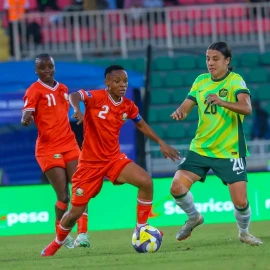
Kenya is out. Again. The Starlets crashed out of WAFCON without reaching the quarter-finals, and the post-mortem has already begun. Fingers are pointing. Voices are rising. And right in the middle of the storm stands captain Mwanahalima Adam, refusing to let her coach take the fall alone.
This is not a story about excuses. It is a story about a leader stepping forward when it would have been easier — and frankly, more politically convenient — to step back and let the technical bench absorb the heat.
What Actually Happened on That Pitch
Kenya showed up to WAFCON with something to prove. They flashed promise. They created chances. But when the moments that matter arrived, the Starlets blinked. No clinical edge. No decisive composure. Just another tournament where potential refused to become results.
The elimination was not a surprise to anyone paying close attention. It was, however, a gut punch — to the players, to the fans who stayed up late watching, and to every young Kenyan girl who sees herself in that jersey. This is what makes it sting so deeply.
Mwanahalima’s Statement Was Rare — And Necessary
Speaking immediately after the team’s elimination, Mwanahalima did something Kenyan sports culture rarely produces: she owned it, completely and without hedging.
“Everything starts with the coach and the technical bench, but once we step onto the pitch, the responsibility is ours. The coaches did their part. We failed to execute the game plan, and we, as players, must take the blame.”
That is not a diplomatic deflection. That is a captain doing what captains are supposed to do — carrying the weight so others do not have to. She went further, dissecting exactly where Kenya came undone.
“We created chances, but small mistakes and our failure to adjust in key moments cost us. We needed to work harder in certain areas, and that’s why we are going home earlier than we hoped.”
The Tactical Question Everyone Is Asking
Coach Odemba has faced scrutiny over her tactical decisions throughout this campaign, and that scrutiny is not going away simply because her captain defended her. Some football stakeholders have questioned the game plans, the substitutions, the formations. These are legitimate questions. A continental tournament is not a friendly — every decision carries consequence.
But Mwanahalima’s point cuts through the noise: a game plan is worthless if the players on the pitch cannot execute it. Tactics do not miss sitters. Players do. Tactics do not lose concentration in the 85th minute. Players do. The captain is drawing a line between preparation and performance — and she is placing the failure firmly on the right side of it.
The Apology to Fans
Mwanahalima did not stop at accountability. She went straight to the people who matter most — the supporters — and she apologised directly, without the usual corporate-speak that Kenyan sports officials tend to hide behind.
“The coach believed in us, and it is painful that we couldn’t repay that faith with the results she deserved. We know our fans are disappointed, and we are disappointed too. This is a learning experience, and we have to make sure we don’t repeat the same mistakes in future tournaments.”
Those words land differently when you understand the context. These are women who represent a country that chronically underfunds its female athletes, that celebrates them briefly after a win and forgets them just as fast. The least they deserved was honesty in defeat — and that is exactly what they got.
The Bigger Problem Nobody Wants to Say Out Loud
One tournament exit is a bad result. A pattern of early exits is a structural crisis. Kenya’s women’s football programme has been stuck in a loop — brief excitement, continental disappointment, vague promises of improvement — for too long. The debate reignited by this WAFCON collapse is not just about Odemba’s tactics or the players’ finishing. It is about whether the infrastructure, the investment, and the institutional will actually exist to build a competitive team.
Mwanahalima’s leadership in this moment is admirable. But leadership statements do not build training facilities. They do not fund scouting programmes. They do not pay for the sports psychologists and conditioning coaches that elite women’s teams across Africa are now investing in. Someone in a position of power needs to hear this and act — not after the next tournament, but now.
What Comes Next
The Starlets are heading home. The conversations will happen — in boardrooms, on Twitter, in living rooms across Nairobi and Mombasa and Kisumu. Some of those conversations will be productive. Many will not.
What Kenya’s women’s football programme needs is not a scapegoat. It does not need Odemba fired to satisfy a news cycle, and it does not need the players shielded from honest criticism either. It needs a hard, unflinching look at every layer of the system — from grassroots development to continental preparation — and a genuine commitment to fixing what is broken.
Mwanahalima showed what accountability looks like. Now it is time for the people who run this sport to show the same courage.