This Is What Impunity Looks Like
A child was snatched from Eastleigh in broad daylight, smuggled across three countries, tortured on camera, and his family was made to watch. Then they were asked to pay for it. This is not a distant horror story — this happened in Nairobi, in April 2025, and the criminal network behind it operated with terrifying confidence. Three suspects are now before the Kahawa Law Courts, but the real question Kenya must answer is this: how deep does this syndicate run, and who is protecting it?
The Architecture of a Nightmare
On April 10, 2025, a minor was abducted from Nairobi’s Eastleigh estate. What followed was a meticulously organised cross-border operation — not a random kidnapping, but a structured trafficking route running through Sudan and South Sudan before depositing the child in war-torn Libya. The people behind this knew exactly what they were doing. They had a system.
Once in Libya, the syndicate did what extortion networks do when they want maximum psychological damage: they recorded the child being tortured and sent the videos to his parents back in Kenya. Think about that for a moment. A family in Eastleigh, watching their child suffer on a phone screen, thousands of kilometres away, completely powerless. The criminal network demanded Ksh 5.5 million. The family, desperate and broken, paid. According to their advocate Kevin Omwanza, the payments exceeded Ksh 5 million before the child was finally rescued by Libyan authorities.
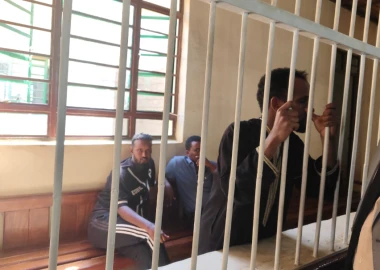
Abdi Samed Abukar, Abdirahman Dagane Ahmed and Abdifatah Abdi Elmi appeared before Senior Principal Magistrate Gedion Kage on Wednesday but did not enter a plea. The magistrate deferred the plea to Thursday, ordering the three to remain in the custody of Kenya’s Anti-Terrorism Police Unit (ATPU). Prosecutors flagged them as a serious flight risk — and given the international scope of this alleged operation, that concern is not theatrical.
The Rescue, the Treatment, the Long Road Home
Libyan authorities have since recovered the minor, who is currently receiving medical treatment in Tripoli. Kenya’s ATPU is coordinating with the Ministry of Foreign and Diaspora Affairs to bring the child home. That coordination matters, but it also raises uncomfortable questions about how long this process takes and why a child is still in Tripoli receiving treatment while three suspects sit in a Nairobi courtroom waiting to enter a plea.
The family is not staying quiet. Through their advocate, they are pushing the government to do two things that go beyond securing a conviction: trace the ransom payments and dismantle what they describe as an Eastleigh-based human trafficking syndicate. Those are not small asks. Tracing Ksh 5 million-plus across international criminal networks requires resources, political will, and the kind of inter-agency cooperation that Kenya’s institutions do not always deliver cleanly.
What This Case Reveals About Kenya’s Trafficking Blind Spots
Here is the thesis that this case forces into the open: Kenya has a human trafficking problem that the official narrative consistently underplays. Eastleigh, as a dense urban hub with significant migrant and diaspora communities, has long been flagged by researchers and civil society as vulnerable to exploitation networks that move people — often children — across East African borders. The Libya route is not new. Migrants and trafficking victims have been documented moving through Sudan and Libya for years, many ending up in detention centres described by human rights organisations as sites of systematic abuse.
What is striking about this case is the brazenness. The abduction happened inside Kenya. The family paid millions. The torture was weaponised as a communication tool. And yet the network apparently operated long enough to move a child from Nairobi to Tripoli before law enforcement intervened. That timeline deserves scrutiny. So does the question of whether the ATPU’s involvement signals that investigators believe this syndicate has links to broader criminal or even extremist financing structures — a suspicion that the anti-terrorism unit’s jurisdiction implicitly raises.
Three men will take a plea. A child will eventually come home. But if the ransom money is not traced, if the syndicate’s Eastleigh infrastructure is not dismantled, and if no one asks how this operation ran undetected for months, then justice in this case will be partial at best. Kenya’s young, politically aware generation knows the difference between a prosecution and accountability. This case demands both.