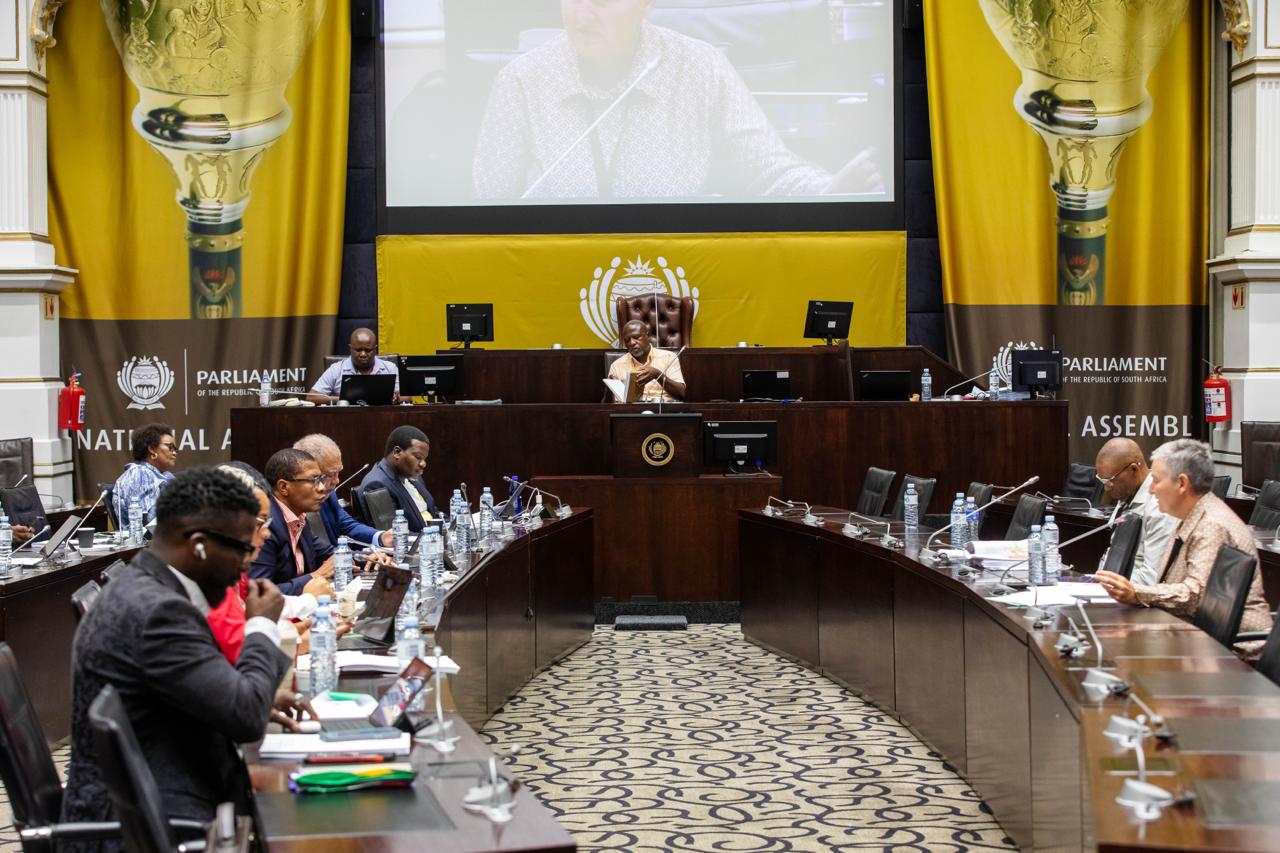
Picture this: a parliamentary committee, weeks from submitting its final report, sitting across from some of the most powerful law enforcement figures in the country — and the air is thick with accusations of cartels, illegal directives, and officials who may have been running background checks on the very witnesses meant to expose them. This is not fiction. This is what South Africa’s Ad Hoc Committee probing police corruption looks like right now, and if you think it has nothing to do with you, think again.
The committee, established by Parliament to dig into allegations of rot inside the South African Police Service, is now in its final stretch — deliberating on a draft report that will eventually land on the desk of National Assembly Speaker Thoko Didiza. Political parties have submitted their recommendations. And what those recommendations reveal is a system so tangled, so compromised, that even the people tasked with cleaning it up can’t agree on what the evidence actually shows.
Here is where it gets personal.
Forensic investigator Paul O’Sullivan — a name that carries weight in South African anti-corruption circles — finds himself squarely in the committee’s crosshairs. He stands accused of violating the Protection of Information Act by running background and credit checks on witnesses, and of impersonating an official from the Independent Police Investigative Directorate. The man who built a reputation hunting corrupt cops is now being hunted himself. That irony is not lost on anyone paying attention.
Then there is former Minister Senzo Mchunu, currently on special leave, whose allegedly unlawful directive to disband the Political Killings Task Team has become one of the committee’s defining controversies. The Political Killings Task Team — the PKTT — was set up to investigate politically motivated murders. Mchunu ordered it disbanded. The MK Party’s David Skosana told the committee flatly that the disbandment has been proven unlawful. The ANC, meanwhile, wants the PKTT’s finances audited, arguing that accountability must reach everyone, noting the task team had been accused of wasteful expenditure and had become a financial burden on the police. These are not small allegations. A task team meant to protect lives, dissolved by a minister who may have had no legal authority to do so — and whose finances may tell a darker story.
The Democratic Alliance’s Glynnis Breytenbach cut through the noise with the kind of directness that makes people uncomfortable. “We cannot find people guilty. We cannot find people innocent. We can find that people misled us when the objective, glaring facts suggest that,” she said. Her colleague Damien Klopper went further, flagging what he called a troubling lack of evidence in the draft report itself — the kind of gap that, in a politically charged environment, becomes a door left open for powerful people to walk through unchallenged.
The DA’s recommendation: forward the committee’s findings to the appropriate investigative agencies. Let the people with actual prosecutorial power take it from here. It sounds reasonable. It also sounds like an exit ramp.
The Patriotic Alliance took a different line entirely. Ashley Sauls argued there is no direct forensic or digital evidence linking Mchunu to any drug cartel — specifically, what has been referred to in proceedings as the “big five drug cartel.” Sauls called for fairness. And look, fairness matters. But in a country where political killings go unsolved and task teams get disbanded by ministerial decree, “fairness” can sometimes be a polite word for protection.
Skosana raised one more issue that deserves to sit with you. President Cyril Ramaphosa did not provide oral evidence to the committee. Skosana warned that the report risks lacking credibility if that gap is not addressed. The head of state, absent from a process investigating the integrity of the very police service he oversees. Draw your own conclusions.
The draft report will now go to all affected parties for ten days of response before it returns for final adoption. After that, it goes to Didiza, and then to the full National Assembly. Weeks of process, layers of procedure — all of it designed, whether intentionally or not, to slow the momentum of accountability.
What this committee’s work makes clear is that corruption inside police structures does not survive in isolation. It survives because mandates are blurred, because ministers can issue directives that may be illegal, because investigators can be turned into suspects, and because presidents can simply choose not to show up. The system protects itself. That is not a conspiracy theory. That is what the evidence — or the lack of it — keeps showing.
The report is almost done. Whether it changes anything is the only question that matters.