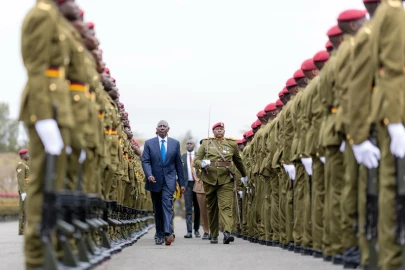
President William Ruto stood before hundreds of freshly trained General Service Unit recruits at the National Police College in Embakasi on Friday and delivered a warning that cut straight to the heart of Kenya’s political rot: stop using the police as your personal enforcement squad. It was a bold thing to say. It was also, for many Kenyans watching, deeply ironic.
The 50th GSU pass-out parade was the backdrop for a message aimed squarely at politicians — across the board — who have been weaponising security forces to disrupt rival meetings, intimidate opponents and generally treat the police as an extension of their political machinery. With 2027 closing in fast, Ruto clearly sees the writing on the wall and wants to get ahead of it.
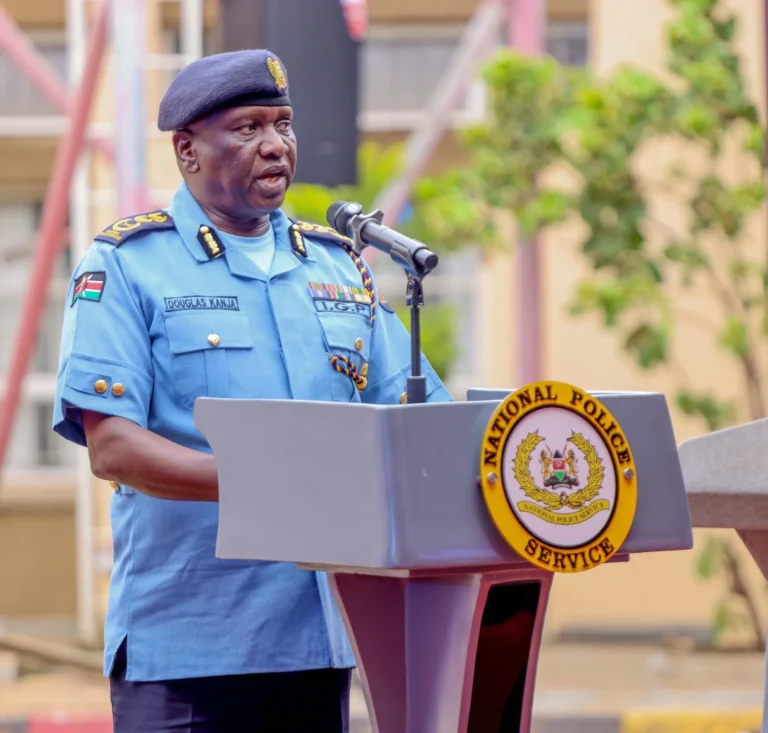
“Political leaders must not draw the police into partisan contests, incite violence, or ask officers to carry out unlawful instructions,” Ruto said, addressing the parade. He went further, framing democratic security as a shared national responsibility — not just a government talking point. That framing matters, because it puts the burden on everyone: politicians, citizens and the officers themselves.
The timing is deliberate. Kenya’s political temperature is already rising well ahead of the 2027 General Election. Parties are organising, alliances are shifting and the scramble for relevance is producing exactly the kind of reckless behaviour Ruto was warning against. Political meetings have been disrupted, tensions have flared in various counties, and the question of police impartiality has become anything but academic.
Ruto’s instruction to the police was unambiguous: secure the democratic space without taking sides. “Political competition will intensify, parties will organise, candidates will campaign, and citizens will assemble. The duty of the police is to secure this democratic space impartially,” he said. For young Kenyans who watched officers crack down on the Gen Z protests last year, those words land with complicated weight.
He also drew a firm line on demonstrations, warning that no political objective justifies criminal conduct. Peaceful assembly must be protected, he said — but those who organise, fund, incite or perpetrate violence will be dealt with firmly and lawfully. The distinction between protest and chaos is one the state has not always respected, which is precisely why skeptics will hold this speech to account.
Interior Cabinet Secretary Kipchumba Murkomen added that the government has revitalised GSU training to embed human rights, constitutionalism and community policing at its core. Five regional training centres — in Kisumu, Mombasa, Kiminini, Ngong and Kiganjo — have been refurbished as part of that push. Whether reformed training translates into reformed conduct on the ground is the real test.
Ruto also inaugurated the newly expanded GSU Hospital at the Embakasi campus, now accredited under the Social Health Authority. The facility will serve not only officers and their families but also the broader Embakasi community — a tangible, if modest, expansion of public services in a densely populated part of Nairobi. It was a quieter moment in an otherwise charged afternoon, a reminder that governance is both grand speeches and ground-level delivery.
The speech will be remembered — or forgotten — depending entirely on what happens next. Words at a parade cost nothing. The 2027 election will be the real measure of whether Kenya’s police serve the constitution or the highest bidder. Young Kenyans, already burned by broken promises, are watching and they are keeping score.