
Something is cracking inside Nairobi’s political establishment, and it is not subtle. The MCAs — the ward-level representatives who sit closest to the frustrations of ordinary Nairobians — are publicly turning on Governor Johnson Sakaja, and they are not mincing words. This is not routine political noise. This is the sound of a coalition beginning to fracture, two years before a gubernatorial election that could reshape the city’s future entirely.
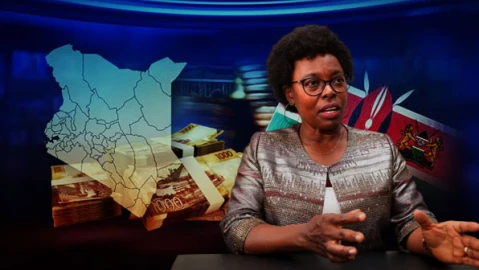
Nairobi South MCA Esther Waithera Chege stood at a campaign rally in South B and said what many have been thinking: “Sakaja has failed.” Her argument was pointed and damning — that the governor’s poor leadership has been so pronounced that the national government has had to step in and fund projects that are constitutionally the county’s responsibility. When the national government is filling your gaps, you have already lost the argument about competence.
Chege went further, raising a question that will haunt Sakaja’s political allies all the way to 2027 — whether UDA, the ruling party that carried him to office, should even consider him their standard-bearer again in the Nairobi gubernatorial race. That is not a small thing to say out loud, especially given that Sakaja himself confirmed in August that ODM had already come knocking. The political ground beneath him is shifting, and everyone can feel it.
The grievances are not abstract. Ward representatives across the city are fielding daily complaints about uncollected garbage rotting in estates, public spaces falling into disrepair, and urban planning enforcement so weak that unauthorised construction has become a running joke in some neighbourhoods. These are not policy failures that live in spreadsheets — they are the lived reality of millions of people who were promised a transformed Nairobi.
Then there is the money question, which may be the most serious of all. MCAs have formally demanded that Sakaja’s administration disclose the physical location of the servers running Nairobi Pay — the county’s digital revenue collection system — and produce certified bank statements to verify what the system has actually collected. In September 2025, legislators stated plainly that they could not scrutinise the system without access to those supporting records. When elected representatives cannot follow the money, that is not a bureaucratic hiccup. That is a governance crisis.
Waithaka MCA Antony Kiragu offered a quieter but equally significant message at the same moment, urging voters to judge candidates by their policies and track records rather than tribal allegiances. In a city as politically complex as Nairobi, that kind of call is both brave and strategically loaded — it is a direct challenge to the identity-based mobilisation that has historically allowed underperforming politicians to survive accountability.
What is unfolding in Nairobi right now is a test of whether the city’s political culture has actually matured. The MCAs are doing exactly what they are supposed to do — holding the executive to account, demanding transparency, and refusing to let campaign promises dissolve quietly into bureaucratic inertia. Whether that pressure translates into real change before 2027, or simply becomes the drumbeat of an opposition campaign, depends entirely on whether Sakaja decides to govern or just to survive.
One thing is already clear: the clock is running, and Nairobi is watching.