
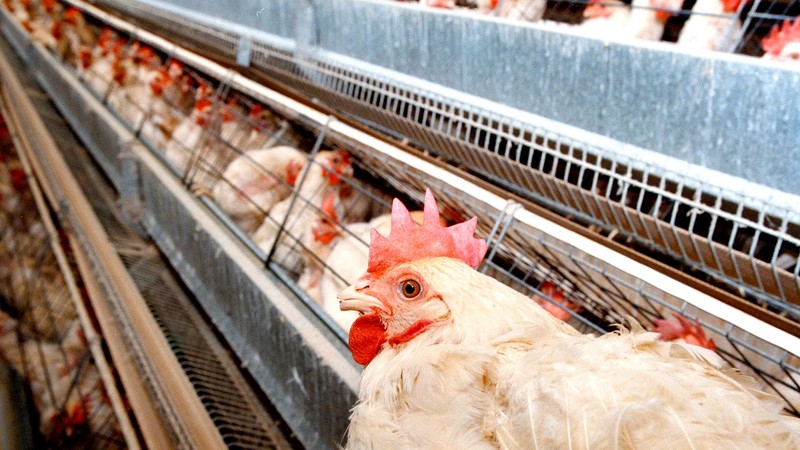
The Government Finally Admits Mass Culling Wasn’t Working
South Africa’s Agriculture Minister John Steenhuisen has announced a landmark policy shift that will allow poultry farmers to vaccinate their birds against highly pathogenic avian influenza (HPAI) — ending a brutal, costly era of mass slaughter that wiped out millions of birds and pushed food prices higher for ordinary South Africans.
This isn’t a minor regulatory tweak. It’s an admission that the old system was broken — and that the people paying the price were farmers and consumers, not bureaucrats.
What Changed and Why It Matters to You
For decades, South Africa’s official response to bird flu outbreaks was simple and devastating: kill everything. Sick birds. Healthy birds. All of them. The law required it.
In 2023 alone, approximately 9.5 million birds were culled — roughly 20–30% of the country’s total chicken stock. That’s not disease control. That’s an agricultural catastrophe dressed up as policy.
The predictable result? Egg shortages. Chicken price spikes. Farmers driven to the edge. And a regulatory framework so rigid it offered producers no legal alternative, no matter how much science said otherwise.
The Poultry Industry Fought Back
The South African Poultry Association formally objected under the Animal Diseases Act, arguing that existing regulations left producers trapped — forced to destroy entire flocks with no affordable, practical alternative.
That objection triggered a Section 23 Investigation Committee, whose findings Steenhuisen has now accepted. The verdict: the old “stamping-out” model is outdated, and South Africa needs a state-regulated vaccination framework to replace it.
Steenhuisen put it plainly: “Our poultry farmers need direct support, and we are changing policy to give them a legal mechanism to protect their livelihoods.”
What the New Policy Actually Does
The Ministry is amending the Animal Diseases Regulations (R.2026 of 1986) to formally legalise HPAI vaccination as part of a broader disease management strategy. This isn’t a free-for-all — farmers will be required to combine vaccinations with:
The Department of Agriculture will oversee national surveillance systems, laboratory testing and regulatory compliance — and will work to ensure South Africa maintains its international trade standards, which is critical for export markets worth billions of rand.
This Has Already Started — Quietly
Here’s what the official announcements don’t lead with: in 2025, the government quietly issued its first-ever permit to Astral Foods to vaccinate against HPAI at one of its broiler breeder farms. The policy shift announced now is the formalisation of a direction already being tested.
Interim control measures will be implemented while the policy is formalised through statutory instruments, including a government gazette notice — with a firm departmental deadline attached.
What This Means for Smaller Farmers
The new framework is designed to work for both large commercial producers and smaller poultry farmers — a crucial detail in a country where small-scale agriculture is both economically significant and chronically underserved by policy.
For years, small farmers bore the brunt of mass culling orders with the least capacity to absorb the losses. A vaccination-based approach, properly implemented, gives them a fighting chance.
The Bottom Line
South Africa’s poultry sector contributes billions of rand to the economy and supports thousands of jobs across farming, processing and distribution. When bird flu hits and the state’s only tool is mass destruction, everyone downstream feels it — including the person buying eggs at a supermarket in Nairobi, Lagos, or Johannesburg.
This policy shift is long overdue. The science on vaccination has been clear for years. What took so long was political will — and the organised pressure of an industry that refused to keep absorbing preventable losses in silence.
The question now isn’t whether this was the right call. It clearly was. The question is whether implementation will match the ambition of the announcement.