
The Question Nobody in the Opposition Wants to Answer
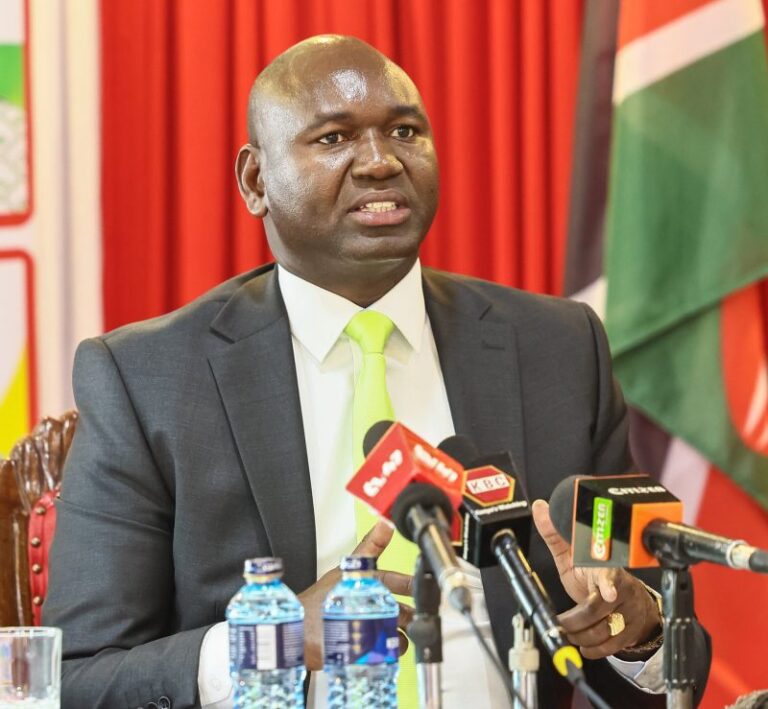
“Ruto must go” is a slogan. It is not a plan. And for millions of young Kenyans who poured into the streets in 2024, watched their peers get shot, and still woke up the next morning to the same cost of living crisis, a slogan is not enough. Nairobi Senator Edwin Sifuna knows this, and in a rare moment of opposition candour, he has attempted to answer the question that Ruto’s allies use as a shield: then what?
Sifuna’s thesis, laid out on Citizen TV’s The Explainer this week, is deceptively simple but politically explosive: Kenya already has the blueprint for good governance written into its Constitution, and the real scandal is that the government in power is not following it. This is not an argument about roads or stadiums. It is an argument about who Kenyans have decided to be as a country — and whether their president has read the memo.
The Moi Parallel That Should Make Ruto Uncomfortable
Sifuna reached back to 2002 to make his point, and the parallel lands hard. When Kenyans voted out Daniel arap Moi and the KANU regime, they did not do it because Moi had failed to build infrastructure. Moi built Kasarani. Moi built Moi Stadium. The roads existed. The argument was never about concrete.
It was about the life Kenyans were forced to live under authoritarian rule — a life measured against the six values embedded in the preamble of the Constitution: human rights, democracy, rule of law, social justice, equity, and equality. Kenyans in 2002 decided that stadiums built by a government that crushed dissent were not a fair trade. Sifuna is arguing, plainly, that the same calculus applies today.
This is where the argument cuts deepest. Ruto’s defenders consistently pivot to development — the Affordable Housing Programme, road construction, the promise of a hustler economy. Sifuna’s response is not to deny those projects exist. His response is that a democracy can build roads too, and that Kenyans are no longer willing to accept a dictator as the price of tarmac.
How Ruto Lost the Hustler Wave
Sifuna does not pretend Ruto stole the 2022 election or that his mandate was illegitimate. He accepts, openly, that Ruto rode a genuinely popular wave — particularly among ordinary Kenyans, the wananchi who saw themselves in the hustler narrative. That acknowledgment matters. It makes the follow-up question far more damaging: how did he lose all of that support so fast, and what exactly did he do?
The Senator’s answer is structural, not just political. First, power got to Ruto’s head and he stopped listening. Article 10 of the Constitution requires public participation — it is not a suggestion, it is a legal obligation. When the government imposed the Finance Bill 2023 and the Housing Levy without genuine public buy-in, it was not just politically tone-deaf. It was unconstitutional.
Second, the government’s response to dissent was violence. Sifuna recalls the opposition beginning with a conversation at Jeevanjee Gardens — raising concerns about the cost of living, asking for intervention, seeking dialogue. The government’s answer was teargas and live bullets. Kenyans died. Those deaths, Sifuna says without flinching, were entirely avoidable. All Ruto had to do was listen.
The Housing Levy Lie Nobody Is Telling Loudly Enough
The Affordable Housing Programme deserves its own reckoning. Sifuna’s critique here is precise and damaging. He asks the question that every Kenyan paying the Housing Levy should be demanding an answer to: where are the results? If this taxation is working, Ruto should be able to point to a closed slum — one informal settlement in Mathare, one in Mukuru Kwa Njenga, where residents have moved into the promised high-rise buildings. He cannot.
The Busia example sharpens the point further. Ruto’s housing agenda assumes that eliminating slums is a universal national priority. But what slum was he eliminating in Funyula? The people of Busia, Sifuna argues, would rather see that money go into expanding their hospital, building schools, addressing the actual priorities of their community. A government that does not listen imposes solutions on problems that do not exist in the places it is supposedly solving them.
This is not a small bureaucratic failure. It is the difference between a government that governs for Kenyans and one that governs at them.
The Constitution Is the Vision
Here is where Sifuna’s argument either wins or loses everything. When pressed on what the opposition actually wants beyond removing Ruto, his answer is the Constitution itself. Not a new manifesto. Not a coalition agreement. Not another set of campaign promises from another set of politicians. The document Kenyans already ratified in 2010.
“The kind of government that Kenyans want is already in our Constitution,” he said. “One that is based on the essential values of human rights, equality, freedom, democracy, social justice and the rule of law. These are not abstract concepts.”
He is right that they are not abstract. They are also not being implemented. And that gap — between the Kenya written in the Constitution and the Kenya being governed by William Ruto — is the entire political argument of the opposition distilled into a single, honest sentence.
The real question for young Kenyans watching this is not whether Sifuna is right. It is whether the opposition, if it ever gets power, will govern any differently. Sifuna has set the standard publicly and on record. That is either a promise or a trap — and Kenyans who lived through Kibaki, Uhuru, and now Ruto are smart enough to know which one it usually turns out to be.