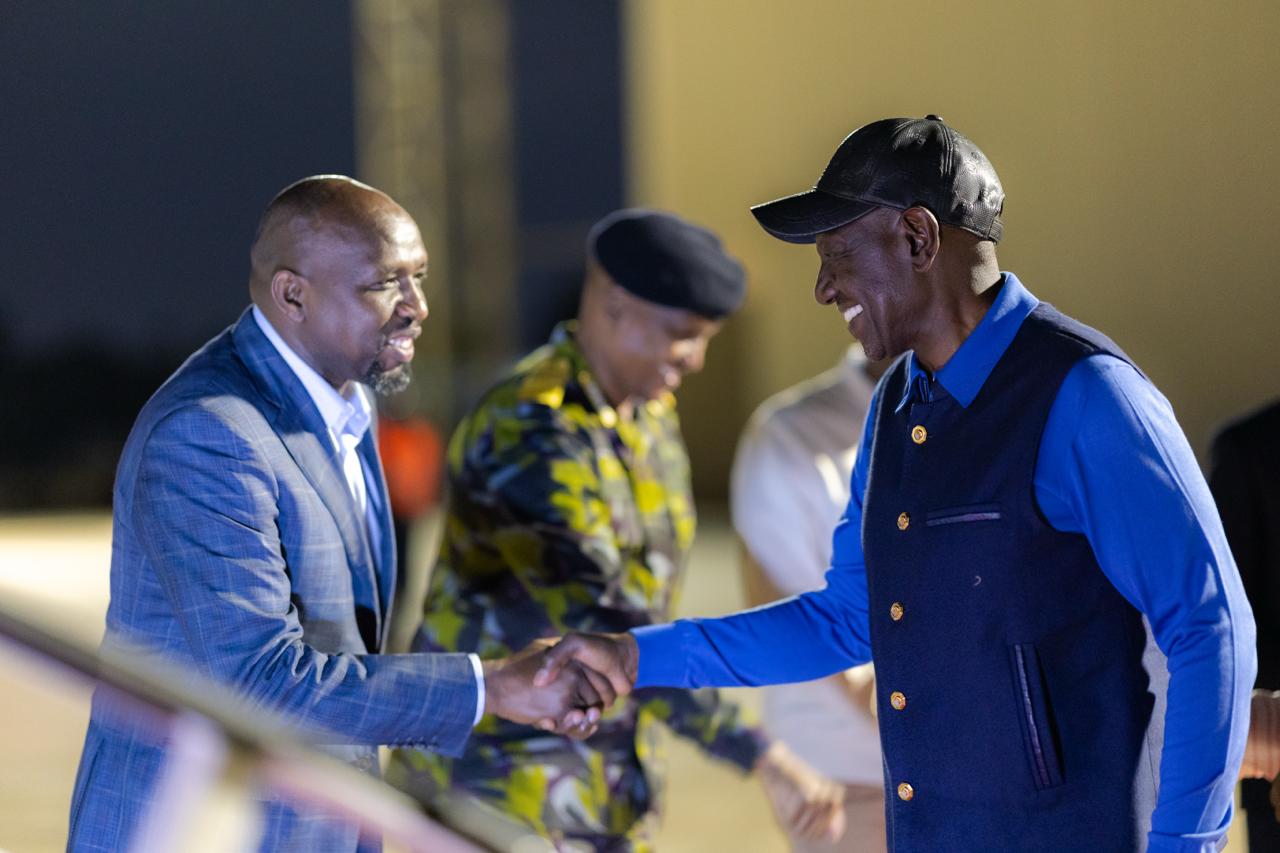
Here is the uncomfortable truth that Kenya’s political class rarely states plainly: Africa has over $4 trillion in domestic savings and assets, yet the continent keeps going cap-in-hand to Western creditors for infrastructure money. President William Ruto flew to New York Saturday evening for the 81st UN General Assembly, and if his agenda holds, this trip is less about diplomatic photo-ops and more about testing whether Kenya can actually flip that script — for real this time.
The centrepiece of Ruto’s pitch in New York is the KSh2.2 trillion ($17 billion) East Africa Refinery in Lamu, a 700,000-barrel-a-day megaproject expected to generate more than 60,000 jobs and anchor regional energy security. The refinery is scheduled to break ground on 30th September 2026, and Ruto will co-chair roundtables hosted by the Africa Finance Corporation and the Global Africa Business Initiative alongside industrialist Aliko Dangote to push the project forward. For young Kenyans watching energy costs eat through their paycheques, this is not an abstract figure — it is the difference between a region that refines its own oil and one that perpetually exports raw resources at a loss, only to buy them back as finished products at a premium.
On artificial intelligence, Ruto is positioning Kenya not as a passive consumer of technology built elsewhere, but as an active architect. He will co-lead the AI Middle Powers Initiative alongside Finnish President Alexander Stubb, a coalition designed to let mid-sized nations pool computing power, data and talent to build genuine AI capacity. Kenya will simultaneously advance the Africa Development Bank-backed AI 10 Billion Initiative, which targets up to $10 billion mobilised for African AI investment by 2035. Ruto will also sign a global declaration on child online AI safety with leaders from Spain, the UK, Canada and Australia, and launch an Africa Resilience Compact that uses AI, satellite earth observation and predictive technologies to prepare the continent for climate shocks like El Niño. The breadth of that agenda is either visionary or dangerously overextended — and Kenyans deserve to watch closely which one it turns out to be.
The financial architecture argument Ruto will make at the General Assembly is arguably the most consequential. Kenya intends to champion a National Infrastructure Fund designed to mobilise up to $40 billion without adding to public debt, and will call loudly for reforms that unlock African capital — domestic savings and pension funds — for African infrastructure. Kenya moved KSh41.68 trillion through M-Pesa in a single year, a staggering figure that proves the continent’s financial plumbing already exists. The question Ruto must answer at the UN, and more importantly back home, is why that liquidity has not yet translated into the roads, hospitals and energy grids that ordinary Kenyans still wait for. Ruto also plans to advance NBA partnerships for youth sporting infrastructure and position Kenya as a regional technology, trade and finance hub at the Next 3 Billion convening.
The thesis of this entire New York trip is simple and bold: Africa must stop treating itself as a charity case and start acting like the economic power its own numbers already describe. Whether Ruto can convert high-altitude declarations into ground-level delivery is the only question that matters — because for the young Kenyan watching fuel prices, unemployment rates and a debt clock that never stops, another summit of polished speeches without tangible outcomes is not just disappointing. It is a betrayal.