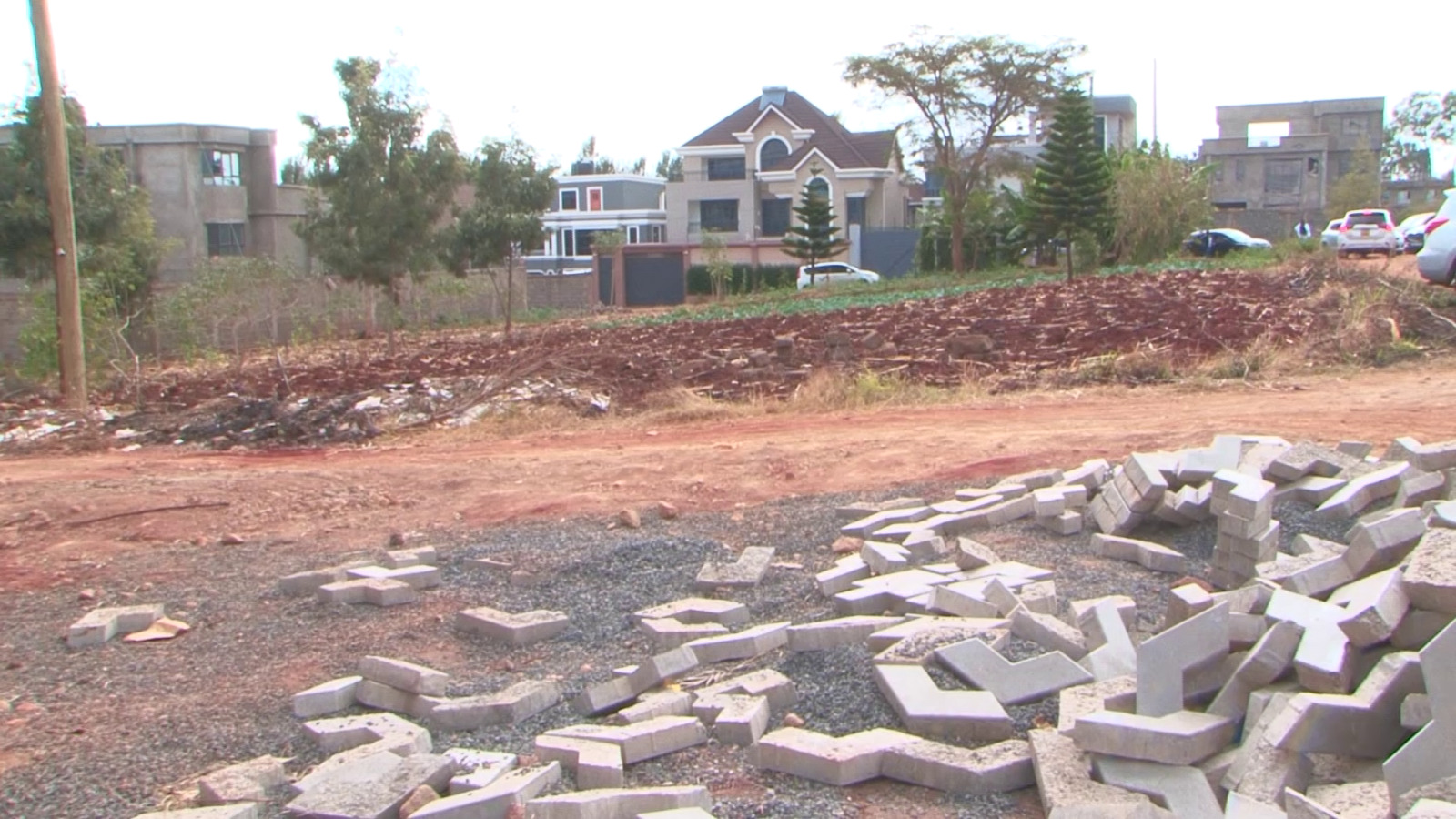
Picture this: you saved for years, bought a plot in a gated estate outside Nairobi, built your home, raised your family — and then one morning you wake up to strangers digging trenches across your access road and carting away the soil from land that borders your property. You call the police. Nothing happens. You call them again. Still nothing. That is not a hypothetical nightmare. That is the daily reality right now for over a thousand families living on a 500-acre estate along the Ruiru–Githunguri road in Kiambu County, on land that once belonged to one of Kenya’s most powerful men — former spy chief James Kanyotu.
The land is valued at Ksh 10 billion. Let that number sit with you for a moment. Ten billion shillings. In a country where ordinary Kenyans scrimp and sacrifice for decades just to own a small piece of earth to call their own, a property of this magnitude was always going to attract predators — people with connections, with lawyers on speed dial, and with the kind of audacity that only comes when you believe the system will protect you, not the people you are targeting.
The residents began purchasing and settling on these plots as far back as 2014. They did not squat. They did not grab. They went through the process, acquired title documents, and built a community of more than a thousand families. Then, last year, someone went to a High Court judge sitting in Meru — not even in Nairobi, not in Kiambu, but in Meru — and walked out with an order nullifying the entire sale. The residents had to scramble to the Court of Appeal, which issued a stay order halting any evictions while the matter is heard and determined. That stay order is what stands between these families and the street.
But here is the thing about Kenya that young people who have been paying attention already know: a court order only protects you if someone is willing to enforce it. The goons did not vanish after the Court of Appeal spoke. They kept coming. They dug trenches to cut off access roads into the estate. They harvested soil from a portion of the land designated for public utilities — stripping it, selling it, profiting from what belongs to the community. Residents eventually took matters into their own hands, filling in the trenches themselves and chasing away the excavators. They did the job the police refused to do.
Patrick Ngumo, who chairs the estate’s environment committee, has been at the forefront of this fight alongside legal secretary Mike Kamau and resident Phelomena Nyambura. They are not asking for charity. They are not begging for handouts. They are asking the government to honour the basic social contract — to protect citizens who followed the law, paid for their land, and now find themselves abandoned by the very security apparatus meant to serve them. Kamau has been direct about it: police were informed, cases were reported at the local station, and officers did nothing. Not a single arrest. Not a single warning shot. Just silence.
This is the part of the story that should make your blood run cold, because it is not unique to Ruiru. Across Kenya, ordinary people who buy land in good faith find themselves outgunned by well-connected interests who know how to weaponise the courts, manipulate local security structures, and wear down communities through sustained, low-level terror until they give up and leave. The residents of this estate have not given up. Not yet. But they are exhausted, and they are scared, and they deserve better than a government that looks the other way while goons strip the earth from beneath their feet.
The ghost of James Kanyotu looms large over all of this. The man ran Kenya’s intelligence services, knew where every body was buried, and accumulated land on a scale that raises questions nobody in power has ever been willing to answer publicly. Now his former property sits at the centre of a brutal tug-of-war, and the people caught in the middle are not the powerful — they are the ones who saved up, signed the papers, and believed that ownership meant something in this country.
It should. And until the government steps in, enforces the Court of Appeal’s orders, arrests those destroying public utility land, and holds the police accountable for their inaction, the answer to whether ownership means anything here remains dangerously, infuriatingly unclear.