For years, Africa has watched its own crises unfold while the world debated who should intervene, how fast, and under whose authority. The African Standby Force was supposed to be the answer — a homegrown, continent-wide rapid response mechanism that would end the embarrassing dependency on outside powers to police African conflicts. But coordination between the African Union and the regional blocs that actually command boots on the ground has remained dangerously fragmented. That just changed.
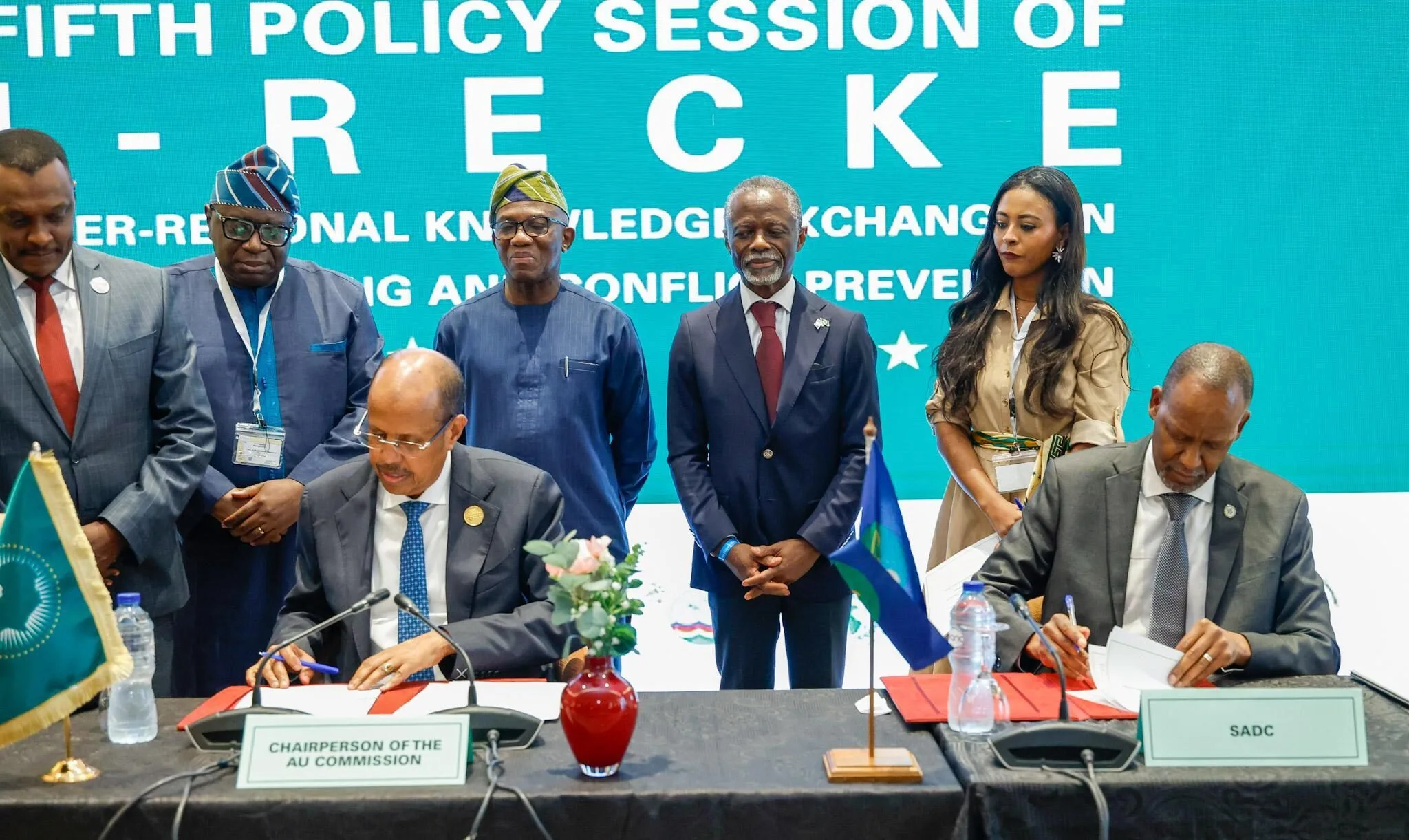
It started with a gathering that most people outside diplomatic circles never heard about. The Fifth Policy Session of the AU Inter-Regional Knowledge Exchange on Early Warning and Conflict Prevention — known as AU I-RECKE — convened on the sidelines of the AU Mid-Year Coordination Summit in El Alamein, Egypt. The session’s theme was direct and urgent: the African Standby Force in the context of the evolving security landscape in Africa. What came out of it was more than a conversation.
On October 5, the African Union, its Regional Economic Communities and Regional Mechanisms put pen to paper on a new Memorandum of Understanding governing the use of the African Standby Force. It was a moment that had been a long time coming.
The ASF was not born yesterday. Established as a cornerstone of the AU’s peace and security framework, it was designed to give Africa the capacity for preventive deployment, peace support operations, and crisis intervention without waiting for the UN Security Council to agree on something — or for France to decide it was convenient. The idea was African ownership. The reality, for much of its existence, has been slow mobilisation, unclear command structures, and regional blocs pulling in different directions.
AUC Chairperson Mahmoud Ali Youssouf called the agreement a watershed moment. He did not mince words about what needs to happen next — the ASF must adapt to a security environment that looks nothing like it did when the force was conceived. Think armed drones, transnational jihadist networks, climate-driven resource conflicts, and coups that now spread like political contagion across the Sahel. The old playbook is obsolete.
Youssouf pushed hard for two things simultaneously: stronger African ownership and legitimacy in conflict response, and tighter coherence between continental and regional institutions. Those two goals have historically been in tension. Regional blocs like ECOWAS, IGAD, and the SADC have their own political interests, their own timelines, their own reluctance. Getting them aligned with AU-level strategy has been like herding cats during a thunderstorm.
The MOU is designed to fix exactly that — to create a binding framework that brings the AU and regional organisations into genuine coordination when deploying the Standby Force, rather than the improvised, last-minute scrambles that have defined too many African security responses.
For young Kenyans watching the news, this is not abstract geopolitics. Kenya sits at the intersection of some of the continent’s most volatile fault lines — Al-Shabaab to the east, instability in the Great Lakes to the west, a fragile Somalia on its doorstep. Kenyan soldiers have died in AU missions. Kenyan taxpayers have funded interventions whose mandates were unclear and whose exits were murkier. A stronger, better-coordinated Standby Force is not a bureaucratic achievement. It is a direct answer to the question of whether African lives and African resources are being spent with any strategic logic at all.
The AU Political Affairs, Peace and Security Department described the signing as “a significant milestone in strengthening coordination and collective action in Africa’s Peace and Security Architecture.” Diplomatic language, yes. But strip it back and the meaning is plain: Africa is trying to get its act together before the next crisis hits, rather than after.
Whether the MOU translates into actual operational capacity — faster deployment, clearer mandates, genuine political will — is the question that nobody in El Alamein answered out loud. Agreements on paper have failed Africa before. What is different this time is the pressure of a continent where the threats are multiplying faster than the institutions designed to contain them.
The clock is already running.