For over a decade, the Dangote refinery was a promise. A massive, expensive, politically loaded promise that many Nigerians quietly doubted would ever be fulfilled. Then, in 2024, it started producing fuel — and suddenly, Africa’s most audacious infrastructure bet became very real.
Now, Aliko Dangote is going one step further. Africa’s richest man has launched the continent’s largest-ever initial public offering, offering ordinary people a stake in the refinery that changed Nigeria’s energy story. The deal could raise as much as $2.1 billion.
This didn’t happen overnight. Go back to 2013, when Dangote first announced the Lagos refinery project with an estimated price tag of around $19 billion. The vision was enormous: a single facility that would end Nigeria’s humiliating dependence on imported fuel — a dependence that made no sense for Africa’s biggest oil producer. Construction didn’t actually begin until 2017, delayed by financing complexities and the sheer logistical scale of the undertaking.
The site chosen was in the Lekki Free Zone near Lagos. Building it required moving 65 million cubic metres of sand in one of the largest land reclamation exercises the continent has ever seen. Then COVID-19 hit, and the project stalled further, testing the patience of investors and Nigerians alike.
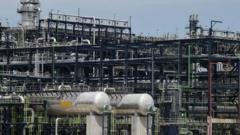
By 2024, the refinery was finally operational. With a processing capacity of 650,000 barrels per day, it ranks as the seventh-largest refinery in the world. More critically for Nigeria, it now supplies more than 70% of the country’s energy consumption — a seismic shift for a nation that had spent decades exporting crude oil only to import refined fuel at punishing cost.
That backstory matters, because it is exactly what Dangote is selling with this IPO. The offering covers roughly 3% of the refinery, with a minimum purchase of just 10 shares — costing about $4. The window is open for one month. Dangote has framed this explicitly as an opportunity for ordinary Nigerians to own a piece of something that already powers their daily lives.
Nigerians are listening. Isah Salisu, speaking to reporters, said he pulled 50,000 naira — roughly $37 — from his savings to invest. “My hope is that my small money will one day grow big,” he said. “I don’t want to miss out as many I know are also investing.” That sentiment is spreading fast across social media and market floors alike.
The excitement is real. So is the risk.
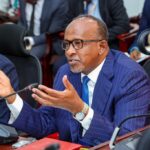
Economy and business expert Dr Abdulrazak Ibrahim Fagge called the IPO launch historic but was blunt about what first-time investors need to understand. Share prices can fall. People can lose money.
That last warning deserves emphasis. Any time a high-profile financial event captures public imagination in Nigeria, predators follow. If you’re investing, verify every platform and broker against the official list. If someone is offering you “guaranteed” shares or asking for unusual fees, walk away.
The money raised through this share sale is earmarked for expansion — specifically, to double the refinery’s processing capacity. Dangote, 67, built his $28 billion fortune first in cement and sugar across Nigeria, then expanded into 16 other African countries. His company, Dangote Cement, remains Africa’s largest cement producer. The refinery represents the most ambitious chapter yet in that story.
For young Kenyans and Africans watching from outside Nigeria, this moment carries a clear signal: African capital markets are maturing, African billionaires are building at scale, and the old excuse — that there’s nowhere meaningful to put your money on this continent — is running out of road. Whether this IPO delivers the returns that hopeful investors like Salisu are dreaming of will depend on execution, global oil markets, and Nigeria’s notoriously volatile economic environment. But the fact that the question is even being asked, at this scale, on African soil, is itself a shift worth paying attention to.