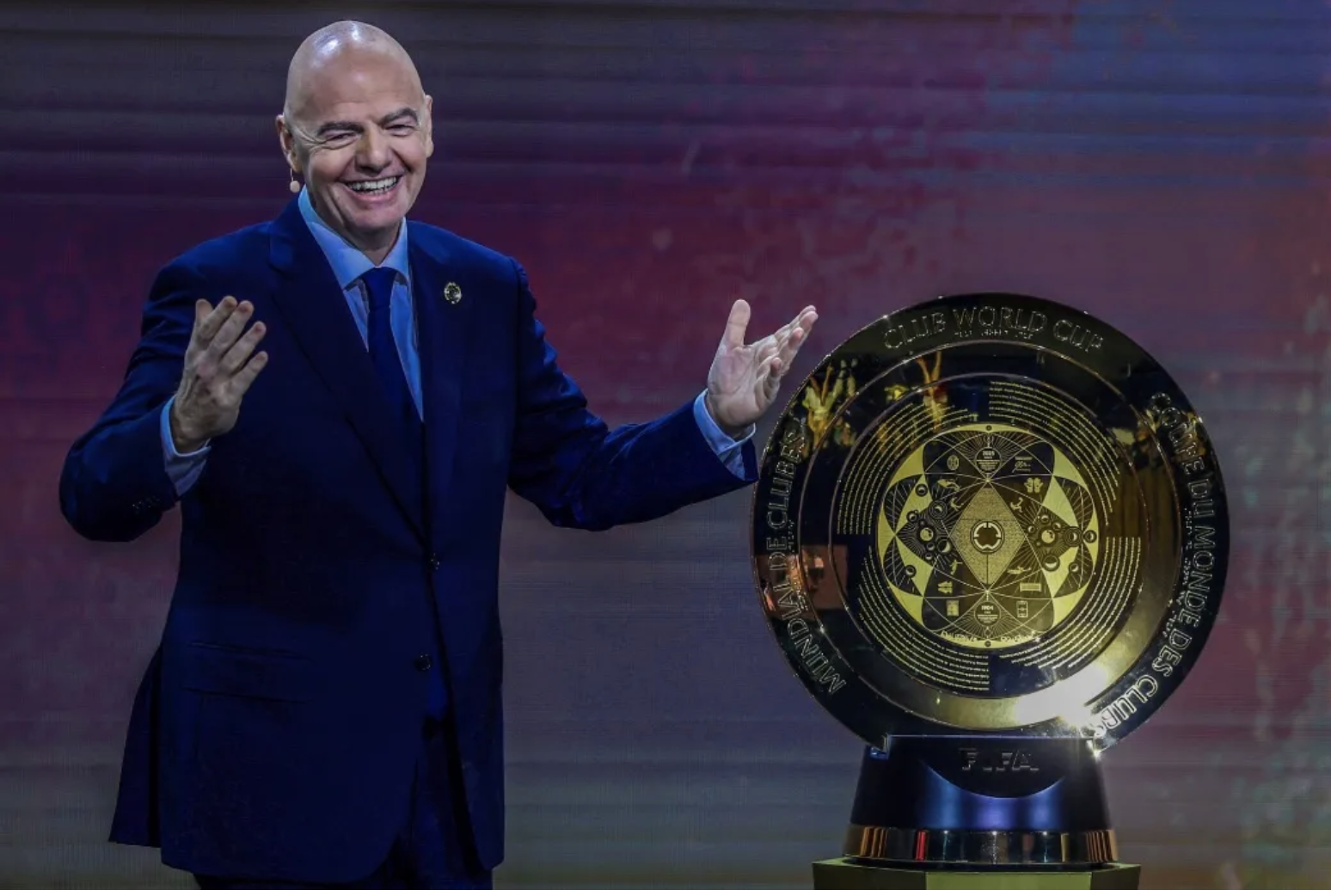
Gianni Infantino is in the fight of his life. UEFA is threatening legal action. Norway’s federation wants him out. England’s FA has pulled its backing for his re-election. And a collapsed plan to bring private investors into FIFA’s commercial operations — the so-called FIFA Forward Enterprise proposal — has given his European critics exactly the ammunition they needed. By every measure of elite football politics, the FIFA president should be on his way out.
He isn’t. And the reason why tells you everything about who actually controls the future of the game — and who has been shut out of it for far too long.
So what exactly happened here?
Earlier this year, FIFA quietly developed a plan to sell a stake in the World Cup’s commercial future to private investors. The details were ambitious, the potential revenues enormous. But the federations that collectively own the sport — the ones whose consent is not optional, it is constitutional — say they were never properly consulted. UEFA, CONCACAF and the Asian Football Confederation called it a “fundamental breach of trust.” Even FIFA has acknowledged the plan was mishandled. That much is not in dispute.
What is in dispute is whether a botched consultation process justifies burning down everything Infantino has built over the past decade. And on that question, the world is split — sharply, and along lines that are not accidental.
Why is Africa standing firm behind Infantino?
The Confederation of African Football, representing 54 member federations — more than a quarter of FIFA’s entire membership — unanimously reaffirmed its support for Infantino in early August. CONMEBOL said it would not back any accelerated push to remove him. Argentina’s federation publicly thanked him for a decade of service. Mexico broke with the rest of CONCACAF to stand by him. Even Donald Trump jumped in, warning on social media that removing Infantino would be a “terrible mistake.” Whatever you think of that particular endorsement, the coalition backing Infantino is not small, and it is not naive.
European commentators have been quick to frame this support as opportunism — smaller federations protecting a powerful patron, or simply not knowing better. That reading is both lazy and condescending. It ignores the concrete, measurable reality of what has actually changed in global football since Infantino replaced Sepp Blatter in 2016.
What has actually changed under Infantino’s watch?
The World Cup expanded from 32 to 48 teams ahead of the 2026 edition, cracking open the tournament’s final stage to nations that previously had almost no realistic path there. That is not a symbolic gesture — it is a structural shift in who gets to compete at the highest level. FIFA has channeled significantly greater investment into African, Asian and North and Central American federations, giving those bodies real institutional capacity rather than the crumbs that historically trickled down from European-dominated governance structures. Continental competitions outside Europe — the Africa Cup of Nations most visibly — have grown into serious commercial and broadcast properties in their own right, not just tournaments where the best players clock in briefly before rushing back to their European clubs.
None of this is perfect. None of it erases the governance failure at the heart of the FFE controversy. But it is real, and the federations who have lived through it are not going to pretend otherwise simply because UEFA is angry.
Is this really about governance, or is it about power?
Former Moroccan international Houssine Kharja asked this question directly in a recent interview, arguing that Europe’s opposition to Infantino cannot be separated from the broader context of football’s shifting global balance. He made another point worth sitting with: European football is itself saturated with private capital, from sovereign wealth funds buying Premier League clubs to private equity reshaping league structures across the continent. The idea that FIFA should be held to a categorically different standard when it explores new financing mechanisms is, at minimum, a position that deserves scrutiny rather than acceptance.
Kharja’s core appeal — that Infantino and UEFA president Aleksander Čeferin resolve their dispute through direct dialogue rather than institutional warfare — has received far less attention than it deserves. It is the kind of solution that requires both sides to acknowledge the other’s legitimacy, which is precisely why it is uncomfortable for those who have decided this is a moment to force a reckoning.
What is actually at stake for young Africans watching this play out?
This is not an abstract boardroom dispute. The question of who leads FIFA, and which vision of global football wins, has direct consequences for whether African leagues develop real financial muscle, whether African nations continue to gain World Cup spots, and whether the next generation of Kenyan, Moroccan, Senegalese and Nigerian footballers builds careers within a system designed to serve them — or one designed to extract from them. The loudest voices demanding Infantino’s removal come overwhelmingly from the continent that has held football’s institutions, revenues and prestige in a tight grip for the better part of a century. That is not a coincidence. It is the context.
Infantino has real questions to answer about how the FFE plan was designed and why it bypassed the consultation his own members were entitled to. Those questions are legitimate and must be answered. But collapsing his entire presidency into that single failure — and handing the keys back to a European-dominated order — risks discarding a decade of progress that federations across Africa, Asia and the Americas fought hard to secure. They are not willing to give that up without a fight. And frankly, they shouldn’t be.