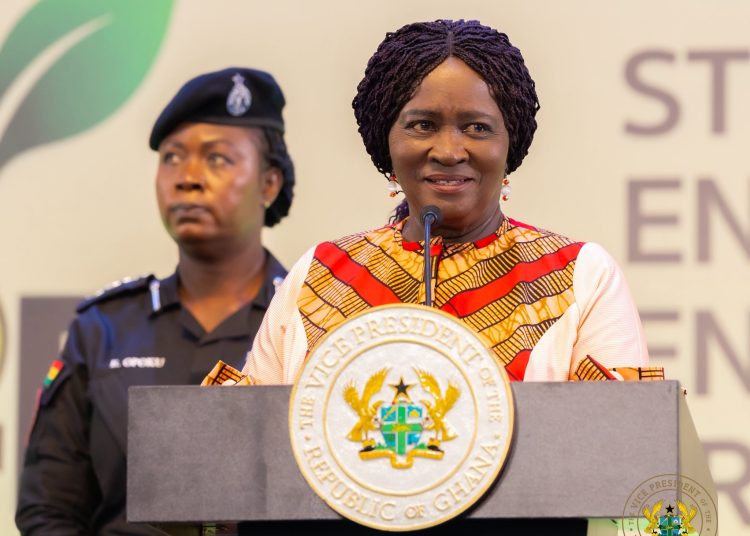
Picture a conference hall in Shanghai, filled with scholars and policymakers from across Africa, Asia and Latin America — people whose countries have spent decades being lectured by Western institutions about the “right” way to develop. Into that room walks Ghana’s Vice President, Professor Jane Naana Opoku-Agyemang, and she says something that cuts straight through the noise: study China’s transformation, but own your own story.
Speaking at the 2026 Global South Academic Forum in Shanghai, Opoku-Agyemang delivered what amounts to a challenge — not just to the scholars in the room, but to every government in the developing world that has been either seduced by China’s model or frightened of it. Her argument is sharper than it sounds. China’s rise over the past several decades, she said, is “one of the most consequential development stories of the modern period,” and ignoring it is not neutrality — it is negligence.
What makes her position compelling is its refusal to be ideologically convenient. She did not stand in Shanghai and celebrate the Communist Party of China as a template for governance. She was explicit: China’s development pathway was shaped by its own history, its own institutions, its own political system and its own national priorities. That context is not transferable. What is transferable — and this is the point young African policymakers need to sit with — are the underlying disciplines: long-term planning, deliberate industrialisation, aggressive poverty reduction and the strategic role of institutions in driving national progress. Those are not Chinese inventions. They are choices. And choices can be made by anyone.
Opoku-Agyemang framed South-South cooperation as the mechanism through which this kind of honest intellectual exchange should happen. The most productive principle, she argued, is that countries “should learn from one another without assuming that we must become one another.” That is a direct rebuke to two lazy tendencies that have long plagued development discourse — the blind copying of foreign models and the reflexive rejection of any lesson that comes from an unfamiliar political tradition. Both impulses cost countries time they cannot afford to waste.
She pushed further, calling for what she described as “intellectual confidence” — the capacity to sit across from another country’s experience and honestly assess what worked, what failed, which institutions enabled progress and which mistakes others might still avoid. For a generation of young Kenyans and Ghanaians and Nigerians who have watched their governments cycle through IMF prescriptions and donor-driven reforms with limited results, that framing hits differently. It is not asking anyone to admire China’s political system. It is asking whether your government has a serious twenty-year plan — and if not, why not.
The Vice President also used the forum to press a harder truth: political independence, which most Global South nations have already won, is not enough. The real work is converting that independence into institutional strength, educational investment, infrastructure and productive economies. Flags and constitutions do not feed people. Deliberate, well-resourced development policy does. That is the lesson she wants taken home from Shanghai — not a Chinese flag, but a sharper question about what your own government is actually building and for whom.