A Prison, a Nickname, and Years of Silence
Before the International Criminal Court shut down his legal escape route, Khaled Mohamed Ali El Hishri was simply known inside Mitiga prison as “the angel of death.” That nickname was not handed to him by enemies or political rivals — it came from the people he personally raped, tortured, and killed while running the women’s section of one of Libya’s most notorious detention facilities, just outside Tripoli.
This did not happen in some distant, lawless era. Between 2014 and 2020, while Kenya was holding elections and young Africans were building futures on social media, women inside Mitiga were being systematically destroyed by a man with institutional power and total impunity.
El Hishri, now 48, is the first Libyan suspect to be brought before the ICC following the court’s inquiry into the chaos that consumed Libya after the 2011 fall of Muammar Gaddafi — a collapse accelerated by a NATO-backed uprising that toppled a dictator but left a power vacuum nobody was ready to fill.
How a Country in Freefall Became a Laboratory for Atrocity
Libya did not simply descend into conflict. It fractured — splitting into two rival governments, each controlling territory, each running parallel institutions, and neither accountable to any meaningful rule of law. Oil wealth kept the engines running. Impunity kept the torturers employed.
Mitiga prison became a symbol of everything wrong with that arrangement. Witnesses who survived testified that El Hishri was not a passive administrator watching abuses happen on his watch — he was the prime instigator, the man who set the tone, who made the violence personal and deliberate.
The UN Security Council had authorised the ICC’s inquiry into Libya as far back as 2011. But it took until 2025 for the Libyan government to formally accept ICC jurisdiction. That fourteen-year gap is not a footnote — it is the entire story of how long accountability can be delayed when geopolitics gets in the way.
The Legal Fight He Tried — and Lost
El Hishri was detained last year. His lawyers immediately challenged the court’s jurisdiction, arguing the ICC had no legal standing to try him. It was a calculated move — the kind of procedural obstruction that has derailed accountability for powerful men before, in Libya and everywhere else.
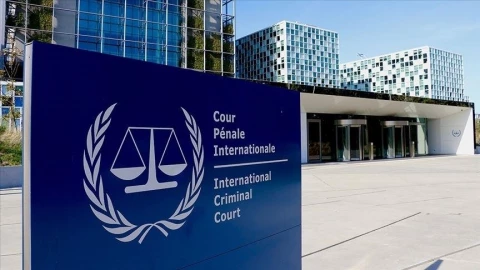
The ICC rejected it. Completely. The court confirmed it “may exercise jurisdiction in the case of the Prosecutor v. Khaled Mohamed Ali El Hishri” and dismissed the defence challenge without ambiguity. No trial date has been set yet, but the legal foundation is now locked in place.
El Hishri faces 17 charges of crimes against humanity and war crimes. He denies everything. That denial sits awkwardly against the testimony of witnesses who watched him operate and gave him his nickname — not as a metaphor, but as a warning.
He Is Not the Only One
The ICC is not done with Mitiga. The court is also pursuing Osama Almasri Najim, head of Libya’s judicial police, on separate charges also connected to alleged crimes at the same prison. El Hishri’s case is the first, not the last.
ICC deputy prosecutor Nazhat Shameem Khan told a preliminary hearing in May that El Hishri was “widely known as a notorious torturer at the helm of Mitiga prison.” That framing matters — this was not a secret. People knew. Institutions knew. The machinery of impunity simply kept moving.
For young Kenyans who have watched their own institutions protect the powerful while ordinary people absorb the consequences, this case should land with a particular weight. International accountability mechanisms are slow, imperfect, and politically compromised — but when they work, they work because someone refused to let the silence hold.
Why This Verdict Is Personal
The ICC has been a complicated institution for Africa. Kenya lived through its own bruising encounter with the court after the 2007–2008 post-election violence, watching cases collapse under political pressure and witness interference. The frustration was real and legitimate.
But El Hishri’s case is a reminder that the court’s failures do not erase its purpose. Somewhere in Libya, women who survived Mitiga are watching this process unfold — women who gave a torturer a nickname because naming him was the only power they had left.
The ICC has now confirmed it has jurisdiction. The defence challenge is dead. The charges stand. Whatever comes next, the angel of death will have to answer for it in public, on the record, before the world.