Here is the uncomfortable truth that no cabinet committee or Sh15 billion contingency fund can paper over: Kenya is heading into what could be its most destructive El Niño since 1982, and the government that is supposed to protect you is already broke, already stretched, and already failing the people most at risk. This is not a weather story. It is a story about who gets left behind when everything goes wrong at once.
The numbers are stark and they demand your attention. The Southern Oscillation Index, the key scientific measure of El Niño’s intensity, plunged to -29.1 in July — its lowest reading since February 1983, according to the Australian Bureau of Meteorology. The US Climate Prediction Centre now puts an 81 per cent probability on a “very strong” El Niño event between October and December, one that would rank among the largest since records began in 1950. The Kenya Meteorological Department adds a grimmer detail still: a 97 per cent probability that these conditions persist well into early 2027. This is not a forecast you dismiss.
The last time Kenya faced an El Niño of this magnitude, in 2023 and 2024, it destroyed around 84,000 acres of crops across 78,000 farms, triggering losses exceeding Sh16 billion. And that event, analysts now say, may have been a rehearsal. During that same cycle, maize production in several African countries fell by more than 50 per cent in a single season, forcing multiple governments to declare national disasters. Oxford Economics Africa is blunt: a severe El Niño “would pose serious risks to livelihoods and could have major humanitarian consequences.”
A Crisis Colliding With a Crisis
What makes this moment uniquely dangerous is not the El Niño alone — it is everything that surrounds it. Kenya’s GDP growth slowed to 4.6 per cent in 2025 and is projected to slip further to 4.5 per cent in 2026. Headline inflation hit 6.7 per cent in May, a two-year high driven by global oil prices that have already pushed up transport and food costs. Public debt has climbed to roughly 70 per cent of GDP, with debt servicing consuming close to half of all government revenues. The fiscal deficit stands at 6.1 per cent. There is almost no room to manoeuvre.
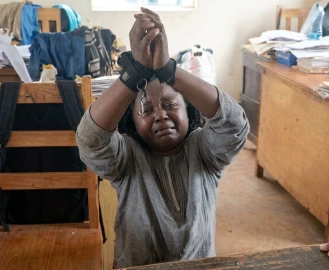
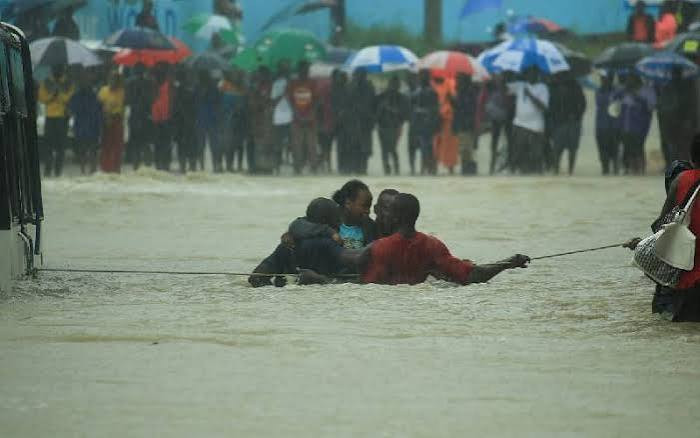
That fiscal reality has direct, human consequences. The government simply does not have the money to deploy meaningful subsidies, emergency food aid, or disaster relief at the scale this event may demand. That means the millions of smallholder farmers in the Rift Valley already reeling from drought-induced crop failure — with yields crashing to as low as two bags per acre against a normal expectation of over thirty — will face the coming floods largely alone. It means the families packed into Nairobi’s flood-prone informal settlements, the same ones that were submerged earlier this year when dozens died, will again be the most exposed and the least protected.
Agriculture Principal Secretary Paul Rono has already confirmed that crop failure has hit roughly 10 per cent of farmers in the South Rift, 30 per cent in the North Rift, and 20 per cent of seed maize producers. The government’s projected harvest of 80 million bags of maize this year is gone. Now, the same farmers who lost their long-rains harvest face the prospect of flooding, crop damage, and post-harvest losses during the short rains season. The FAO and WFP have placed Kenya among 22 countries at high risk of climate-related shocks linked to El Niño between late 2026 and early 2027. The International Rescue Committee’s Vice President for Emergencies, Bob Kitchen, put it plainly: “We’re watching several emergencies converge at once, and the places least equipped to absorb another shock are the ones in the crosshairs.”
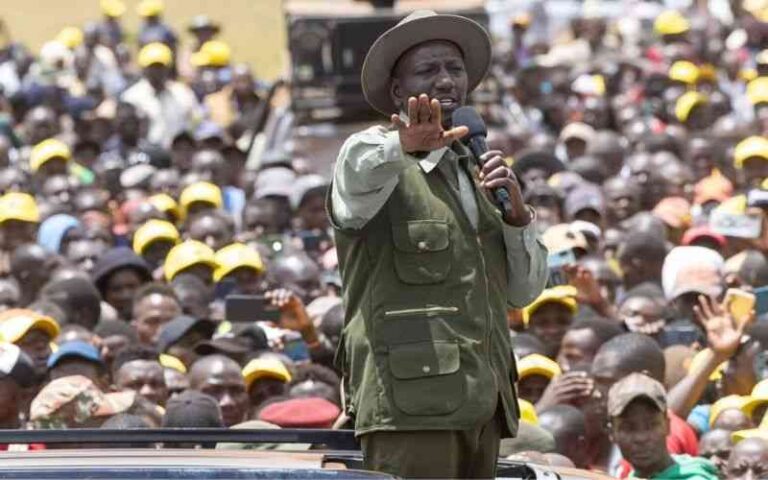
President Ruto’s cabinet has appointed Deputy President Kithure Kindiki to chair an Ad Hoc Cabinet Committee on El Niño Preparedness and Response, with a mandate covering flood mitigation, evacuation planning, drainage clearance, and infrastructure reinforcement. Kindiki told the country in July: “There is no need to panic.” That is precisely the kind of reassurance that should make you nervous. Kenya Meteorological Department director David Gikungu was more honest, cautioning that El Niño’s real impact depends on drainage systems, settlement patterns, land degradation, and infrastructure — all areas where Kenya’s record is, at best, uneven.
The deeper implication here is one that young Kenyans understand in their bones even if official narratives refuse to say it plainly: climate vulnerability and economic precarity are the same crisis. A shilling weakened by rising import bills, food prices inflated by crop failure, a government too indebted to respond — these are not separate problems that happen to coincide. They are a single system of risk, and the people at the bottom of that system have the fewest exits. The October rains are coming. The question is not whether Kenya will be hit. It is who will be made to bear it alone.