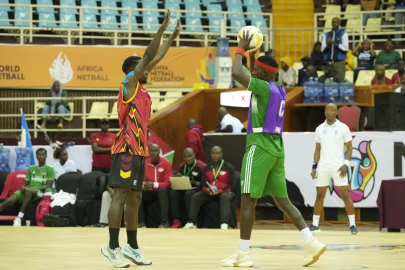
It started, as most things do, with someone else’s dominance. South Africa arrived at the 2026 Africa Netball Cup at Kasarani Indoor Arena in Nairobi with a point to prove, and by the fourth day of competition, they had already proven it — loudly. On Wednesday morning, the South Africans dismantled Malawi 50-40, booking their place in the men’s final without breaking a sweat. They had beaten Eswatini, Kenya, Uganda, and now Malawi. Five teams entered this tournament. South Africa has beaten every single one of them.
South Africa’s assistant coach Siyabonga Khuzwayo didn’t celebrate wildly — he was too focused. “So far so good for us,” he said after the Malawi match. “We just need to correct errors and we are ready to go in the finals. They have raised the bar high so it is no longer a walk in the park.” That last line should terrify whoever faces them next. This is a team that wins convincingly and still thinks it needs to improve.
Malawi’s captain Arnold Khobiri was gracious in defeat, acknowledging that small mistakes had cost his young side dearly. He pointed to the future — three to five years, he said, before the Malawi Kings would genuinely compete at this level. It was an honest, clear-eyed assessment from a captain who understands exactly where his team stands. The Malawi Kings only came into existence during the last edition of this tournament, held in Malawi in December last year, and competing at all is already a statement of intent.
But here in Nairobi, right now, none of that matters as much as what Kenya does next. The Kenya Net Kings have a record of one win and two losses — the same as Uganda — and they face a must-win fixture against Eswatini on Wednesday. Lose, and they go home. Win, and they could join South Africa in the final, with goal difference deciding the second finalist. Coach Peter Oloo’s squad knows exactly what is at stake, and so does every Kenyan watching from the stands or following online.
Eswatini, meanwhile, made their own statement earlier in the day by defeating Uganda 41-38 in a match that was tight from the first whistle to the last. Eswatini led 21-18 at halftime, stretched it to 30-27 heading into the final quarter, and then held their nerve as Uganda pushed back hard. Their head coach Vilane Jabulani credited video analysis and sharp tactical adjustments for the win, specifically noting how he identified Uganda’s goal attacker Gonzaga Kigozi as a threat — and how Eswatini exploited the moment Uganda substituted him out. “Next match is against Kenya and it is not going to be easy,” Jabulani admitted, “but we will take one match at a time.” That composure is exactly what makes Eswatini dangerous.
Uganda’s assistant coach Abalo Florence was direct about what went wrong. Her team had the upper hand at various points in the match but failed to convert interceptions into points and gave away too many short centre passes. It was the kind of self-inflicted damage that decides tight tournaments, and Uganda will carry that frustration into their Wednesday match against Malawi, where they’ll be fighting to salvage pride if not a final berth.
On the women’s side, the stakes are even higher — and more complex. Ten teams are split across two pools, with Pool Two featuring Uganda, Malawi, Zambia, Kenya Divas, and debutants Nigeria. South Africa and Uganda have already secured automatic qualification for the 2027 Women’s Netball World Cup in Sydney, Australia, through their World Netball rankings. That leaves two World Cup spots for the remaining eight nations, and the pressure that comes with that reality is written all over every result.
Kenya Divas entered this tournament with momentum, thrashing Nigeria 61-40 on September 19 under Zimbabwean head coach Tapiwa Chirenda and assistant coach Evelyn Jerono. The very next day, Malawi handed them a sharp 55-47 reality check. By Tuesday evening, they were back on court against arch-rivals Uganda — a match that will define their trajectory heading into Wednesday’s critical clash with Zambia.
Zambia set up that showdown by beating Nigeria 63-44, a result that kept their World Cup qualification hopes firmly alive. Head coach Lazarus Tembo called the win a “very good build-up” ahead of the Kenya fixture. Zambia captain Beauty Nakazwe went further, directly addressing the pressure of playing the hosts: “We can handle the pressure from the home crowd because we know what we are capable of.” Nigeria’s centre player Aramide Ajayi, for her part, took the loss on the chin and focused on what her team learned — particularly around adjusting to umpire calls. For a debutant nation, that growth mindset matters.
So here is where everything stands, and it is as stark as it gets. Kenya — both the Net Kings and the Divas — face defining matches on Wednesday. The Net Kings need to beat an Eswatini side that just outthought and outplayed Uganda. The Divas need to beat a Zambia side that is hungry, prepared, and playing for a World Cup. Both Kenyan teams are playing on home soil, in front of home fans, with everything to lose. That is not a burden — that is an opportunity. The question is whether they will take it.