
Three hundred politicians walked into a Naivasha retreat this week, and President William Ruto made one thing unmistakably clear: losing the 2027 General Election is simply not on the table. This is not a campaign slogan. This is a directive — and the architecture of Kenya’s next political era is being built right now, behind closed doors in Nakuru County.
The Message Was Blunt
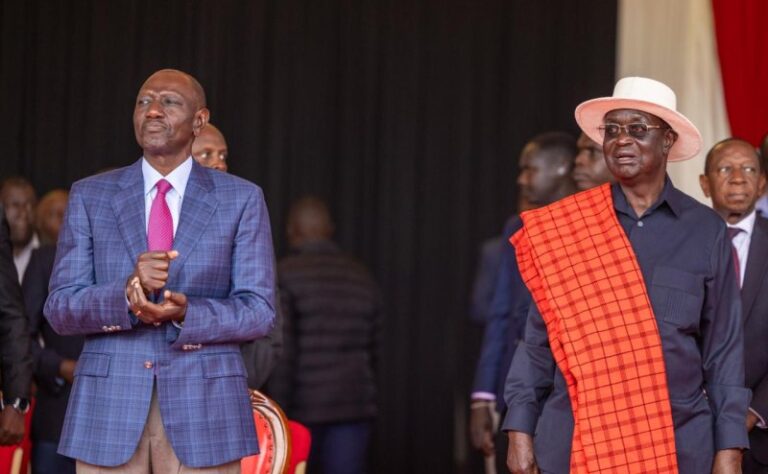
Ruto stood before more than 250 Members of the National Assembly, 45 Senators, and a room full of Governors drawn from both his United Democratic Alliance (UDA) and Raila Odinga’s Orange Democratic Movement (ODM), and he did not mince words. “We must win the next election. We have no choice,” he told them, invoking both God and Allah in the same breath — a deliberate signal to a coalition that spans Kenya’s religious and ethnic fault lines. He framed the 2027 contest not as a fight for political survival among the elites in that room, but as a question of national consequence. Whether you believe that framing or not, the urgency was real.
The three-day retreat in Naivasha is not a casual team-building exercise. It is the formal beginning of the broad-based coalition’s campaign machinery, with UDA and ODM moving steadily toward a pre-election merger that would represent the largest political formation in Kenya since the grand coalition government that followed the catastrophic 2007–2008 post-election violence. Ruto himself drew that comparison directly, citing the Kibaki-Odinga arrangement as a precedent and daring his critics to explain why a UDA-ODM alliance should be treated as anything more controversial.
What Ruto Said About the Opposition
The President reserved his sharpest language for whoever sits on the other side of the political divide. “When I look at the alternative, I shudder,” he said, describing the opposition as a collection of individuals without vision, agenda, policy, or a track record worth defending. He accused them of chaos, of fumbling and mumbling when pressed on their record. That is a pointed attack — and it is designed to land with voters who remember the Gen Z protests of 2024, the Finance Bill crisis, and the broader disillusionment with political leadership across the board. Ruto is betting that the opposition cannot consolidate fast enough or credibly enough to pose a serious threat.
Here is where smart, skeptical readers should pause. The same broad-based government Ruto is now asking his allies to defend was itself assembled after significant political turbulence — the very upheaval that forced him to absorb ODM into his administration in the first place. Calling the opposition chaotic while governing through a coalition born of crisis requires a particular kind of political confidence. Ruto clearly has it. Whether voters will agree is a separate question entirely.
The Real Stakes at Naivasha
The retreat’s agenda is built around a specific reckoning: what has the broad-based government actually delivered? Ruto challenged his leaders to have candid conversations about the administration’s performance — first under Kenya Kwanza, then under the expanded broad-based arrangement — before locking in a shared political direction for 2027. That is a significant ask, because the 10-point agenda that formally brought UDA and ODM together remains only partially implemented, and accountability for those gaps sits squarely with the people in that room.
What happens in Naivasha does not stay in Naivasha. The resolutions reached at this retreat will shape candidate lists, resource allocation, and the political messaging that reaches ordinary Kenyans between now and August 2027. Ruto knows that the window to consolidate is narrow. The opposition — however chaotic he claims it to be — will eventually find its footing. The question is whether this broad-based coalition can hold together long enough, and deliver convincingly enough, to make the argument that it deserves another five years. That answer will not come from a retreat in Nakuru. It will come from the streets, the markets, and the ballot boxes of a country that is watching very closely.