This is no longer simply a debate about undocumented migration. In reality, it never was.
What began with vigilante groups confronting people they believed to be foreign nationals, demanding identity documents and attempting to exclude migrants from workplaces, clinics and other public spaces has developed into a broader confrontation over the meaning of South Africa’s constitutional order. Courts have already ruled that private groups do not have the authority to perform immigration enforcement, while the government has repeatedly warned against citizens taking the law into their own hands.
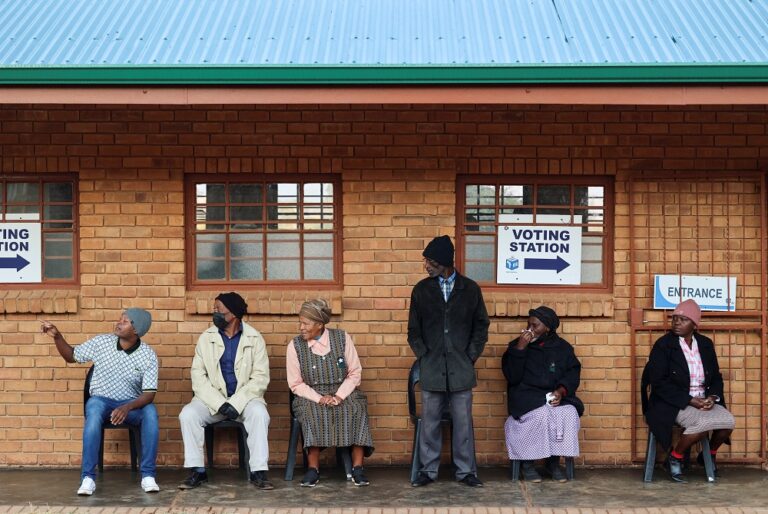
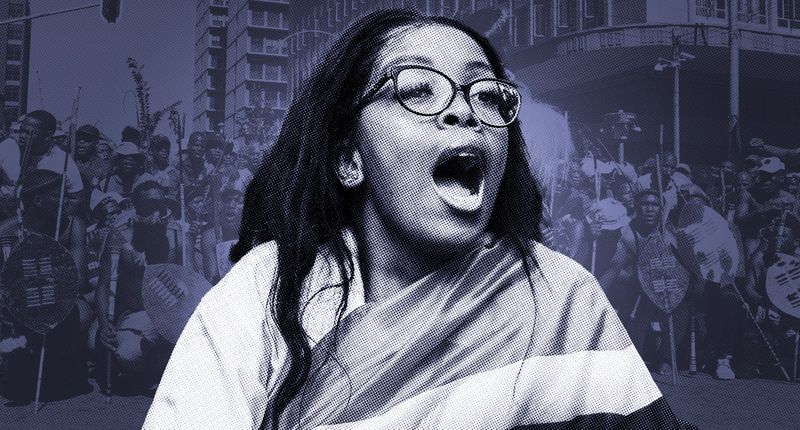
The danger has become particularly visible in recent days. Anti-migrant demonstrations in Soweto and Durban turned violent this week amid false claims about a Constitutional Court ruling on asylum seekers. Vehicles were torched, foreign-owned shops were looted and police were deployed to restore order. The government says the judgment merely confirmed that people cannot automatically be prevented from lodging asylum claims because they entered the country irregularly; it did not grant undocumented migrants automatic legal status.
That distinction matters because South Africa is facing two different questions that are increasingly being collapsed into one.
The first is legitimate: how should a country control its borders, process asylum claims and enforce immigration law?
The second is far more fundamental: who is entitled to the protection of the law once they are inside the country, and who gets to decide?
South Africa’s Constitution provides a clear starting point. Its preamble states that the country belongs to “all who live in it, united in our diversity”. It also describes the Constitution as the foundation of a democratic society based on human rights, social justice and the rule of law.
That sentence has now become politically contested.
Proposals have emerged to change the wording so that South Africa would instead be described as belonging primarily or exclusively to its citizens. ActionSA has publicly supported such a change, arguing that the existing language has been misused in debates over illegal immigration. Parliament’s constitutional review process has already considered submissions calling for the preamble to be amended.
That does not mean that changing a line in the preamble would instantly remove every constitutional protection enjoyed by foreign nationals. Many fundamental rights in the Bill of Rights apply to “everyone”, and South African courts remain responsible for interpreting those protections. But the political significance of the debate is much larger than the wording of a single sentence.
It is about what kind of constitutional culture South Africa wants to preserve.
There is a major difference between saying that immigration laws must be enforced by the state and allowing political movements or crowds to determine who appears sufficiently South African to receive basic services, work, trade or simply move through a neighbourhood without being challenged.
Once that distinction disappears, citizenship documents cease to be merely administrative records and become informal passes demanded by whoever believes they have the authority to ask for them.
South Africa has already seen what that can look like. In November 2025, the Johannesburg High Court ruled that Operation Dudula and its members could not assault, intimidate or harass people they suspected of being foreigners or demand passports and identification documents from them. Those enforcement powers belong to authorised immigration officials and police officers, not private citizens.
The issue therefore goes beyond sympathy for migrants.
The rule of law exists precisely because individuals cannot simply decide that another person’s appearance, language or accent makes them suspicious enough to lose ordinary legal protections. If immigration enforcement becomes dependent on whether somebody “looks foreign”, the system inevitably creates risks for South African citizens as well — particularly in a country whose population contains enormous linguistic, ethnic and regional diversity.
And this is where younger South Africans should pay particular attention.
Constitutional protections are easiest to weaken when the first people affected are politically unpopular. A restriction can initially be presented as something aimed only at undocumented foreigners, criminals or some other narrowly defined group. But once arbitrary searches, exclusion from services or informal identity checks become socially acceptable, the principle being established is much broader: that rights can depend on whether another person considers you sufficiently legitimate.
There is also a danger in treating vigilantism as a substitute for government failure.
South Africa has genuine problems with immigration administration. The asylum system has faced severe backlogs and institutional pressure, while unemployment, inequality and strained public services create fertile ground for anger over competition for jobs and resources. Those concerns cannot simply be dismissed. The state has both the authority and the responsibility to manage migration effectively.
But mobs cannot repair an immigration department.
They cannot create employment, increase hospital capacity, improve policing or process asylum cases.
What they can do is redirect public frustration toward a visible target.
Recent unrest illustrates how quickly that dynamic can become dangerous. Misinformation surrounding the Constitutional Court’s asylum judgment spread into protests and violence, despite government attempts to explain that the judgment did not legalise undocumented migrants. Following the unrest and pressure on refugee reception offices, the Department of Home Affairs withdrew a directive intended to implement that judgment.
That is precisely why the constitutional dimension matters.
If intimidation or violence can influence how constitutional rights are implemented, the consequences extend far beyond migration policy. It raises a larger question about whether institutions make decisions through law and judicial process or whether sufficiently intense political pressure can determine who receives protection in practice.
South Africa’s post-apartheid constitutional settlement was deliberately constructed around the opposite idea: that political power itself must operate within legal limits.
The Constitution is the supreme law. Governments can change. Majorities can shift. Public anger can move from one target to another. Rights and institutions exist partly because none of those things is permanently predictable.
None of this means that South Africa must have open borders or abandon immigration enforcement. A constitutional democracy can deport people who have no lawful right to remain, police its borders and impose immigration rules. The crucial question is who performs those functions and under what legal authority.
That line is becoming increasingly important.
Today, the person being stopped may be a Malawian, Zimbabwean, Somali or Mozambican migrant.
Tomorrow, the criterion may simply be an accent, a surname, a neighbourhood or the inability to immediately produce the document someone demands.
And once a society accepts that rights can be informally rationed according to who appears to belong, there is no reliable mechanism ensuring that the boundary will remain where it started.
The political argument surrounding migration therefore conceals a much larger institutional test.
South Africa has every right to debate immigration policy. It has every right to demand better border management and a functioning asylum system. Citizens can legitimately argue over how scarce public resources should be allocated.
But the moment private groups begin deciding who may access