The Plan That Could Rewrite How Power Works in Your City
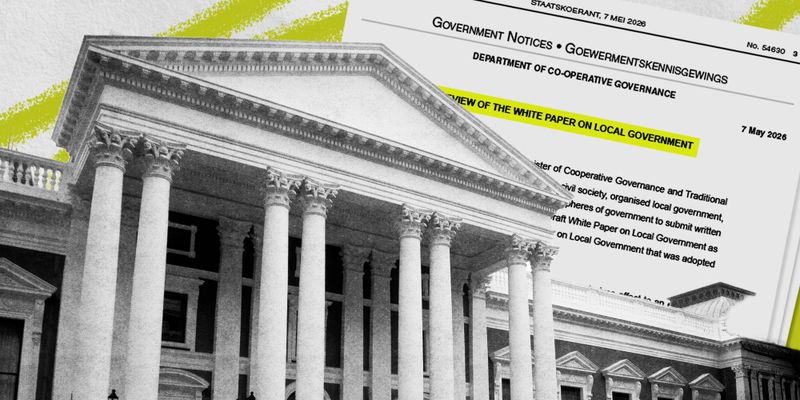
South Africa’s Department of Cooperative Governance and Traditional Affairs has released a 192-page White Paper on Local Government reform, and if you care about why your municipality can’t fix a pothole, why your water keeps getting cut, or why mayors seem to change faster than seasons, this document is the most important thing you haven’t read yet. President Cyril Ramaphosa officially launched the proposals on 22 October, and his own language was a stunning admission of failure — he told the assembled audience that “we underestimated how politicised appointments would open the door to corruption, malfeasance and a lack of accountability.” The man leading a party that still practises cadre deployment said that. Out loud. Let that sink in.
This is not a routine policy update. This is a structural reckoning with decades of local government dysfunction, and the proposals, if implemented, would fundamentally alter who runs your council, how they get there, and what happens when they steal from you.
Depoliticising Appointments: The Core of the Whole Thing
The most consequential proposal in the White Paper is the move to strip political parties of their grip on senior municipal appointments. The document explicitly states that appointments to senior management and key technical posts must be grounded in disciplines like finance, engineering, planning and infrastructure management — not party loyalty. More striking still, the National Treasury’s director-general Duncan Pieterse confirmed on air that Treasury would hold veto power over the appointment of a council’s chief financial officer. That is not a small thing. That is the national fiscus inserting itself directly into the patronage pipeline that has bled municipalities dry.
Local governance expert Miyelani Holeni of Ntiyiso Consulting has pointed out that this reform would create a genuine professional ladder for municipal administrators, one where a competent official could build a career from smaller rural municipalities upward, independent of which party controls the council at any given moment. The idea is a professional class of city administrators who serve the institution, not the faction. It sounds obvious. In the current system, it is revolutionary.
The White Paper goes further, proposing that councillors who knowingly approve unlawful or unsuitable appointments face collective or individual liability, and possible disqualification. Sitting councillors in cities like Johannesburg — where city manager Floyd Brink was found guilty of gross misconduct by an independent investigation — should be paying very close attention to that clause.
Budget Discipline and the End of Fictional Finances
The National Treasury is also asserting the power to reject municipal budgets that are not fully funded. This addresses a specific and catastrophic habit: councils, including Johannesburg repeatedly, have passed budgets allocating expenditure without securing the revenue to cover it. The inevitable result is financial collapse, service delivery failure and, earlier this year, Treasury’s decision to temporarily suspend payments to certain councils. The White Paper proposes a coordinating technical unit — described as the “engine room of system coherence” — that would monitor councils without wielding executive power, instead using evidence and escalation to force accountability before crises spiral.
It also proposes a formal political escalation mechanism through Parliament or Cabinet to govern when national or provincial intervention in a struggling council becomes necessary. The explicit aim is to prevent situations like the politically motivated ANC-led Gauteng provincial takeover of the DA-led Tshwane administration — a decision the Constitutional Court ultimately overturned. Whether this new system would have caught the Bronkhorstpruit water crisis earlier, where officials reportedly flagged chlorine supply problems to their superiors and were ignored, remains an open question. But the architecture is being designed to make that kind of institutional silence harder to sustain.
Coalition Agreements Must Now Be Written, Signed and Public
Here is the proposal that the political class should fear most. The White Paper requires that any coalition or support agreement affecting the formation or sustainability of a municipal executive must be written, signed and made public. Decision-making principles, commitments to lawful conduct, guarantees of service delivery continuity — all of it, on the record, in public.
This is a direct response to the shadow politics that has defined coalition governance in South Africa’s councils. When agreements are secret, no one can hold anyone accountable, and the reasonable suspicion that arrangements are held together purely by patronage and personal deals becomes almost impossible to disprove. Think of Johannesburg’s Colleen Makhubele, then the sole Cope councillor, who appeared able to single-handedly determine which grouping held power simply by shifting her personal position, with no party structure capable of checking her. Public agreements would not eliminate that kind of individual opportunism, but they would at least expose it.
The Glaring Gap: No Threshold for Representation
The White Paper does not propose any minimum threshold for party representation in councils. This is a significant missed opportunity, and it is one that reflects the failure of the current national coalition to use its combined political weight for structural reform. Both the ANC and the DA have every incentive to prevent a situation where eight parties each hold a single council seat, creating the instability and chaos that has defined recent municipal governance. They have done nothing about it. The consequence is that after future elections, councils will likely become more fragmented, not less, and the revolving door of mayors and collapsing coalitions will continue.
What This Means If It Actually Happens
The proposals in this White Paper are, on balance, serious and substantive. The vision of depoliticised appointments, funded budgets, transparent coalitions and enforceable accountability chains represents exactly the kind of structural reform that communities across South Africa have been demanding for years. The key phrase, though, is if it actually happens. South Africa has no shortage of well-written policy documents. What it has a shortage of is the political will and institutional culture to implement them against the resistance of entrenched interests.
Changing what is written in law is the easier part. Changing what is normalised in practice — the verbal instructions to officials, the unlawful appointments, the unfunded budgets signed off without consequence — requires something the White Paper cannot legislate: a genuine political reckoning, broad enough to carry all parties and all constituencies. That reckoning has not arrived yet. But this document at least names what needs to change, clearly, and in 192 pages of uncomfortable detail.