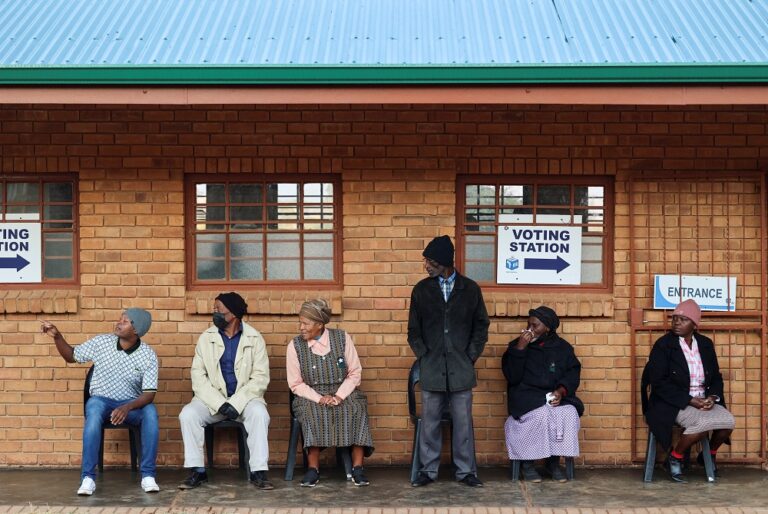
Picture the border town of Tororo, a place where the line between Uganda and Kenya is less a hard boundary and more a lived daily negotiation — where families straddle two nations, where language blurs, where the question of belonging has never been simple. Now imagine officials on both sides suddenly very interested in who exactly is crossing that line, and why. That is where East Africa finds itself this week, caught in a diplomatic tangle that cuts to the heart of sovereignty, electoral integrity, and the kind of political games that young Kenyans have every reason to be furious about.
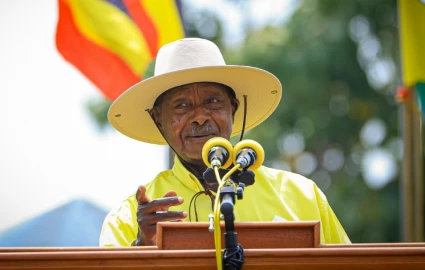
Uganda’s First Deputy Prime Minister and Minister for East African Community Affairs, Rebecca Alitwala Kadaga, issued a sharp directive this week: no Ugandan citizen crosses into Kenya to register as a voter. Full stop. Speaking during a security briefing on Wednesday, Kadaga made no effort to soften the message. “You can’t be a citizen of two countries at the same time,” she said, and directed state agencies and local leaders stationed along the border to enforce that reality immediately. Uganda has already identified specific flashpoint areas — Bukwo, Moroto, Tororo, Namayingo and Buikwe — where authorities suspect organised movement of people into Kenya for electoral purposes has been taking place or could intensify.
This is not bureaucratic noise. This is Uganda telling Kenya, in the clearest diplomatic language available, that something is wrong.
Kadaga framed the crackdown explicitly around sovereignty — Uganda’s own. She said such cross-border participation in another country’s electoral process violates Ugandan law and undermines the integrity that both nations owe each other as neighbours. “It is not proper,” she said, “for Uganda or its institutions to participate in another’s electoral process.” The statement carries weight precisely because Uganda is not pointing fingers outward here; it is disciplining its own side of the border. That restraint makes the implicit accusation against Kenya even louder.
The context is everything. Kenya’s opposition had already raised alarms about alleged voter importation ahead of the 2027 General Election, a charge that the ruling Kenya Kwanza administration dismissed with the usual confidence of people who control the narrative. Then, barely two weeks before Kadaga’s directive, Interior Cabinet Secretary Kipchumba Murkomen, alongside Kenya’s High Commissioner to Uganda Ababu Namwamba and other Kenya Kwanza heavyweights, crossed into Uganda’s Bukwo District and held what they described as an engagement with Kenyans living abroad. The official line was that they were simply connecting with diaspora Kenyans. Nobody in that room, presumably, was meant to notice that Bukwo sits squarely inside Uganda, or that the event carried every hallmark of a campaign rally for President William Ruto’s re-election bid.
Ruto’s allies insist the visit was about community engagement, not electoral interference. You are smart enough to decide what you believe.
What makes this story cut deeper than a typical border dispute is what it reveals about how power operates in Kenya right now. The 2027 election is still years away, and already the machinery is moving — across borders, through diplomatic channels, in border towns where ordinary people live ordinary lives and have no idea their neighbourhoods have become pawns in someone else’s political chess game. The Ugandan government’s response, measured and sovereignty-conscious as it is, essentially validates every concern the opposition has raised. When a foreign government feels compelled to order a crackdown to prevent its own citizens from being swept into your electoral process, the “nothing to see here” defence collapses entirely.
Uganda respects Kenya’s sovereignty, Kadaga said, and expects the same in return. That sentence lands differently when you consider that Kenyan officials were just in Bukwo doing what Uganda is now explicitly prohibiting on its side. The asymmetry is glaring. One government is enforcing its laws. The other is still crafting its talking points.
For young Kenyans who have watched elections be stolen, managed, bought and litigated for their entire adult lives, this moment deserves more than a shrug. The border is not just a geographic line — it is the outer limit of where Kenyan democracy is supposed to be built and defended. When that limit becomes porous by design, when voters can apparently be sourced like any other campaign resource, the question is not just about legality. It is about whether the 2027 election will mean anything at all. Uganda has drawn its line. Kenya still has time to draw its own.