
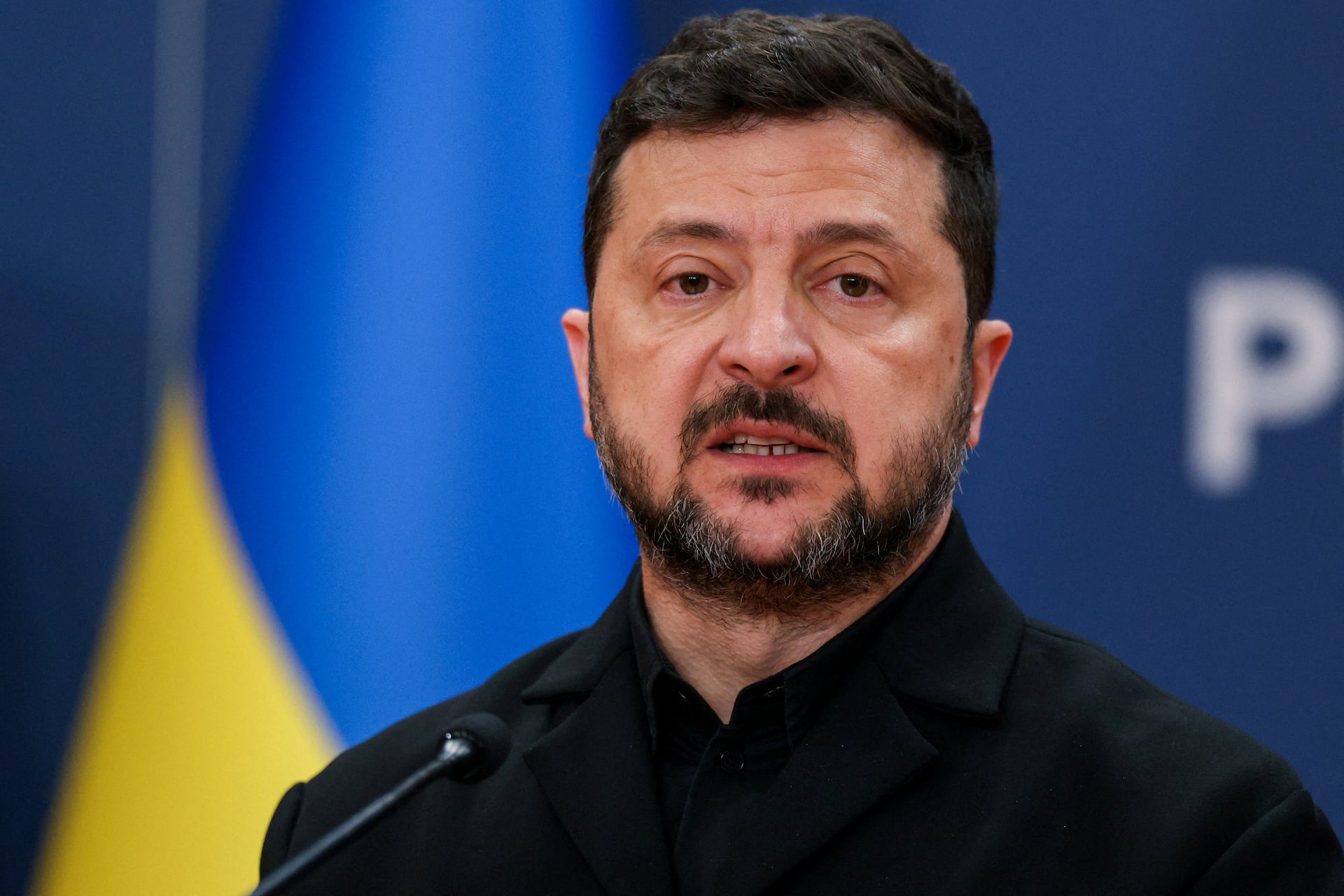
While most of the world slept, something significant happened over Ukrainian skies — a brand-new, homegrown anti-drone weapon locked onto an Iranian-designed Shahed drone and destroyed it. President Volodymyr Zelenskiy confirmed the hit in his nightly video address, and if you think this is just another routine war update, you are not paying attention.
Zelenskiy was measured but deliberate in his announcement, the way a man speaks when he knows the weight of what he is saying. “Another development is undergoing testing. It’s a Ukrainian development and it scored a hit, the ‘shahed’ was destroyed,” he said, while acknowledging that refinements are still needed before the weapon is fully operational. That honesty matters. This is not a government spinning a propaganda victory — this is a country at war telling its people, and the world, exactly where it stands.
The numbers behind that single overnight test are staggering when you sit with them. Ukrainian forces downed 187 airborne targets in one night. Zelenskiy reported a 93% drone interception rate — a figure that would have seemed impossible in the early, desperate months following Russia’s full-scale invasion in February 2022. Yet here we are.
Ukraine did not achieve this by waiting for Western handouts. Faced with an enemy flooding its skies with cheap, mass-produced Shaheds — drones designed in Iran, built to overwhelm and exhaust air defence systems — Ukraine made a strategic decision that has quietly reshaped modern warfare: build your own interceptors, make them cheaper than what they are shooting down, and iterate fast. That philosophy is now a doctrine, and it is working well enough that other countries, including several in the Middle East that have faced Iranian drone strikes directly, are buying into Ukrainian expertise.
This is the part that rarely gets enough attention in mainstream coverage of this war.
Ukraine has effectively become a live laboratory for 21st-century drone warfare, developing and field-testing technology at a pace that no peacetime defence contractor could match. Every Shahed that crosses the border is data. Every interception is a lesson. The country is not just surviving — it is innovating under fire, and exporting that knowledge to allies who recognise that the drone threat is not going away anywhere in the world.
But the picture is not entirely triumphant, and Zelenskiy did not pretend otherwise. Ukrainian forces continue to struggle significantly against Russian ballistic missiles, which fly faster, hit harder, and demand far more sophisticated — and expensive — interception systems. Kyiv has repeatedly pressed Western allies to accelerate supplies of the interceptors capable of handling these threats, with limited results. The gap between what Ukraine needs and what it receives remains a source of deep frustration in Kyiv, and it should be a source of discomfort in every European capital that has pledged support while moving at bureaucratic speed.
There is also the longer-term bet Ukraine is placing on Freyja, a European-designed air defence system whose rapid development Kyiv is actively pushing. The logic is straightforward: dependence on American-supplied systems creates political vulnerability, and Ukraine has learned, painfully, that political winds shift. A European air defence architecture offers a different kind of security — one rooted in a continent that has finally, if slowly, understood that this war is its problem too.
For young Kenyans watching this conflict from a distance, the temptation is to treat it as someone else’s geopolitical chess game. It is not. The drone technology being tested over Ukrainian skies tonight will define the next generation of conflict on every continent. The countries that understand this — and invest accordingly — will not be caught off guard. The ones that dismiss it as a distant European problem will scramble to catch up when the moment comes. Ukraine chose to build. That choice, made under bombardment, is the real story here.