When the Vehicles We Trust Become the Threat We Fear
South Africa’s National Consumer Commission has announced safety recalls affecting 879 vehicles — and if you think this is just another bureaucratic notice buried in government paperwork, think again. This is about seat belts that may not hold you in a crash, truck couplers that could detach at highway speed, and a system that only works if ordinary people actually pay attention to it. The central truth here is uncomfortable but undeniable: the vehicles rolling off dealership floors are not always as safe as the price tags suggest, and the burden of fixing that falls squarely on consumers who trusted the brands in the first place.
The recalls cover three separate vehicles — the Audi Q3, the Hyundai Santa Fe MX5 HEV, and the Toyota Hino 700 truck tractor — each carrying its own distinct defect, each representing a failure that slipped through quality control and landed in the hands of real people navigating real roads. That is not a minor administrative inconvenience. That is a structural problem with how vehicles reach consumers in this market.
Three Vehicles, Three Failures, One Pattern
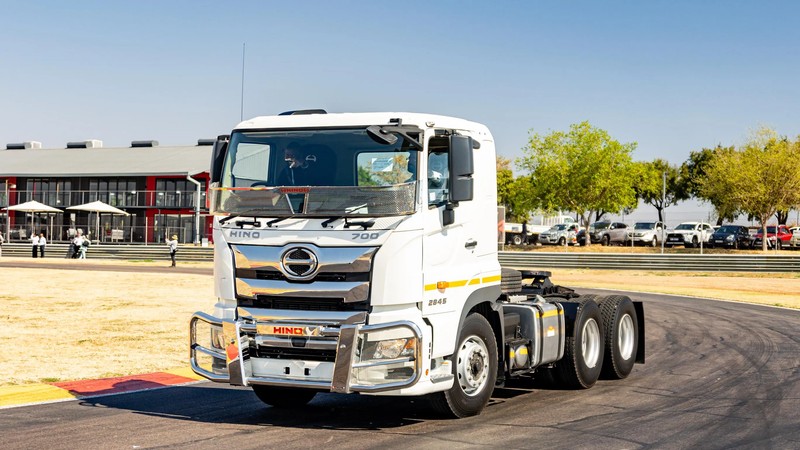
The largest recall involves 482 Hino 700 truck tractors sold through Toyota South Africa’s dealer network between April 2023 and January 2025. The defect is a bolt fracture occurring during assembly on the production line, meaning the fifth-wheel coupler securing bolts and mounting plate securing bolts may already be cracked inside trucks currently hauling loads across South African highways. The fifth wheel is the mechanical coupling that connects a truck tractor to its trailer — if it fails, the trailer separates from the cab. At speed, on a public road, that is not a mechanical inconvenience. It is a catastrophe.
The second and third recalls both involve front seat belts, which makes the pattern even harder to dismiss as coincidence. Audi South Africa identified a defect in 235 Q3 vehicles sold nationally from April 2026 onwards, where the belt webbing may not have been correctly guided through the metal eyelet on the lap belt tensioner. In plain terms, the seat belt may not actually be connected to the vehicle’s load-bearing structure — which means in a collision, it may not restrain the occupant at all. Separately, 162 Hyundai Santa Fe MX5 HEV vehicles sold through Hyundai dealerships in 2025 carry a misalignment of the front seat belt’s snap-on anchor, which could similarly compromise proper restraint in the event of a crash.
Two different brands, two different manufacturing processes, the same critical safety component failing in the same critical moment. That convergence demands scrutiny, not reassurance.
The Recall System Only Works If You Use It
The NCC spokesperson Phetho Ntaba confirmed that all corrective work will be carried out at no cost to consumers, and affected owners are advised to bring their vehicles to any authorised dealership for inspection and, where necessary, replacement of the defective components. The contact point for questions is recalls@thencc.org.za. These are the right steps, and they matter — but they only matter if consumers actually act on them, which historically, many do not.
Recall compliance rates across global markets are notoriously low, and there is no reason to believe South Africa is an exception. The people most likely to miss these notices are those who bought their vehicles second-hand, those who do not follow automotive news, and those who simply assume that a vehicle purchased from a reputable dealer is safe by default. That assumption, in all three of these cases, would be wrong. The recall system is a corrective mechanism, not a guarantee — and it only functions when the public treats it with the urgency it deserves.
If you own an Audi Q3, a Hyundai Santa Fe MX5 HEV, or a Hino 700 truck tractor, the question is not whether this affects you. The question is whether you will act before something does.