The Man Who Refused to Let Africa Be Invisible
Before Instagram. Before selfies. Before anyone talked about “representation,” a young man from Accra was already doing the work, pointing his camera at Black faces and insisting they deserved to be seen, beautifully, on their own terms.
James Barnor, born in Accra in 1929 and turning 98 next year, has just been named the 20th recipient of the Outstanding Contribution to Photography award at the Sony World Photography Awards 2027. It is a long-overdue recognition for a career that cuts across colonialism, independence, immigration, fashion and the making of modern African identity. And if you have never heard his name until now, that gap in your knowledge tells you everything about whose stories get centred and whose get buried.
Starting at the Heartbeat of History
Barnor learned photography under his cousin, portrait photographer J.P.D. Dodoo, and by 1950 he had become the first staff photographer at Ghana’s newly established Daily Graphic. He was in his early twenties, camera in hand, standing at the edge of one of the most consequential moments in African history. Ghana was moving toward independence from British colonial rule, and Barnor was there to photograph every rally, every celebration, every political figure who shaped what was coming, including Kwame Nkrumah, who led the country to independence in 1957.
But Barnor understood something that most political photographers miss: history is not made exclusively by politicians. In 1953, he opened his Ever Young studio in Accra’s Jamestown district. Students, shop assistants, traffic officers and judges walked through his door, not because they were famous, but because they wanted to be seen looking their best. Those portraits are extraordinary documents of aspiration and dignity, records of ordinary people claiming their moment before the lens.
London, Drum Magazine and the Fight for Black Visibility
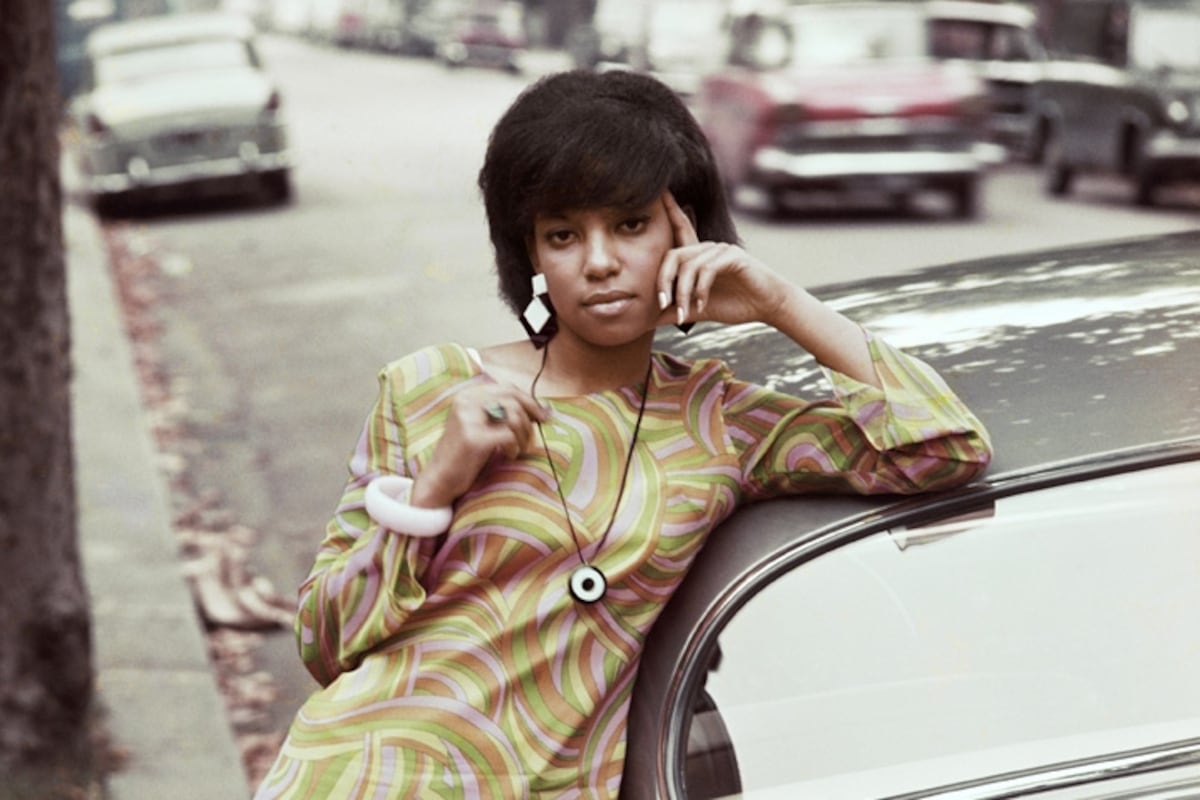
In 1959, Barnor moved to London, where another cultural revolution was already in motion. He began working for Drum, the influential South African magazine that celebrated Black culture while directly confronting apartheid. In London, he photographed models, musicians and fashionable young Black Londoners at a time when Black faces were almost entirely absent from mainstream British fashion imagery.
His photographs from this period are full of glamour and confidence, but they carry something more politically charged underneath the surface: a flat refusal to accept that beauty, style and everyday Black experience did not belong at the centre of the frame. Every image was an argument, and he made it without raising his voice.
Bringing Colour to a Continent Shown Only in Grey
Barnor was also a technologist. After studying photography in Kent and working in British laboratories, he trained with Agfa-Gevaert in Europe before returning to Ghana, where he established the country’s first colour-processing laboratory. That achievement was both a technological milestone and a political one. Africa had long been represented to the outside world through monochrome images of hardship and upheaval. Barnor’s laboratory meant the continent could now be documented in all its actual, vivid colour, on its own terms, by its own people.
Recognition That Came Late, But Came Hard
The world caught up with Barnor slowly. His archive gained international prominence decades after many of the photographs were taken, eventually leading to major institutional exhibitions and a reassessment of his place in photographic history. His influence now reaches forward through the James Barnor Prize, which actively supports emerging African photography talent.
More than 50 of his works will be exhibited at London’s Somerset House from April 16 to May 3, 2027, tracing his journey between Accra and London across seven decades. He receives his award on April 15, joining previous honourees including Sebastião Salgado, Susan Meiselas and Joel Meyerowitz.
Why This Matters to You, Right Now
Here is the thing about Barnor’s story that should land personally for every young Kenyan scrolling past official narratives and curated feeds: the most powerful images of your generation will not be taken by outsiders flying in with a brief. They will be taken by people who already live inside the story, who know what dignity looks like from the inside, who refuse to flatten complexity into a single frame of suffering or triumph.
Barnor spent his career proving that. The Sony World Photography Awards are finally saying it out loud. The question is what the next generation of African photographers does with that permission.