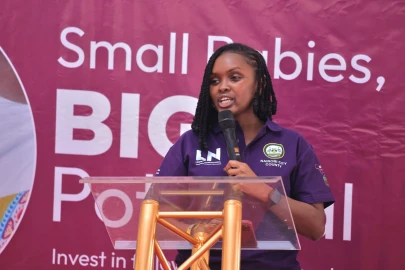
On World Prematurity Day 2026, Nairobi County did not just hold a commemoration. It made a statement about where public health investment is actually going, and for once, the numbers back it up.
The story begins, as these stories often do, with a gap between what exists and what is needed. Premature births are not rare events in Nairobi. They are an everyday reality in a city where maternity services have historically been overwhelmed, underfunded and geographically uneven. For years, families in areas like Riruta, Dandora and Githurai have had to travel long distances to access even basic obstetric care, let alone the specialised support that a premature baby requires to survive.
A Hospital That Went from Four Deliveries to 180
The most striking data point from this year’s commemoration, held at Riruta Level 4 Hospital, is not a policy announcement. It is a single statistic: in February 2025, Riruta Level 4 Hospital recorded just four deliveries in a month. By October 2026, that number had climbed to 180. That is not a rounding error. That is a fundamental shift in community trust, driven by concrete improvements in services, including obstetric ultrasound, a fully stocked pharmacy and a properly equipped laboratory.
Riruta Hospital CEO Alice Ndwiga did not dress it up. She said the increase came from improved services and growing public confidence in the facility. When the infrastructure works, people show up. That is the argument the county is making with its money.
County Executive Committee Member for Health Suzanne Silantoi, speaking at the event, was direct about what saving a premature baby actually demands. “Saving a premature baby’s life is only the beginning,” she said. “We must also invest in the continued care, monitoring and support these children need to survive, develop and thrive.” That framing matters because it pushes back against the tendency to treat survival at birth as the finish line.
What Is Actually Being Built
The county has opened a new 100-bed paediatric wing at Mama Margaret Uhuru Hospital, a significant expansion of specialised treatment capacity for children. At Pumwani Maternity Hospital, preparations are underway to operationalise a Newborn Intensive Care Unit to handle premature babies and newborns requiring intensive medical attention. Four additional maternity theatres and newborn units are nearing completion at Westlands, Makadara, Bahati and Dandora II health facilities. New maternity facilities have also opened in Ruai and Githurai 44, bringing professional maternal healthcare closer to residents who previously had few options nearby.
This is not one flagship project in a wealthy part of the city. These investments are spread across Nairobi’s most densely populated and historically underserved areas.
Beyond the Hospital Walls
What makes this push more serious than a ribbon-cutting exercise is the county’s focus on what happens after a premature baby goes home. Community Health Promoters are being deployed to monitor newborns, identify those needing additional medical attention and support mothers with Kangaroo Mother Care and breastfeeding. Digital health records and specialised follow-up clinics are being used to track mothers and babies requiring continued support. The county’s Emergency Operations Centre, reachable on the toll-free number 1508, coordinates referrals for maternal and child health emergencies.
Pumwani Maternity Hospital also operates Kenya’s only Human Milk Bank, which provides donated breast milk to vulnerable newborns, particularly premature babies whose mothers cannot breastfeed immediately. That is a resource most Kenyans do not know exists, and its continued operation is quietly critical to newborn survival outcomes.
The Bigger Picture
Nairobi County’s expansion of neonatal and maternal infrastructure is not happening in a vacuum. It reflects a growing recognition that the city’s health system has to scale up to match its population, and that premature birth is a public health challenge that demands sustained, coordinated investment rather than sporadic attention. Silantoi called on families, healthcare workers and development partners to strengthen collaboration, and that call is pointed: the county cannot carry this alone.
The trajectory is real. The gaps are still significant. But the direction is clear, and for young families in Nairobi navigating a system that has too often let them down, that matters.