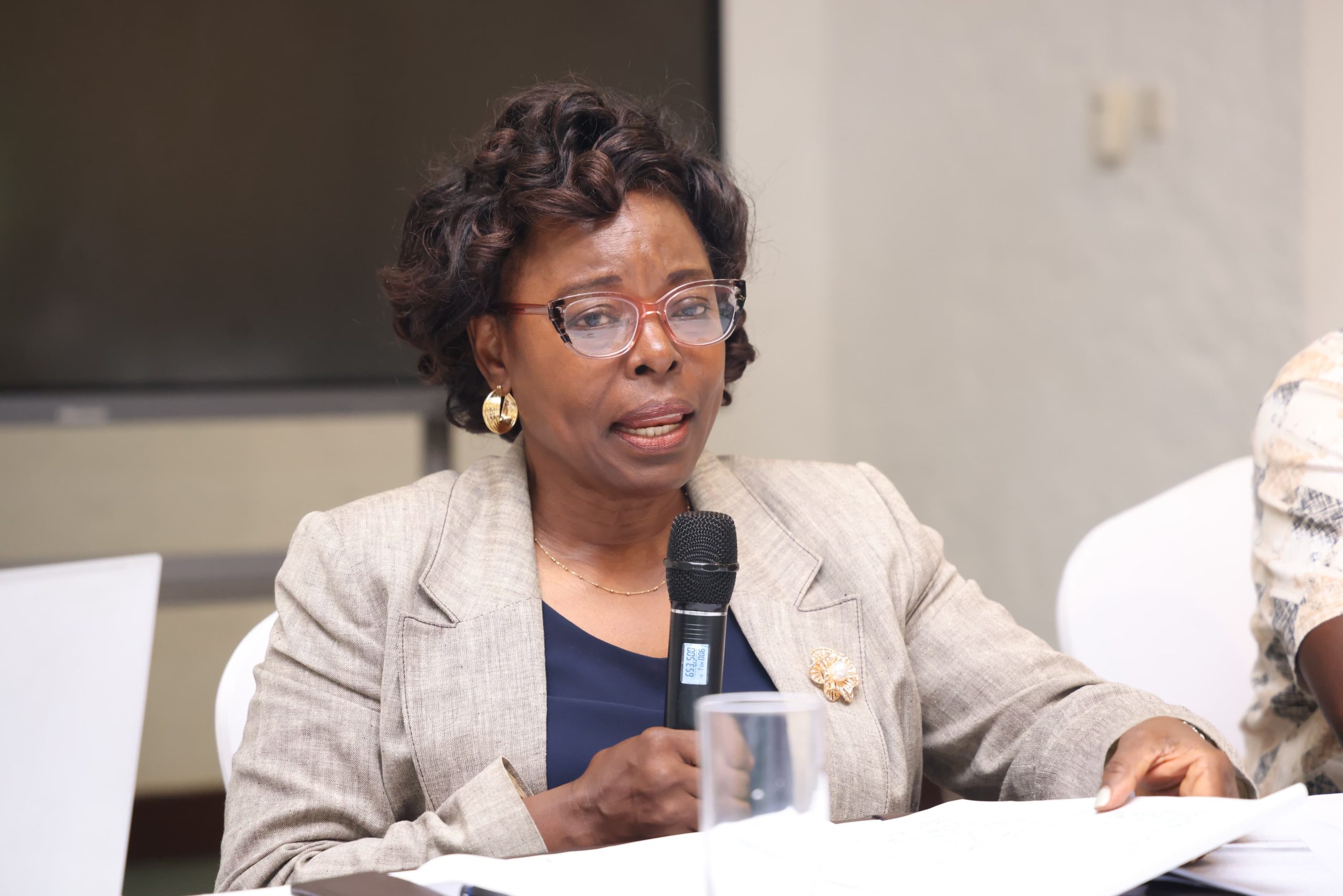
Kenya’s Parliament is tightening its grip on public spending. The Budget and Appropriations Committee convened this week to interrogate Controller of Budget Dr. Margaret Nyakang’o on the state of the FY 2025/26 national budget — and what emerged was a picture of a government still struggling to translate allocations into results on the ground.
Dr. Nyakang’o appeared before the Committee, chaired by Vice Chairperson Robert Pukose, and presented a sweeping assessment covering revenue performance, Exchequer releases, donor-funded programmes and the stubborn problem of pending bills across both national and county governments. She confirmed that pending bills owed by National Government entities have declined — a sign of progress — but made clear that verified obligations must continue to be settled on a First-In, First-Out basis and strictly within approved budgets.
The Procurement System Nobody Can Actually Use
The sharpest exchange of the session centred on the Electronic Government Procurement System, a platform designed to make government purchasing more transparent and efficient. MP Japheth Nyakundi cut straight to the point: funds have already been disbursed for the NG-CDF, but projects cannot move because the system is not functioning as it should. Dr. Nyakang’o acknowledged the bottlenecks — integration failures with existing systems and a steep learning curve for users — and called for intensified training and supplier sensitisation to break the deadlock. The system’s promise remains real; its current execution does not.
MPs also pressed Dr. Nyakang’o on the use of Article 223 of the Constitution, which allows supplementary expenditure under specific circumstances. MP Christopher Aseka challenged both the Controller’s office and the Committee to stop treating the provision as a bureaucratic formality and instead develop practical mechanisms to enforce its limits. Dr. Nyakang’o agreed, urging that the article be invoked only for expenditure that genuinely could not have been foreseen during budget formulation — not as a backdoor for spending that should have been planned.
The Equalisation Fund Is Failing the People It Was Built For
The most politically charged discussion involved the Equalisation Fund — a constitutional mechanism created specifically to lift historically marginalised communities out of neglect. MP Adan Keynan did not mince words: “The Fund was meant to cure the marginalisation that have affected parts of Kenya. The Fund as it is right now is not meeting the intended purpose.” MP Jane Kagiri pushed further, asking the Controller to explain why absorption of Fund resources remains low in several counties.
Dr. Nyakang’o reported that Kshs. 4.17 billion had been authorised for withdrawal from the Equalisation Fund in FY 2025/26, covering development projects across 25 counties. Yet the volume of money authorised means little if it does not reach the communities it was constitutionally mandated to serve. Lawmakers also raised the risk of duplication — Equalisation Fund projects overlapping with initiatives already financed through other devolved mechanisms — a structural flaw that drains impact before it begins.
On the broader question of whether Kenya’s budget can be trusted to reflect reality, Dr. Nyakang’o called for stronger macroeconomic forecasting, tighter programme costing, genuine expenditure prioritisation and rigorous affordability assessments for new commitments. She also demanded predictable, timely Exchequer releases to Ministries, Departments and Agencies and to County Governments — because delayed funds mean stalled projects, and stalled projects mean ordinary Kenyans wait longer for services that were already promised. In a separate briefing, the Parliamentary Budget Office, led by Dr. Martin Masinde, presented the Committee with an analysis of global geopolitical pressures and the macroeconomic framework underpinning the FY 2026/27 budget cycle.