
The Vote Is Just the Beginning
Here is what nobody in power wants you to understand about coalitions: they are not a sign of democracy maturing. In most cases, they are a backroom deal dressed up in the language of governance. The 2026 local government elections are approaching, and the uncomfortable truth is already visible to anyone paying attention — no single political party is going to walk away with an outright majority in most municipalities. That means hung councils. That means coalitions. And if history is any guide, that means ordinary citizens getting pushed to the margins while politicians negotiate their own survival.
This is not speculation. It is a pattern that has been repeating itself since 2016, when coalition politics became a fixture of local government across the region. What followed was not stability or service delivery — it was a revolving door of motions of no confidence, collapsed agreements and communities left without water, without functioning roads, without anyone picking up the phone. The people who voted, who queued for hours, who believed their ballot meant something, were the ones who paid the price for political theatre they never auditioned for.
The Local Government: Municipal Structures Amendment Bill — the legislation that could have provided a legal framework for how coalitions are formed and held accountable — was only tabled in Parliament in August 2026. It will not be passed before election day. That is not an accident. That is a choice, and it has consequences that fall squarely on communities, not on the politicians who made it.
Gentlemen’s Agreements Are Not Governance
Once the results come in, parties will have fourteen days to form governments in all municipalities. Fourteen days. That is barely enough time to understand what voters actually wanted, let alone construct a coalition that genuinely serves them. What happens instead is what political commentator Rebone Tau calls a “gentlemen’s agreement” — an informal, unwritten arrangement between party elites that prioritises access to power over accountability to the public. These agreements are made behind closed doors, announced without detail, and measured by no one.
The result is a system where a motion of no confidence can be filed not because a coalition failed to deliver services, but because one party decided it wanted a bigger seat at the table. Citizens watch their municipalities collapse into instability without ever being told why, or what the plan is, or who is responsible. That is not governance. That is organised confusion, and it has been tolerated for far too long.
What needs to change is structural. Coalition agreements must be made public — not summarised, not paraphrased, but published in full, with clear timelines and measurable commitments. Every twelve months, those agreements should be subject to public review. Did the coalition deliver on water access in the townships? Did it fix the potholes in the suburbs? Did it reduce corruption in procurement? These are not unreasonable questions. They are the minimum standard of accountability that any functioning democracy should demand.
The Ward Councillor Is Your Most Powerful Tool — Use Them
Here is something the political class would rather you forgot: ward councillors have a direct mandate from the citizens who elected them. Unlike proportional representation councillors, who are appointed by party structures and answer primarily to those structures, ward councillors are supposed to answer to you. They are supposed to hold ward committee meetings. They are supposed to communicate when services fail. They are supposed to be reachable when the water goes off for the third time in a month. In a coalition environment, where the political dynamics inside a council chamber shift constantly, a strong, accountable ward councillor is the single most important buffer between community interests and political self-interest.
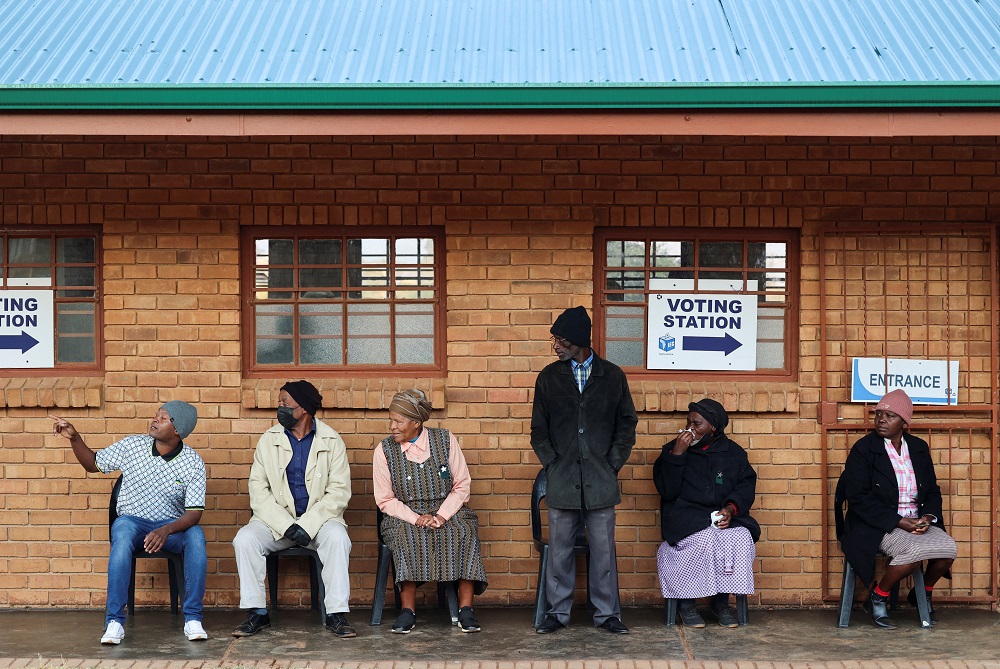
This means the decision you make on 4 November is not just about which party you support. It is about which individual you trust to walk into a complex, fractious coalition environment and fight for your ward. A councillor who does not understand the mechanics of coalition governance, who does not call meetings, who disappears between elections — that councillor will be captured by party whips and political deals the moment the results are announced. Vote for someone who knows what accountability looks like in practice, not just in a campaign speech.
Corruption Is Not a Side Issue — It Is the Main Issue
Coalition instability and corruption are not separate problems. They feed each other. When coalition agreements are informal and unwritten, there is no paper trail. When there is no paper trail, procurement decisions become personal favours. When procurement becomes personal favours, the budget that was supposed to fix the sewage system in your ward ends up in someone’s private account. This is not a hypothetical — it is the documented reality of local government failure across the region, and it accelerates dramatically under weak coalition arrangements where no single party can be held responsible for anything.
Ending corruption at the local level requires citizens to do more than vote. It requires showing up to Integrated Development Plan meetings in your ward, demanding that coalition agreements are published, and refusing to accept vague promises as substitutes for concrete commitments. Paying your rates and taxes matters too — municipalities cannot deliver services without revenue, and underfunding a corrupt system does not fix the corruption, it just starves the services that ordinary people depend on. The solution is pressure, consistent and informed, applied before and after election day.
Your Participation Cannot End at the Ballot Box
The most dangerous thing a young, politically aware citizen can do right now is vote on 4 November and then disengage. That is exactly the window that political parties count on — the months between the election and the next news cycle, when coalition agreements are being written, when cabinet positions are being traded, when the real decisions about your community’s future are being made in rooms you were never invited into. Coalitions are going to happen. The only question is whether they will be built around political survival or around the people who actually live with the consequences.
The answer to that question does not come from Parliament. It does not come from party manifestos. It comes from citizens who understand that democracy is not an event — it is a continuous act of engagement, scrutiny and demand. Show up to ward meetings. Read the coalition agreements when they are published. Hold your councillor to the timeline they committed to. Ask the uncomfortable questions that official narratives are designed to deflect. The politicians are already planning their next move. The only way to make sure it serves you is to make sure they know you are watching.