The Work Was Done. The Money Never Came.
Imagine showing up to teach, doing the work, marking the papers, and then waiting — not for weeks, not for months, but for an entire decade — to be paid. That is exactly what happened to 19 part-time lecturers at Maasai Mara University, and a Kenyan court has now ruled that enough is enough. Justice Nzioki wa Makau has ordered the public university to pay Ksh. 9.1 million to the former academic staff, plus interest at standard court rates from the date of judgment until full settlement, plus all legal costs. This was not a close call. The judge was unambiguous: the university violated the lecturers’ constitutional right to fair administrative action under Article 47, and it did so repeatedly.
It Started in the Classrooms of Kisii and Kilgoris
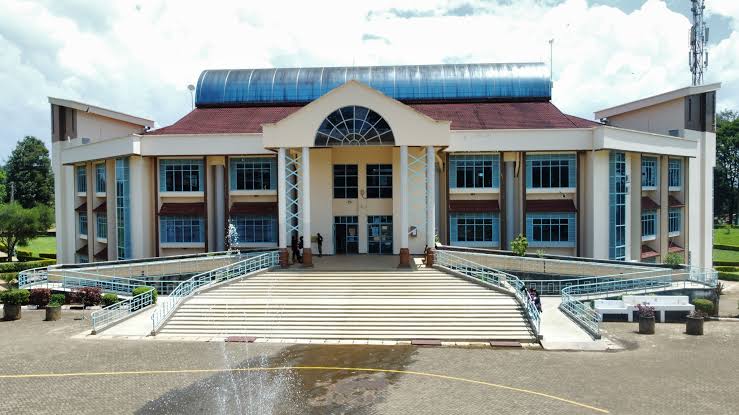
Between 2014 and 2016, Benard Oichoe Kinara and 18 other lecturers taught at Maasai Mara University’s satellite campuses in Kisii and Kilgoris. They were part-time staff — the kind of academic workforce that keeps Kenya’s public universities running while being treated as expendable and invisible by the very institutions they prop up. They fulfilled every teaching obligation assigned to them. They received nothing in return. No salary. No part-payment. No explanation. Just silence from an institution that knew exactly what it owed and chose, year after year, to do nothing about it.
Years of Promises, Zero Payments
By July 2019 — three full years after their teaching contracts ended — the lecturers had exhausted every informal avenue and escalated the matter to the Commission on Administrative Justice, commonly known as the Ombudsman’s office. The CAJ investigated and reached a clear conclusion: Maasai Mara University had acted unreasonably in withholding payment. The Ombudsman quantified the total dues at Ksh. 9.1 million and issued a directive ordering the university to establish a settlement plan within 60 days and clear the full balance within 12 months. It should have ended there. It did not.
In December 2019, the university formally acknowledged in writing that over 80 percent of the lecturers’ claims were genuine — an admission that should have triggered immediate action. It triggered nothing. By September 2020, the institution was again acknowledging its financial obligation and claiming it was engaged in out-of-court settlement negotiations. Then, in June 2021, Maasai Mara University’s own Vice-Chancellor stood before the Ombudsman and conceded the claims were valid, citing severe financial constraints and internal verification challenges as reasons the money still had not moved. The pattern was clear: admit, delay, repeat.
Parliament Received the Report — and Did Nothing
On July 4, 2023, the CAJ submitted a detailed report on the matter to the National Assembly, triggering the constitutional mechanism designed for exactly this kind of institutional non-compliance. Lawmakers read it, filed it, and moved on. No action was taken. No pressure was applied. The lecturers, now nearly a decade into their fight, had no choice but to drag both the university and Parliament itself before the courts, seeking judicial intervention as the last resort available to citizens failed by every other institution meant to protect them.
The University’s Defence Was Weak — and the Court Said So
In court, Maasai Mara University attempted to reframe the entire dispute as a simple contractual matter and argued that the petitioners had failed to produce sufficient proof of employment. This, from an institution that had already admitted in writing that the majority of those very claims were genuine. Justice Makau dismissed the defence without ceremony. The National Assembly, for its part, argued it lacked a direct statutory mechanism to enforce CAJ determinations without a specific non-compliance submission — a technical argument the court accepted, ultimately dismissing the case against Parliament on jurisdictional grounds.
But on the core question — whether Maasai Mara University had violated the constitutional rights of these 19 academics — the court was decisive. “The first respondent has brought this matter upon itself,” Justice Makau ruled. “From the correspondence before the court and the actions of the interested party directed to it, it is apparent the first respondent has breached constitutional rights of the petitioners… the right to fair administrative action under Article 47 has been abridged by the first respondent repeatedly.” That word — repeatedly — carries the full weight of ten years of institutional failure.
What This Ruling Actually Means
Beyond the Ksh. 9.1 million principal, the university now carries the burden of court-rate interest accumulating from the date of judgment until every last shilling is paid, on top of all legal costs generated by a suit the institution could have avoided at any point in the last decade simply by honoring its obligations. The financial penalty is real, but the constitutional indictment is sharper: a public university, funded by Kenyan taxpayers, spent ten years using bureaucratic inertia as a weapon against workers it had already admitted it owed money to. That is not a financial management failure. That is a power imbalance dressed up as an administrative delay.
For young Kenyans watching this case, the lesson is uncomfortable but necessary. The lecturers who taught in Kisii and Kilgoris were not powerful people. They were contract workers in a sector that routinely exploits them, and every institution they approached — the university, the Ombudsman, Parliament — either failed them outright or moved at a pace designed to exhaust their will to fight. They fought anyway. A court finally listened. That should not have taken ten years, and the fact that it did tells you everything you need to know about who Kenyan institutions are actually built to protect.